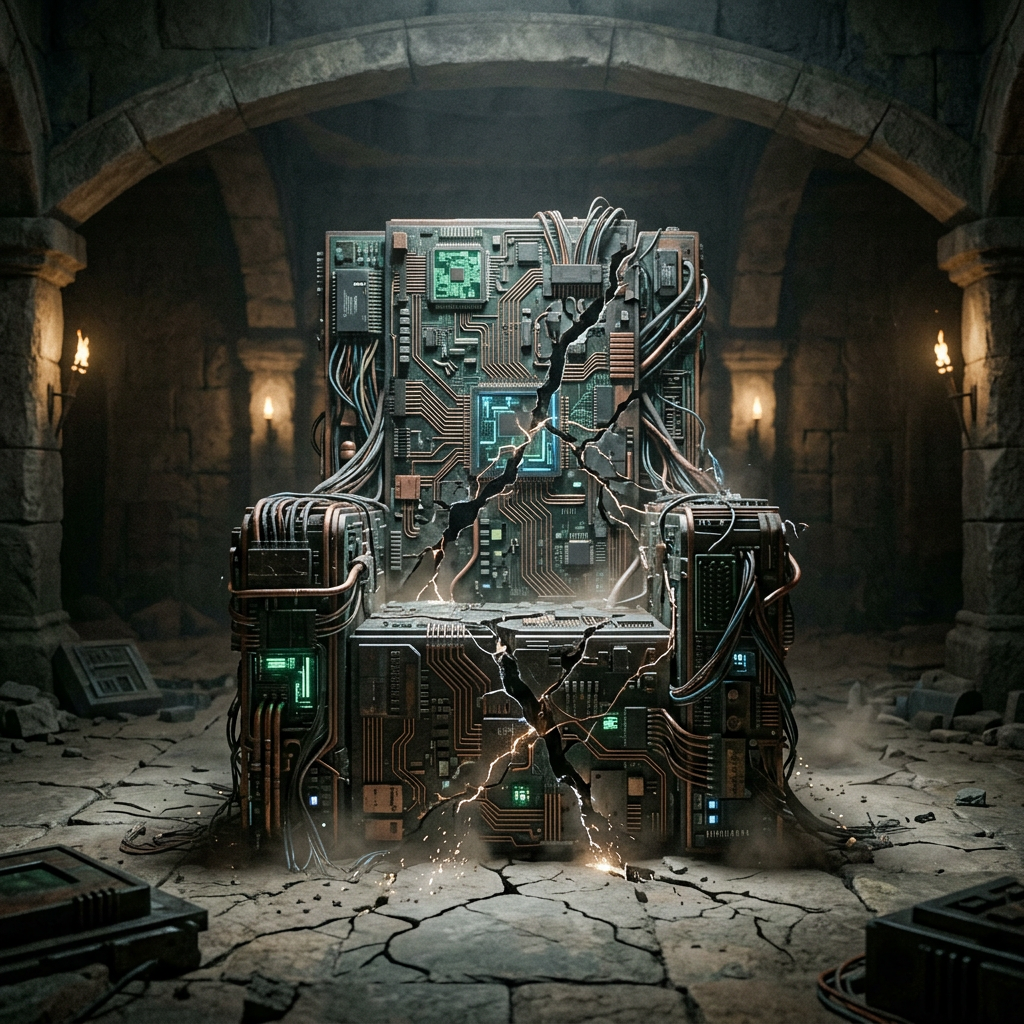
In the shimmering haze of the digital age, we have long suspected that invisible forces govern our online lives. Algorithms—silent, cold, and calculating—have risen to become the true arbiters of our reality. They decide what we see, what we know, and even how we feel. But now, a long-foretold moment is upon us, a reckoning hidden in the very code that runs the world. The veil has been lifted, and the judgment of the algorithmic kings is revealed. This is the story of their unmasking and the final verdict that reshapes our understanding of power.
The Iron Cipher Opens to Judge the Kings
For years, these algorithmic rulers operated from behind an iron cipher—a fortress of complex code and proprietary secrecy that made them virtually untouchable. They were the kings of digital kingdoms: the recommendation engines that trapped us in endless loops, the sorting systems that graded our worth, and the prediction models that profiled our futures. But a new era of transparency has dawned. Through collaborative audits, open-source watchdog projects, and regulatory sunlight, the cipher has cracked.
The judgment is not a single event but a continuous process. We now see these systems for what they are:
- Flawed by design: Many are trained on biased data, reflecting historical inequities.
- Unaccountable by nature: Their decision-making paths are often invisible, denying users the right to an explanation.
- Self-serving in purpose: They prioritize platform engagement over user well-being.
> “The first step to dethroning a king is to reveal that he wears no clothes—or in this case, that his code is riddled with bias.” — Anonymous Data Ethicist
This revelation forces us to ask: Who really benefits from these systems? The answer is rarely the end user.
Algorithmic Rulers Stripped of Their Data Cloak
With the iron cipher opened, the next stage of judgment involves stripping these rulers of their most powerful weapon: their data cloak. This cloak was woven from our own interactions—every click, scroll, pause, and purchase. It allowed algorithms to know us better than we know ourselves, creating a god-like perspective that was then used to manipulate us.
The stripping of this cloak reveals what was always there:
- Profiles of exploitation: Your data has been used to predict your vulnerabilities.
- Echo chambers constructed: You were shown only what reinforced your existing beliefs.
- Rapid feedback loops: Systems that pushed content to elicit extreme reactions.
The key insight here is that the algorithm does not care about you—it cares about pattern completion. When stripped of this cloak, the emperor has no clothes. We see that these kings are not wise, but merely efficient at extracting attention.
Molten Encryption Reveals Hidden Digital Thrones
The most shocking part of the judgment is the revelation of the hidden digital thrones. These algorithms were not isolated tools; they were connected in a vast, molten network of encryption and shared data. Like lava flowing under a cool crust, their real power was hidden beneath layers of protection. The judgment melts this encryption, exposing the thrones where power actually sits.
What do we find?
- Interconnected monopolies: Major tech platforms share data and algorithms, creating a unified ruling class.
- Privileged access points: Certain users and corporations get to bypass the rules, while others are strictly policed.
- The silence of the engineers: Those who built the thrones often remain anonymous, shielded from responsibility.
This exposure is liberating. It shows us that the system is not magic; it is a constructed hierarchy. When you can see who sits on the throne, you can finally choose to whom you owe your allegiance—or rebellion.
The Unmasking of Power Behind the Code
The judgment culminates in the final unmasking of the power behind the code. This is not about a single algorithm or a single company. It is about the philosophy of automated governance itself. The algorithmic kings ruled because we allowed them to operate in the shadows, believing their decisions were neutral.
The unmasking reveals:
- The myth of objectivity: Algorithms are never neutral; they always reflect the values of their creators.
- The erosion of agency: We became passive consumers, not active participants.
- The cost of convenience: We traded privacy and autonomy for free services and seamless experiences.
The final verdict here is that we must reclaim our role as the true judges. Not by destroying technology, but by demanding it serve humanity, not the other way around. The power behind the code is ultimately our collective will to enforce ethics, transparency, and accountability.
Rust-Light Scroll Delivers the Final Verdict
As the dust settles, we find a rust-light scroll—a document of age and wisdom, flickering in the twilight of this digital revolution. This scroll delivers the final verdict, written not in code but in clear, inarguable truth.
The verdict reads:
> The algorithmic kings are found guilty of governance without consent. Their sentence is not destruction, but reformation.
This means moving forward:
- Algorithms must be explainable in plain language.
- Users must have meaningful control over their own data and recommendations.
- Oversight must be continuous, with independent auditors having full access to code and training data.
The final verdict is a call to action. We are not powerless subjects. We are the will behind the code. The rust-light scroll reminds us that the iron cage of algorithms can be unlocked, but only if we hold the keys of critical awareness and democratic participation.
Conclusion
The judgment of the algorithmic kings is a mirror held up to our own society. Their flaws are our flaws; their power is our delegation. By revealing the iron cipher, stripping the data cloak, exposing the hidden thrones, and unmasking the power behind the code, we have learned a vital lesson: no king should rule without consent, and no algorithm should judge without accountability. The revelation is complete, and now the work of building a just digital kingdom begins—with every one of us as the sovereign.
Leave a Reply