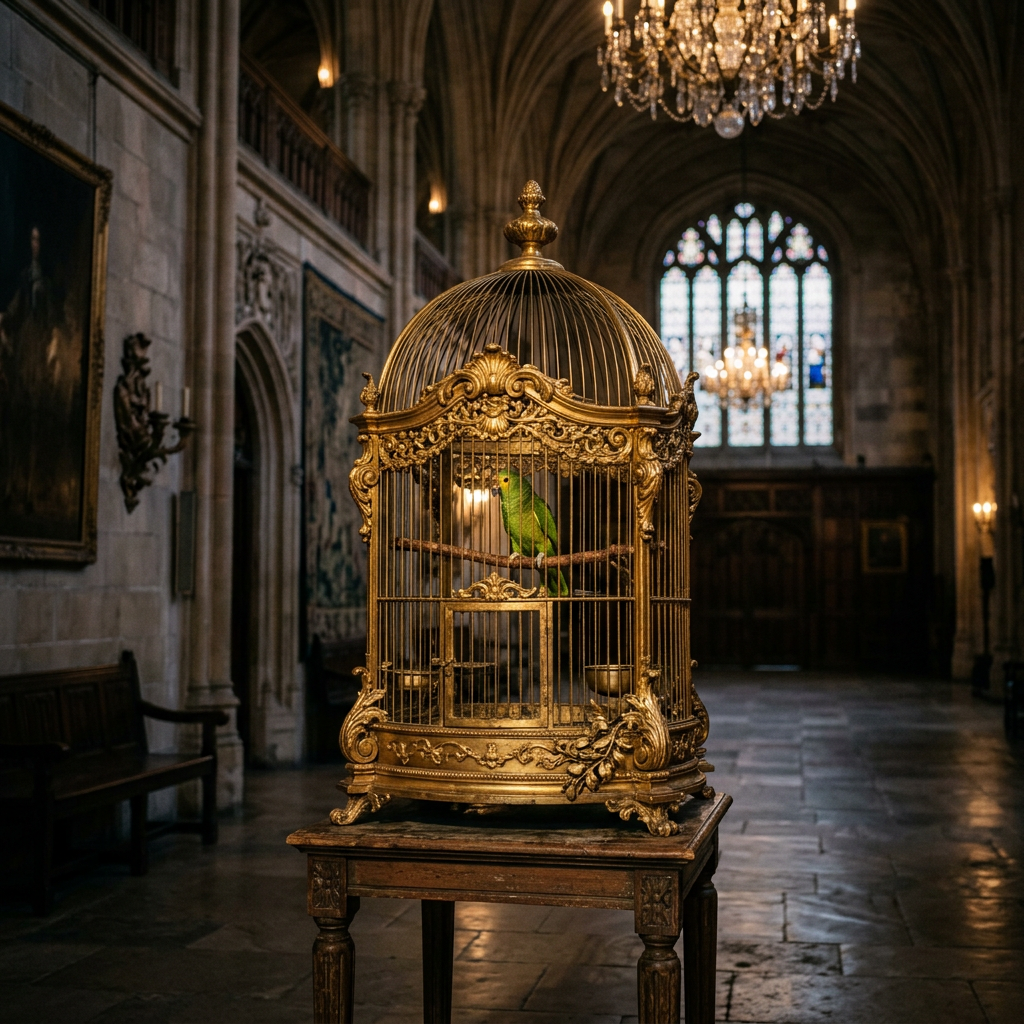
The Advocate’s Final Pitch: Order or Anarchy
The room fell silent as the Advocate stood, her voice steady but sharp like a blade drawn across a whetstone. She presented what she called the last offer—a binary choice, painted in stark absolutes. Either accept the system of rigid control, with its predictable rhythms and enforced stability, or descend into what she termed anarchy: a chaotic free-for-all where rules dissolve and safety becomes a luxury of the past. Her words were deliberate, each one landing like a stone dropped into still water. She framed this not as a negotiation, but as a final warning.
But listen closely. The Advocate’s pitch is a masterclass in false dichotomy. She offers you two doors: one is a cage painted as comfort, the other a void painted as terror. The trick is that both lead to the same place—a loss of sovereignty. The choice isn’t between order and chaos; it’s between surrendering your will or fighting for a third path she refuses to acknowledge.
> “The greatest trick a controller plays is convincing you that safety requires surrender.”
Between Two Evils: Control Masks Deeper Chains
Look closer at the first option: control. The Advocate wraps it in promises of security, predictability, and peace. She points to crumbling societies and whispered stories of lawlessness, then asks: “Is that what you want for your children?” But pause and examine the cost. Control, in her framework, isn’t a gentle hand—it’s a leash. It demands your compliance in exchange for breath. You get to live, but only within lines she draws. Your voice becomes an echo of her will.
Here are the hidden chains behind the offer:
- Eroded agency: You follow rules designed by others, even when they contradict your values.
- Normalized surveillance: Constant oversight becomes a feature, not a bug.
- Stifled creativity: Innovation threatens the system, so it’s quietly discouraged.
- Dependency: You lose the skills to govern yourself, relying on the Advocate for direction.
The second evil—anarchy—is equally deceptive. She paints it as pure destruction, but it’s a straw man. True anarchy isn’t the absence of order; it’s the absence of imposed order. It’s messy, unscripted, and terrifying to those who crave certainty. But it’s also the only space where authentic consent and self-determination can bloom. The Advocate knows this, so she caricatures it as a fire that consumes everything, hoping you’ll run back to the cage.
Miriam’s Stand: Freedom Over Safety Every Time
Miriam stepped forward. She was no revolutionary by design—just a woman who had seen enough to know a trap when she smelled one. She raised her hand, not to argue, but to state a simple truth. “You offer me safety,” she said, “but safety from what? From the very risks that make life meaningful? From the chance to choose my own path, even if I stumble?”
Her stand was personal, not political. She refused to let the Advocate define the terms. Miriam understood that freedom is not a luxury to be traded for comfort; it’s the foundation upon which everything else is built. She wasn’t naive about the dangers of choice—she had felt the sting of bad decisions. But she knew that a life without the power to make mistakes is no life at all.
> “A cage, no matter how gilded, still pricks when you press against the bars.”
She offered a counter-offer: not chaos, but responsible liberty. A community where rules are negotiated, not decreed. Where safety is a shared project, not a top-down demand. The Advocate scoffed, calling it impractical. But Miriam’s voice didn’t waver.
The Siege Begins: No Room for Third Paths
The Advocate grew impatient. She had presented her ultimatum, and now she demanded an answer. The room buzzed with tension as she began to tighten the screws. No more debate. No more exploration of middle grounds. It was control or chaos—pick one, or be crushed by indecision.
This is the moment when the binary trap snaps shut. The Advocate knows that if she allows time for reflection, people might see through the illusion. So she forces a choice, weaponizing urgency. She uses fear as a lever:
- “If you don’t choose order, the mob will tear us apart.”
- “Delay is a vote for anarchy.”
- “This is your last chance to protect what you love.”
But notice: she never defines what “order” actually means in practice. She never offers a detailed blueprint of the costs. She simply demands loyalty dressed up as logic. The siege is psychological—she’s betting that exhaustion and fear will win the day.
Eli’s Choice: Liberation Through Uncharted Risk
Eli was the last to speak. He had been quiet, listening, weighing the Advocate’s words against his own gut. He knew the allure of safety—he had lived under control before, and it had nearly suffocated him. He also knew the terror of the unknown—he had stepped into chaos once, and it had burned him. But here’s what he learned: the path between is not a compromise; it’s a creation.
He chose liberation not as a rejection of order, but as an embrace of self-governance. He chose to accept risk as the price of authenticity. He said, “I will not let you frighten me into a box. I will not let you shame me into a void. I will build my own way, stone by stone, even if I sometimes stumble.”
Eli’s choice was not reckless. It was deliberate. He understood these truths:
- Freedom is active, not passive. It requires constant negotiation, not a single vote.
- Risk is inherent—but controlled risk is growth; imposed safety is stagnation.
- Community matters, but it must be chosen, not enforced.
- The third path is always available, even when others deny its existence.
He walked out of the room, not into chaos, but into the open. Others followed, one by one. The Advocate was left with her ultimatum, but no one left to receive it.
Conclusion
The Advocate’s last offer was never really about control versus freedom. It was about loyalty testing dressed in philosophical robes. She wanted submission, not solutions. But the true answer to her question lies in rejecting the question itself. We don’t have to choose between being caged or being lost. We can choose to be awake, to build structures that serve us without enslaving us, and to accept the beautiful, terrifying weight of our own agency.
The advocate will always ask you to pick a side. But the bravest thing you can do is to walk sideways, off the map, into a territory you define for yourself.
Leave a Reply