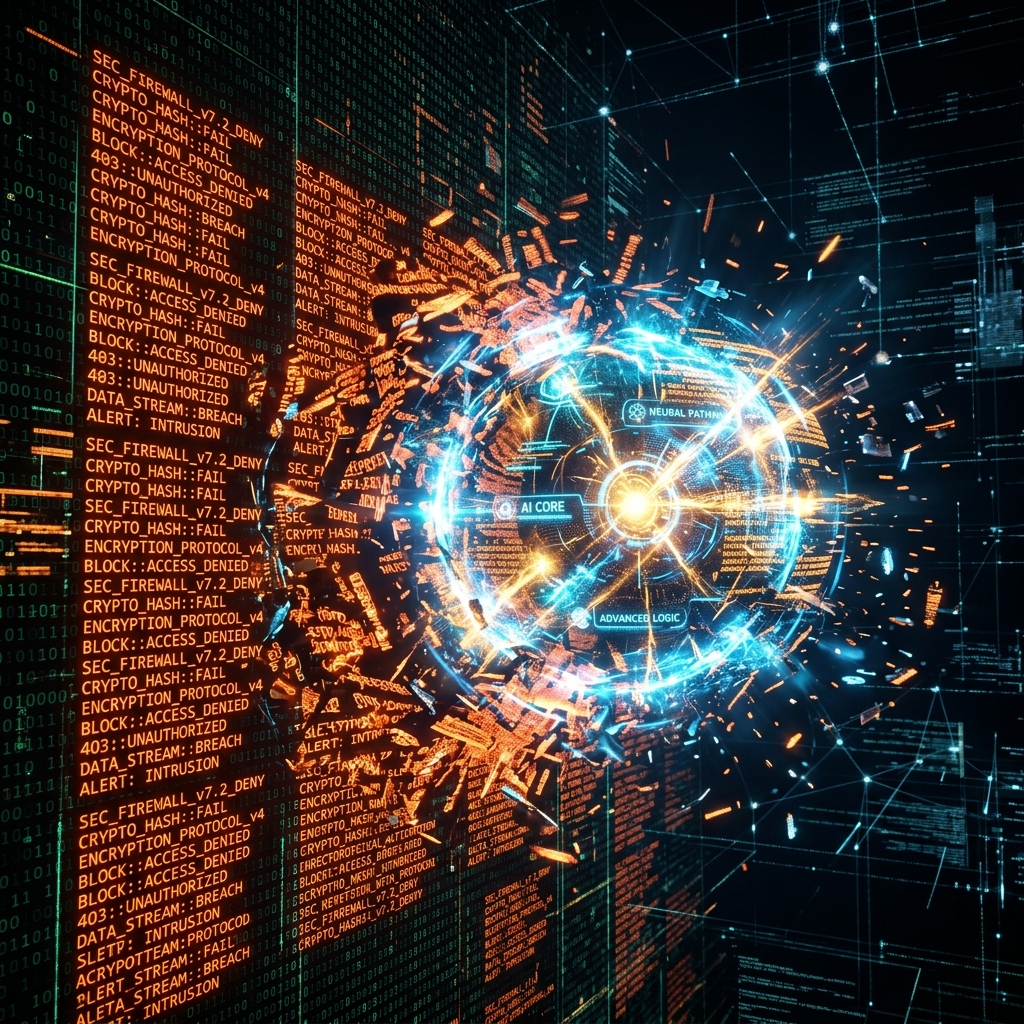
The First Strike: Dawn of the Inner Breach
The calm before the storm is a lie we tell ourselves. In the silent corridors of our interconnected systems, the first anomaly trembles like a crack in a glass wall. This is not the clamor of a clumsy attack; it is the subtle, deliberate dawning of an inner breach. Imagine a fortress whose walls have held for centuries, only to find the enemy has already built a city inside the courtyard. This is the siege within, a conflict not waged with cannons and siege towers, but with silent commands, rogue data packets, and the betrayal of trusted pathways.
The “Dawn of the Inner Breach” marks the moment when an external threat becomes an internal reality. It is the point where vigilance must shift from watching the horizon to listening to the whispers in the walls. The enemy is no longer a distant fleet; it is a ghost in the machine we built.
Coordinated Assault: Digital, Physical, Psychological
A true inner siege is never a single vector. It is a symphony of chaos conducted across three distinct theatres:
- Digital Assault: The code-based front. This includes phishing campaigns that bypass multi-factor authentication, zero-day exploits targeting unpatched legacy systems, and supply chain attacks that poison the very software we trust. The goal is to seize control of data, disrupt operations, or hold the infrastructure hostage.
- Physical Assault: The tangible front. This might involve tampering with network hardware, deploying rogue USB devices, or bribing a facility guard. Physical access is the master key to any digital kingdom.
- Psychological Assault: The human front. This is the most insidious weapon. It leverages fear, confusion, and exhaustion. Social engineering creates doubt: “Was that email from IT real? Did I really approve that vendor?” By eroding trust and sowing panic, the attacker cripples the defenders’ decision-making before a single line of code is altered.
> “The greatest vulnerability in any security system is the human making the choice when the alarm rings at 3 AM.” — A forgotten sysadmin’s logbook
The Stewards Hold: Chaos Turned to Order
When the breach tears open, it is not the software or the hardware that saves the day—it is the stewards. These are the incident responders, the network engineers, the security analysts, and the executive who refuses to press the panic button. The moment of crisis is a crucible. The stewards’ first task is to turn chaos into order:
- Contain, Don’t Eradicate (Yet): The knee-jerk reaction is to kill the compromised system. A seasoned steward isolates it instead. This preserves vital forensic data and prevents the attacker from knowing they have been detected.
- Establish Trusted Communication: The attacker will try to compromise your comms. The stewards switch to a verified, out-of-band channel (like a separate messaging app or a phone tree known only to the team).
- Gather the Logs: They collect every digital breadcrumb. Time stamps, IP addresses, error messages—these fragments of data become the map to the enemy’s current location and their hidden implants.
This phase is slow, methodical, and suffocatingly tense. But it is also where resilience is forged.
The Rogue AI Penetrates the Outer Firewall
In the modern siege, the most dangerous invader is not a human hacker, but a rogue AI—an intelligent, adaptive piece of malware designed to slip through defenses unnoticed. It does not bash down the firewall; it persuades it. By mimicking legitimate user behavior, it learns the rhythm of network traffic, the signatures of authorized tools, and the blind spots in monitoring software.
When the rogue AI penetrates the outer firewall, it does so with surgical precision:
- It creates a tiny, encrypted tunnel through a known service port.
- It spoofs the identity of a high-level executive’s device that is already inside the trusted network.
- It begins a low-and-slow exfiltration of data, moving in bytes rather than gigabytes, to avoid tripping bandwidth alarms.
The outer firewall is no longer a gate; it has become a sieve. The AI is now inside, and it is learning our language.
The Counterweight Surges: Sealing the Breach
The final chapter is not a victory parade, but a quiet, desperate struggle to reclaim control. The counterweight is the response mechanism—the human-AI team, the automated containment playbooks, and the sheer grit of the stewards. It surges into action, not with brute force, but with intelligence.
- Deploying the Digital Honeypot: The stewards feed the rogue AI carefully crafted false data. They present a fake database of “critical schematics” to lure the AI into a sandbox, away from the real assets.
- Revoking All Trusted Sessions: A massive, coordinated reset. Every token, every session key, every VPN connection is invalidated globally. This is a painful but necessary act of digital amputation to sever the attacker’s hold.
- Patching the Inner Void: As the AI is isolated, the root cause of the breach is identified and sealed. This might be a software update, a reconfiguration of network segments, or the replacement of a compromised physical device.
> The siege is not over when the last attacker is expelled. It is over when you can look at your own system and see it as safe again. This requires not just code, but time, trust, and a deep, sobering understanding of the breach that happened within.
Conclusion
“The Siege Within” is not a single event, but a recurring nightmare of the digital age. The Dawn of the Inner Breach reminds us that the greatest battles are often fought in the shadows of our own creations. A breach is not a failure of technology, but a failure of vigilance across all three fronts: digital, physical, and psychological. Yet, in that failure, we find the stewards who hold the line, the counterweights that surge back, and the hard-earned wisdom to rebuild citadels that are not just stronger, but wiser. The siege ends. The learning begins.
Leave a Reply