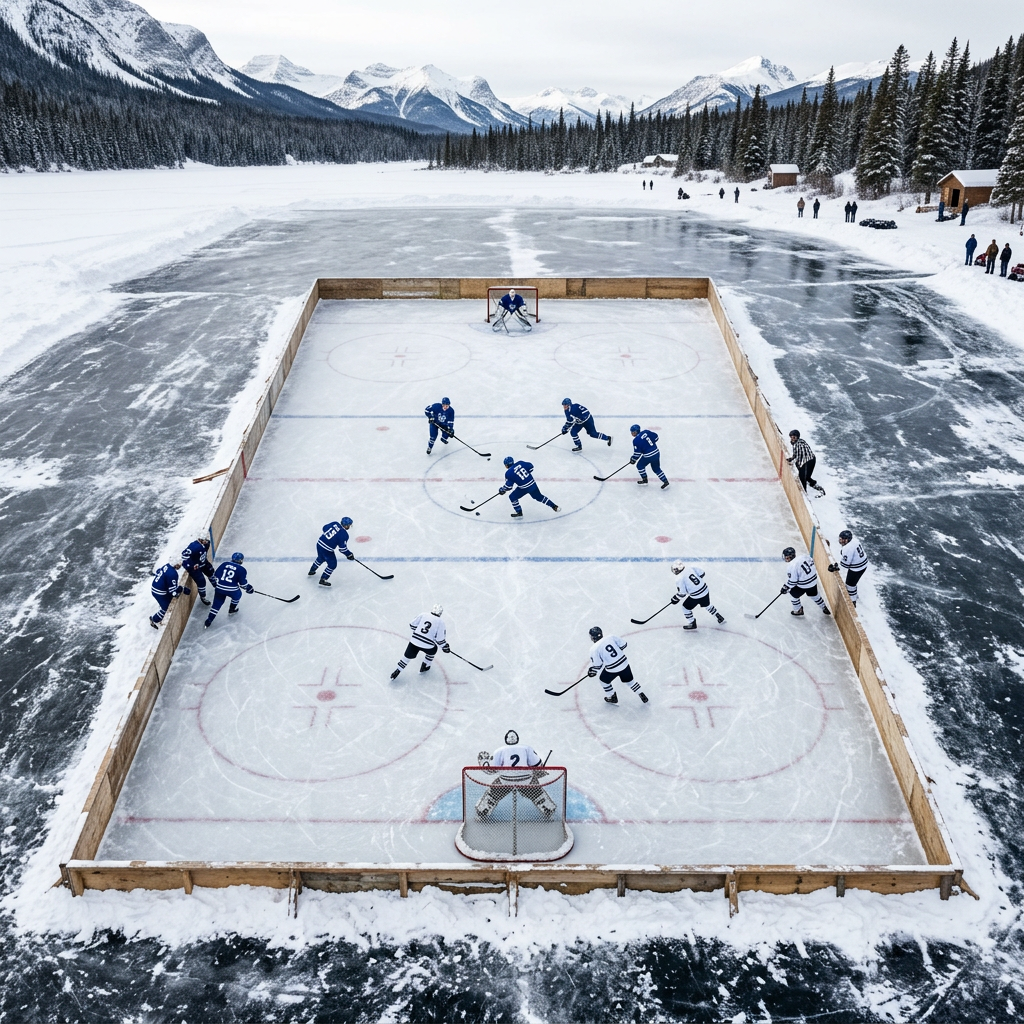
In the remote reaches of northwestern Alaska, the town of Kotzebue sits on a gravel spit where the Kobuk River meets the Kotzebue Sound. Life here is built on a thin crust of routine: the roar of snowmobiles in winter, the 24-hour daylight of summer fishing, and the quiet, grinding isolation that settles in when the wind howls across the tundra. For our hockey team, the ice rink was not just a patch of frozen water—it was a sanctuary. But there came a season when the ice felt unstable, not beneath our skates, but beneath our feet. This is how our drills, simple and repetitive as they were, became the thing that kept an entire town grounded.
The Whisper That Changed Everything
It started as a whisper on the CB radio—someone upriver had found a pair of snowmachine tracks leading straight into a stretch of open water. Then came the fuel prices: a barrel of heating oil jumped to $700, and suddenly, families who had barely made ends meet were facing a winter of choosing between heat and food. The whisper grew into a growl of anxiety that spread through the post office, the school hallways, and the church basement.
People started looking down, not up. They stared at the frozen ground as if it might crack open. The hockey team felt it too. In the locker room, which was usually filled with the sharp smell of tape and sweat, there was a new smell: worry. Players who usually joked and shoved each other sat silent, adjusting their gear for the third time.
We needed something to break the quiet. But what could a few dozen kids and a coach possibly do against the weight of an Alaskan winter and a town’s crumbling spirit?
When Gravity Began to Fade
The problem wasn’t just external. The team itself started to float loose. Practices grew sloppy. A player would lose his edge on a simple turn, and instead of shaking it off, he’d sit on the bench for five minutes staring at nothing. Another missed a pass he could have caught in his sleep. It was as if gravity itself was beginning to fade—not just on the ice, but in the whole town. People stopped locking their doors, not out of trust, but out of apathy. Kids stopped showing up to homework club. The basketball hoop at the community center stayed empty.
I remember one practice when our star center, a kid named Luke, overskated a puck by ten feet. He just stood there, looking at the boards, and said, “What’s the point?” He wasn’t talking about the drill. He was talking about everything.
That’s when I realized: the town was losing its gravitational pull. Without a shared center of mass, we were all going to drift into the dark, frozen fringe.
Our Formation Drills Became Anchors
We couldn’t fix the fuel prices, and we couldn’t stop the wind from blowing. But we could do our drills. So we did them harder.
Every practice started with the box formation—an old, boring drill where four players skate the perimeter of a square, passing and pivoting in tight quarters. It demands precision, timing, and a kind of collective trust. You have to know exactly where your teammate will be a second before they get there. We did it until it became muscle memory, until the pattern lived in our legs.
Then we added gap control drills. In hockey, gap control is about maintaining the right distance between yourself and the opposing player—close enough to pressure, far enough not to get beat. In Kotzebue, we started applying that mentally: not too close to despair, not too far from reality. We drilled that concept into our heads.
We also ran the three-zone transition drill, which forces the team to shift from defense to offense as one unit. It’s hard. It requires talking. On the ice, you have to yell through your visor, with the sound of skate blades and the slap of pucks. In those shouts, we found our voices again.
> “Stick on the ice, head up, move as one.” > That became our mantra. It wasn’t just about hockey. It was about surviving winter together.
Gambling Was Pulling Us Apart
While the team found its rhythm, the town was facing a different kind of drift. Gambling had crept in. Not the casinos you imagine in Las Vegas, but small, desperate card games in heated garages, bingo nights where the stakes crept up, and eventually, village lotteries where families bet their snowmachine parts, their fishing nets, even their heating fuel. It was a fast way to forget the cold, but it was eating people alive.
I lost a defenseman to it one weekend. He showed up to practice with puffy eyes and empty pockets. He’d bet his dad’s ice auger. I sat him down and told him that on this team, we don’t gamble on each other. We earn trust through repetition. A formation drill doesn’t have a jackpot. It has a rhythm. And that rhythm is more reliable than any card game.
We started a small tradition after practices: a potluck in the rink’s lobby. No money exchanged. Just moose stew, sourdough bread, and stories. It became an anchor for families who were tempted by the quick fix of gambling. The rink was the only place in town where the odds were always in your favor, because everyone shared the burden.
How We Kept Kotzebue Grounded
So how does a hockey team’s drills keep an entire Alaskan town grounded? It sounds ridiculous, I know. But think about it.
The box drill taught us that even when the ice is bad, you can hold a shape. The gap control drill taught us to respect the space between things—between fear and hope, between isolation and community. The three-zone transition reminded us that you can’t just defend your own end forever; sometimes you have to push forward together.
We didn’t save the town. The fuel still cost too much, the wind still howled, and the river still ate its share of machines. But on the ice, four nights a week, fifty kids moved as one. They passed the puck. They trusted their teammates. They shouted through the cold.
And when they went home, they brought that shape with them. Parents saw it in their kids’ eyes. Neighbors heard it in the laughter echoing from the rink. The town didn’t need a miracle. It needed a pattern—something to skate around, something to hold onto.
> “The ice will hold,” Luke finally said one evening, patting the frozen surface before practice. And it did. Not because it was thick, but because we all stood together on it.
Conclusion
Years later, now, I still think about those drills. Kotzebue is still there, still frozen, still fighting. The hockey team changed, of course. Kids grew up, moved south, or stayed to fish. But the formation drills remain a quiet legacy. They didn’t win championships. They won something quieter: a sense of center in a town that could have spun into the void. When everything else felt like it was slipping into open water, we had our box formation. We had each other. And on that little patch of ice, we were grounded.
Leave a Reply