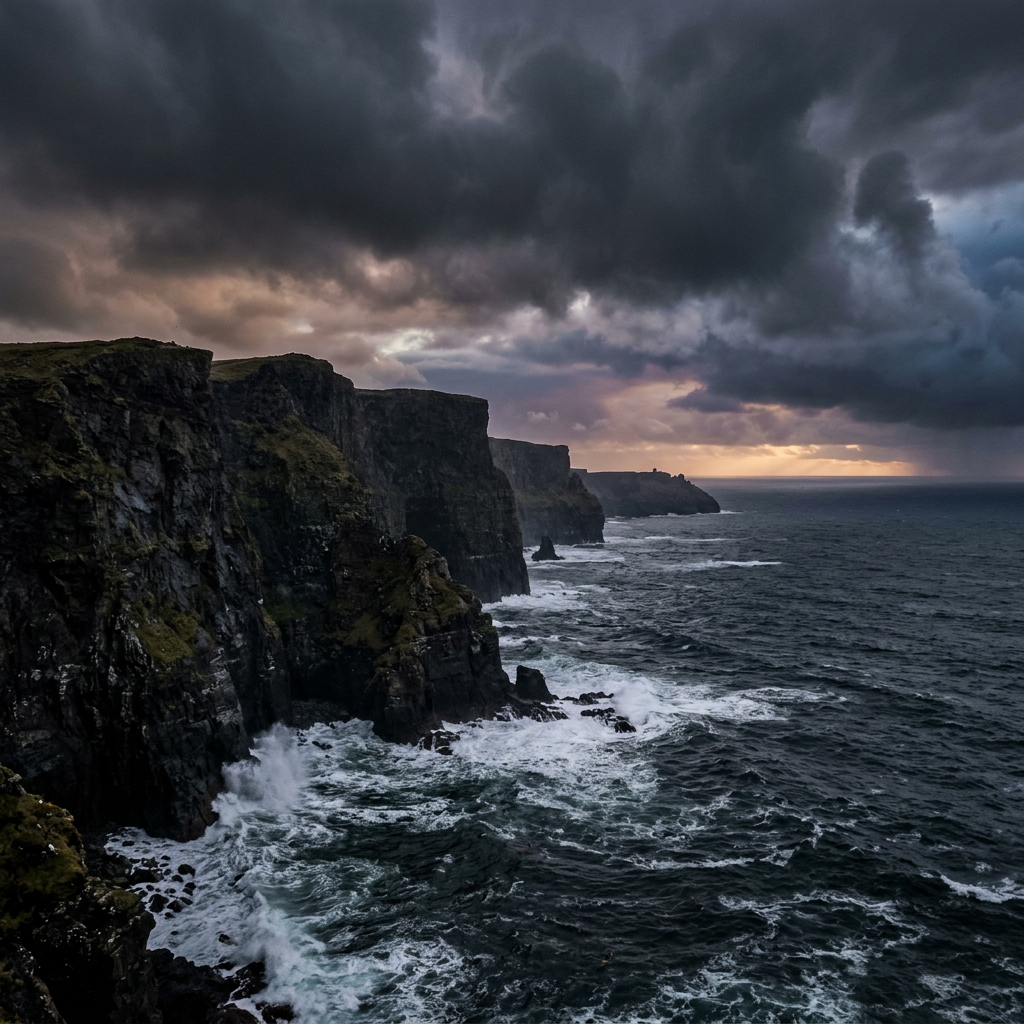
Living on the southern edge of the world, where the Tasman Sea meets the Southern Ocean, Stewart Island is a place where the sky feels heavier than anywhere else. There’s no grand cataclysm—just a slow, creeping dread that the heavens are sagging lower each day. For the small community that calls Rakiura home, this isn’t a metaphor for bad weather. It’s the very real weight of isolation, economic fragility, and the quiet erosion of hope. Over the years, we developed what we called the Stewart Island Drills—a set of practices to push back against that descending firmament.
The Weight of Invisible Pressure
The pressure on Stewart Island isn’t visible like a storm cloud. It’s the silence of a satellite phone that won’t ring, the groan of a cargo ship delayed by a week, or the knot in your stomach when the last tourist ferry leaves for the season. This invisible pressure is the accumulation of small anxieties—the cost of living climbing faster than the fishing quota, the medicine that costs triple in the mainland, and the steady trickle of young people leaving for jobs that pay in real currency.
> “The sky doesn’t fall all at once,” old Angus used to say. “It settles on your shoulders like a wet tarpaulin. You either learn to lift or you get buried.”
This weight manifests in two silent epidemics: chronic insomnia and a peculiar form of cultural despair. People don’t talk about it openly—that would be un-Stewart Island. Instead, they drink, they gamble, or they retreat into their work. The drills we developed weren’t about saving the world; they were about saving the next hour.
Drills That Braced Us for Collapse
The Stewart Island Drills are not official government protocols. They are grassroots survival habits passed between neighbors, tested by time, and hardened by experience. Here are the key practices:
- The Morning Sky Check: Every dawn, walk to the highest point on your property. Look east, not west. If the horizon is clear, recite one thing you are grateful for aloud. This reorients the brain away from scarcity.
- The Three-Point Anchor: Identify three concrete things in your immediate environment that will not change: a familiar rock formation, a family photograph, a dog that always wags its tail. When the sky feels ready to crash, mentally touch these anchors.
- The Silent Watch: Once a week, sit alone in complete darkness for 15 minutes—no phone, no light, no noise. This recalibrates your internal barometer against manufactured urgency.
- The Bucket Brigade: Actively share one resource (food, tools, advice) with a neighbor every Wednesday. This builds a web of invisible support that counteracts isolation.
> Key Tip: Do not delay these drills until you feel the weight. Practice them when the sky is high and clear. Muscle memory works for the soul too.
The most critical drill is the Rakiura Reset. When the pressure peaks—after a shipwreck, a failed season, or a community tragedy—everyone stops at a designated hour. Lights go out. For one minute, the island falls silent. Then, someone rings a bell from the old whaling station. This shared pause reminds us that the sky has not actually fallen—yet.
How Gambling Lowers the Sky
Despite our resilience, a dark undercurrent threatens to pull the heavens down faster than any storm. Gambling arrived on Stewart Island like a slow leak, invisible until the floor is soaked. It started with harmless pub pokies and weekend card games. Then came online sports betting, accessible on any phone. The drill-resistant community found a new enemy.
Gambling operates by shrinking your future. Every bet you place turns a hopeful “maybe” into a desperate “must win.” It lowers the sky because it replaces agency with chance. Instead of holding up your own piece of the sky—through hard work, community ties, and patience—you hand the rope to a slot machine or a betting algorithm. The sky then drags lower, faster.
I remember watching Barry, a good fisherman, lose his boat equity in three nights of online blackjack. He told me, “The sky felt so heavy anyway. Gambling was the only time I felt light.” That lightness is a lie. It’s the sensation of dropping your load rather than bearing it. The heaviness doesn’t disappear; it just redistributes—onto your family, your debts, and your community.
Contrast this with the drills: the drills ask you to stand upright, shoulders back, and hold. Gambling asks you to kneel and hope for a lucky star. One strengthens your spine; the other hollows it.
Holding the Unseen Together
So how do you physically hold up something as vast and formless as a sky? The answer, we learned on Stewart Island, is that you don’t hold the whole thing. You hold your five-inch patch. That is, you focus on the area directly over your head and your immediate circle. If everyone holds their own patch, the collective fabric tightens and the whole sky rises.
- Patch 1: Your Body — Sleep, eat whole food, walk the coastline. A strong body is the first pillar.
- Patch 2: Your Threshold — Keep your home clean and repaired. A leaky roof invites the sky to seep in.
- Patch 3: Your Craft — Whatever you do, do it with meticulous attention. Meat processing, guiding tours, repairing nets—quality work pushes back entropy.
- Patch 4: Your Word — Say what you will do, and do what you say. Trust is the mortar between the patches.
- Patch 5: Your Silence — Guard your quiet moments. They are not empty; they are structural.
Holding the unseen together means accepting that most of your effort will be invisible. No one applauds the pillar. But when the sky sags, you feel who held and who didn’t.
> Important Tip: If you cannot hold your patch, ask for help immediately. Holding is not solitary. The drills work because they connect patches.
What Stewart Island Taught Us
After decades of these drills, Stewart Island has earned a hard-won wisdom. We learned that the sky is not an indifferent force; it is responsive to human cooperation. When we stand together, hands raised, it lifts. When we divide and despair, it descends.
Here is what we pass on:
- The sky never falls on everyone at once. It picks the isolated, the exhausted, the gamblers. Community is the best shield.
- Drills are not optimism. They are more important than optimism. They are action in the face of uncertainty.
- The thickest clouds carry the most rain. But also the most nutrients. Even the heaviest sky can feed the ground.
- Gambling is a shortcut to collapse. It dissolves the very fabric of holding. Stay away.
- You do not need to see the whole sky. You only need to see your patch.
We are not heroes. We are people with cold hands and warm hearts, practicing the same drills year after year. The sky still sags sometimes. But now, when it does, we don’t panic. We walk to our high points, check the horizon, touch our three anchors, and remember the bell.
Holding sagging skies is not a one-time victory. It is a daily practice. And on Stewart Island, we have the drills to prove it.
Leave a Reply