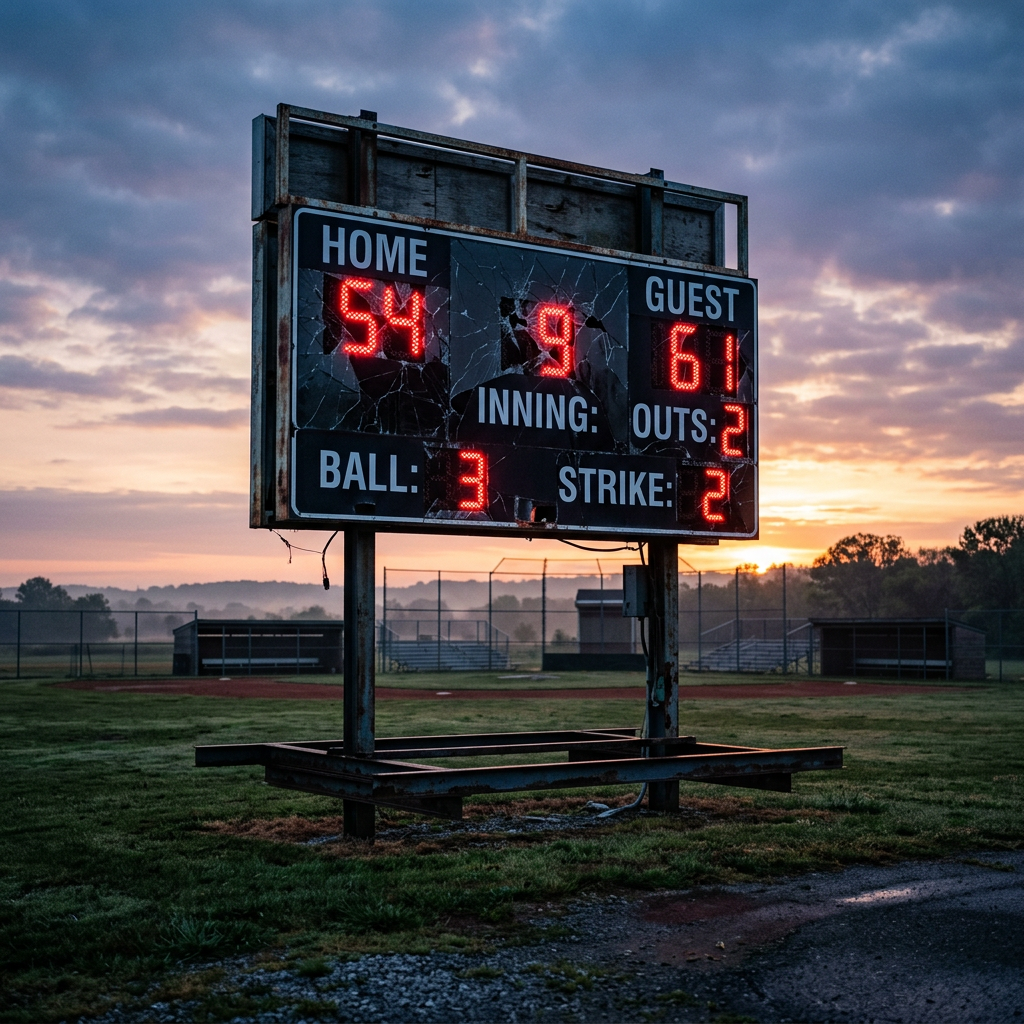
When the Scoreboard Cracked at Dawn
It happened so quietly that most of us didn’t notice at first. The scoreboard above the gymnasium flickered, then went dark for a split second before rebooting. That was the morning of the town council’s vote on the new zoning ordinance—a decision that, on paper, was about where to put a new shopping center. In reality, it was about something far deeper: the invisible boundary that had been growing between my neighbors for decades.
The crack on the scoreboard wasn’t a hardware failure. It was a symptom. That glowing rectangle, once a symbol of shared triumph at Friday night basketball games, had become a mirror reflecting our fractured community. Old-timers who remembered when the hardware store was a meeting place suddenly stopped talking to families who had moved in from the city. The school board meetings grew tense, then hostile. The diner’s two-tone seating arrangement wasn’t accidental; it was deliberate.
The Phantom Map No One Had Uploaded
I didn’t realize how deep the fault line ran until I saw a map that didn’t exist on any official document. A friend of mine, a GIS technician, showed me a heat map of our town based on emergency call patterns. The data was stark: ambulance dispatches, noise complaints, and even school bus delays clustered into two distinct zones separated by a single winding street. It wasn’t just opinions that divided us; it was infrastructure, funding, and access.
The phantom map revealed three key fractures:
- Sidewalk gaps that left one half of town walkable and the other dependent on cars
- School district feeder patterns that funneled children into vastly different quality of education based on a few hundred feet of address
- Internet speed disparities where one side enjoyed fiber optics while the other relied on dial-up in 2025
None of these were accidental. They were the result of decades of decisions made in rooms most of us never entered. The map showed a town where your zip code determined your doctor, your grocery store, and your child’s future. It was a phantom because no committee had ever voted to create it. It grew like ivy, slowly and silently.
How a Glowing Fracture Split Our Town
The scoreboard became the metaphor we couldn’t escape. At a crucial game against our rival county, the home team was winning by two points. Then the scoreboard froze. The visiting team’s fans cheered, claiming we had manipulated the timing. Our fans shouted back. Within minutes, the shouting turned to shoving. The game was called off.
But the real game was already being played in the digital arena. A local entrepreneur had installed a smart scoreboard app that let fans follow the game from their phones. The problem? The app displayed different stats depending on which side of town you lived in. Algorithms optimized for engagement showed one set of highlights to the east side and another to the west. It wasn’t malicious—just profitable. The algorithm, trained on past behavior, gave each side what it wanted to see. In doing so, it deepened the divide.
We discovered later that the app had no moderation. Anyone could post rumors. A blurry photo from the parking lot was enough to spark a weeks-long feud. The scoreboard had stopped being a neutral scorekeeper and had become a tribal torch.
Training to Heal the Line in Real Time
I joined a group called Recover the Middle, a small band of librarians, retired teachers, and high school students who were tired of the fighting. Our approach wasn’t dramatic. We didn’t hold protests or demand resignations. Instead, we trained ourselves to heal the line in real time.
Here are the methods we developed, which worked far better than any official panel:
- Active listening pairs: We paired residents from opposite sides of the dividing street for 15-minute, timed conversations where the only rule was you couldn’t rebut until you could repeat the other person’s point to their satisfaction.
- Neighborhood data walks: We walked the literal line between zones, taking photos of cracked sidewalks and shiny new crosswalks, and uploaded them to a shared public document. Naming the disparity took away its power.
- Rewriting the map: Students at the local high school created a desire-line map—a map showing where people actually walked, not where roads were built. That map became our primary lobbying tool.
- Scoreboard neutrality: We convinced the school board to donate the old, broken scoreboard to a local museum and replace it with a simpler, human-operated one. No apps, no algorithms, just a volunteer with a whistle and a chalkboard.
The training wasn’t about winning an argument. It was about holding space for the discomfort of being wrong. The most powerful moment came when a retired firefighter and a young activist discovered they both had the same grief—losing a family member to an ambulance delay caused by the very road gaps on the phantom map. That shared grief became a bridge.
What the Coach Meant About Our Future
At the final assembly of the year, the old basketball coach—a man who had coached both sides of the divide without ever asking which side a kid was from—stood in front of the repaired scoreboard. He didn’t talk about wins or losses. He said this:
> “A scoreboard tells you who scored last, not who you are. When you look at this thing, you see numbers. But underneath those numbers is a team. And a team ain’t built on the points you scored. It’s built on the pass you made when no one was looking.”
He was right. His words cut through the noise. The future of our town isn’t in zoning ordinances or fancy apps. It’s in the small, unlogged acts of connection: the shared lawn mower, the block party invitation, the moment you choose to listen instead of correct. We will never agree on everything. The phantom map will never fully disappear. But the crack in the scoreboard taught us that fractures in a community are not permanent lines on a graph—they are invitations. Invitations to look up from our devices, walk across the street, and shake a hand that doesn’t agree with ours.
The new scoreboard is just a board now. And that’s exactly what we need.
Leave a Reply