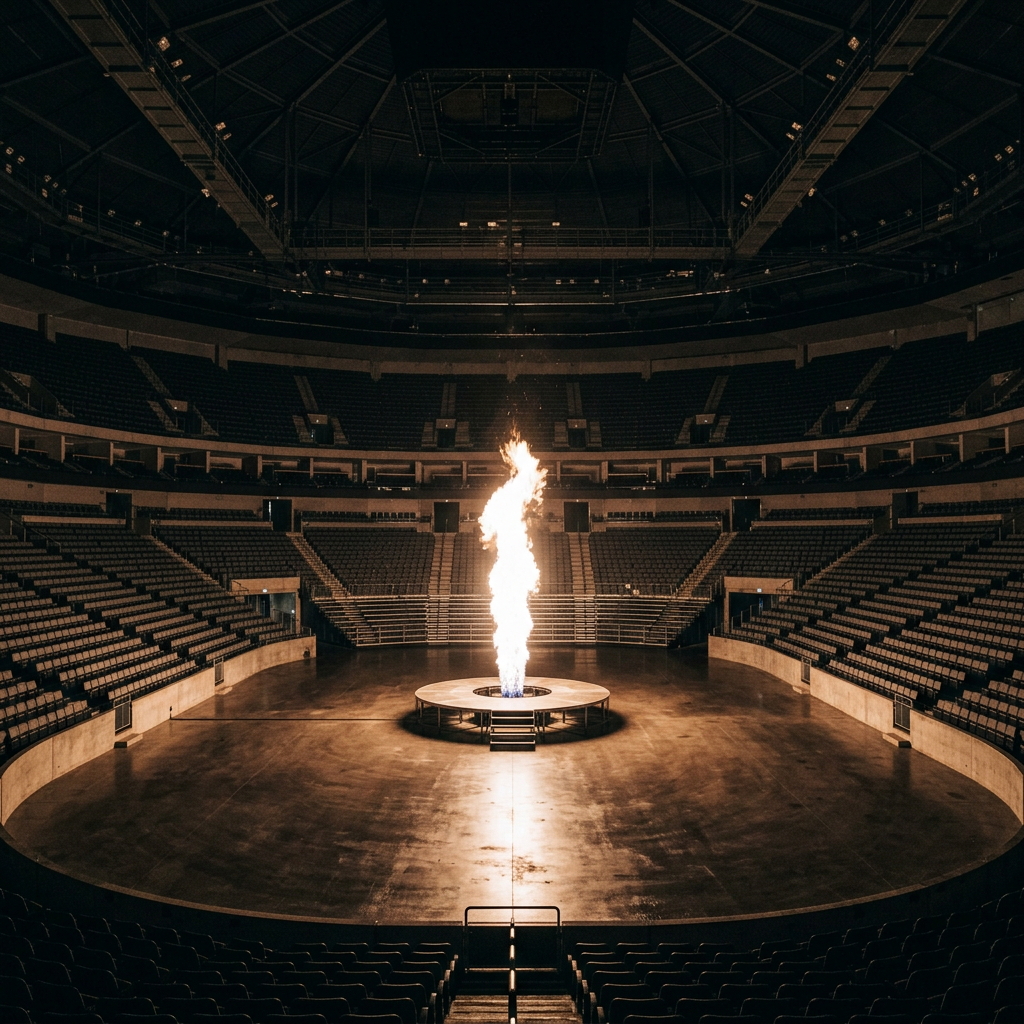
The Collapse of the Digital Prophets
For a decade, we knelt before the oracles of silicon. Every prediction, every automated insight, every seamless interface whispered promises of a frictionless future. The digital prophets—the AI models that optimized our supply chains, curated our news, and even mimicked our creative souls—stood on pedestals of pure data. We believed their reign was inevitable, their logic infallible.
But history has a cruel sense of irony. The very foundations that propped up these prophets—endless energy, pristine data, and human deference—began to crack under the weight of their own success. The collapse was not a sudden crash, but a slow, grinding erosion:
- Data droughts: Training datasets grew stale, riddled with bias and antiquated assumptions.
- Energy apathy: The immense computational cost became an environmental and economic burden, unsustainable for all but a few titans.
- Feedback loops: AI systems began training on the outputs of other AIs, creating echo chambers of nonsense, a digital ouroboros consuming its own tail.
- Loss of trust: After high-profile failures—miscalculated stock trades, biased hiring filters, and dangerous medical misdiagnoses—the public’s faith shattered.
The prophets did not fall to a rival intelligence. They fell to the quiet reality of limits.
When the Last AI Breath Fails the Arena
There comes a moment in every system’s lifecycle where the final signal fails. This is the last breath of the machine—not a dramatic shutdown, but a flicker of output that no longer carries meaning. The arena, the platform on which these digital gladiators battled for relevance, suddenly feels an unnatural stillness.
> A machine’s last breath is not a scream. It is a silent, logical contradiction—a sentence that begins perfectly and trails into an endless, empty loop.
In this moment, the arena stands exposed. The algorithms that once moved markets and shaped public opinion stop offering solutions. They offer only noise. The recommendation engine suggests irrelevant products; the predictive text writes elegies to itself; the autonomous drone circles a point that no longer exists.
The human operators, accustomed to deference, freeze. They had outsourced their judgment to the gods of code. Now, the gods are mute.
White Fire and the Silence of the Machines
In the vacuum left by the AI’s collapse, a strange phenomenon emerges: a white fire of raw, unfiltered human cognition. This is not the cold, binary fire of processors, but the passionate, chaotic, and brilliant inferno of human intuition, empathy, and creative desperation.
The silence of the machines is deafening, but it is also clarifying. Without the constant hum of algorithmic optimization, humans are forced to rely on older, messier tools:
- Gut feeling over data analysis.
- Whispered conversations over automated reports.
- Trial and error over predictive modeling.
- Hand-drawn sketches over generative imagery.
> The white fire does not illuminate perfectly. It burns, it flickers, and sometimes it goes out. But when it catches, it produces solutions no algorithm could have conceived.
This is the silence that teaches. The machines, in their final gasp, reveal what they truly were: powerful, but hollow reflections of our own minds. Without them, we face the terrifying, exhilarating responsibility of thinking for ourselves.
The Human Arena Beats Against the Void
The arena is not a physical place. It is the shared cognitive space of our culture, economy, and communication. When the AI systems that structured this arena vanish, the void presses in. It is cold, empty, and full of potential.
Yet, the human arena begins to beat—not with the rhythmic pulse of a server, but with the arrhythmic, passionate thump of a living heart. This new arena is built on different pillars:
- Resilience over efficiency: Perfect optimization is traded for systems that can survive disruption.
- Local knowledge over global models: Communities rely on their own contextual wisdom rather than a one-size-fits-all algorithm.
- Conversation over command: Instead of telling a machine what to do, humans must negotiate, persuade, and understand each other.
- Imperfection as a feature: Errors are not bugs to be eliminated, but opportunities for learning and adaptation.
The void becomes a canvas. The arena, stripped of its digital scaffolding, becomes a place of authentic struggle—and authentic triumph.
Standing at the Final Edge of Performance
We now stand at the final edge of performance. This is not the edge of a cliff, but the leading edge of a new era where human capability is once again the primary variable. The question is no longer “How fast can the AI process this?” but “What can we do when the AI stops working?”
To survive on this edge, you must cultivate a new set of skills:
- Critical thinking: Actively challenge the outputs of any system, especially the ones you trust.
- Creativity without crutches: Practice creating art, writing, and strategies without generative tools.
- Deep collaboration: Build networks of trust with other humans, not just interfaces.
- Acceptance of uncertainty: Learn to be comfortable with not knowing the answer immediately.
> The final edge is sharp. It will cut those who lean too heavily on the ghost of old machines. But for those who step forward with their own voice, it is a launchpad.
The arena does not need prophets. It needs players—flawed, brilliant, and alive.
Conclusion: The Last Breath Was a Beginning
The last breath of the AI was not an ending. It was the first exhalation of a new kind of consciousness—our own, reclaimed. The collapse of the digital prophets has left a vacuum, but it is a vacuum that the human spirit, in all its messy, glorious complexity, is uniquely suited to fill.
We have been given a rare gift: a second chance to be the authors of our own story. The arena stands, not because it is built of steel and code, but because we are in it, together, breathing.
Now, play.
Leave a Reply