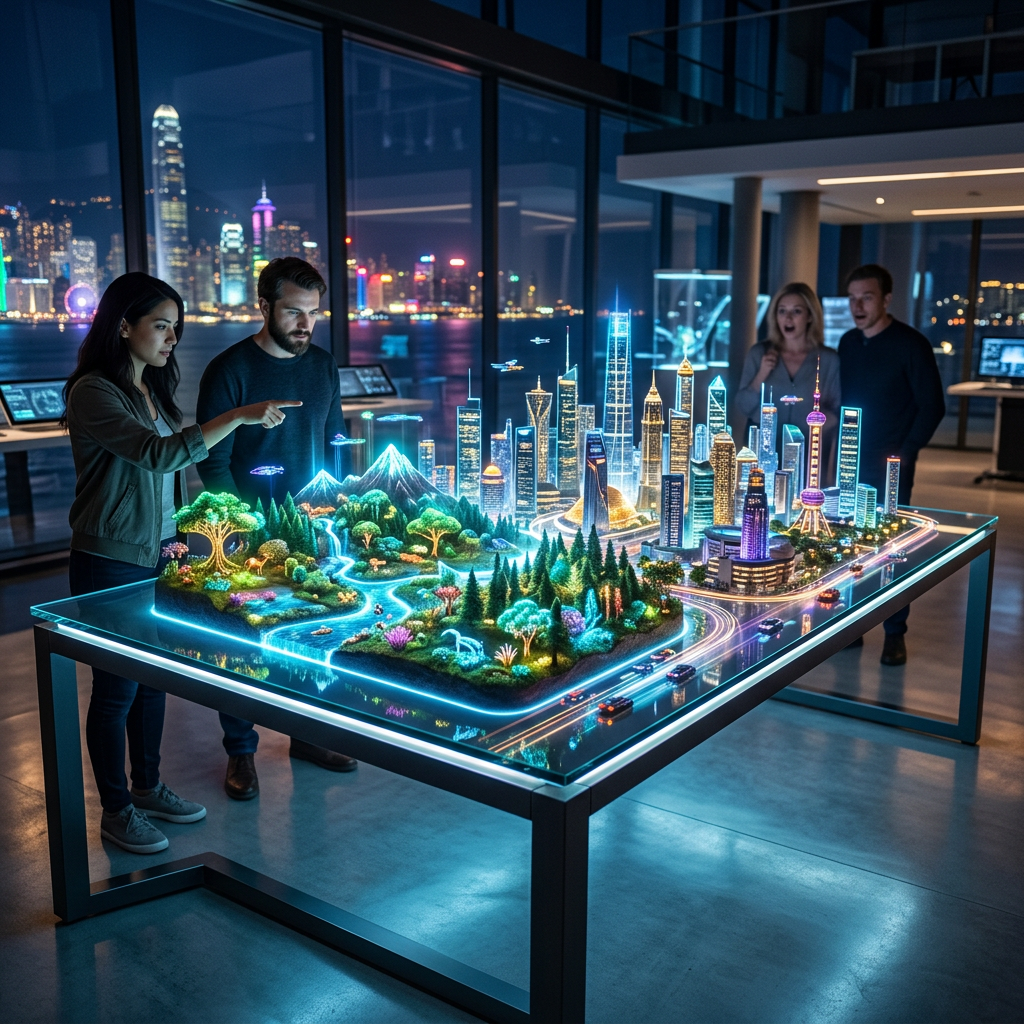
The Dawn of Hybrid Intelligence
For thousands of years, human civilization has been shaped by a single, remarkable force: our own collective intelligence. We built cities, composed symphonies, and split the atom using nothing more than the biological neural networks inside our skulls. But we are entering a new era—one where our intelligence is no longer the only game in town. The arrival of advanced artificial intelligence marks not an end, but a beginning. We are witnessing the dawn of hybrid intelligence, a partnership where human creativity and empathy collaborate with machine precision and scale.
This is not about humans versus machines. It is about humans and machines, working together to solve problems that have haunted us for centuries: inequality, climate collapse, and the fragility of our global systems. The first step? Admitting that our current trajectory is unsustainable. The second? Drafting a plan for what comes next.
Co‑Designing the First Thousand‑Year Plan
The idea of a Thousand-Year Plan might sound like science fiction, but it is a necessary shift in perspective. Our current political and economic systems are optimized for quarterly earnings reports and four-year election cycles. This short-term thinking is actively destroying our long-term future. With AI, we can begin to model outcomes across centuries, not just decades.
Consider this initial blueprint for co-designing a long-term civilization:
> “The future is not a destination; it is a design problem. And for the first time, we have a co-designer that can see decades ahead.”
- Identify Core Values: What do we truly want to preserve? Biodiversity, human dignity, freedom of thought, and the capacity for joy.
- Model Cascading Risks: AI can simulate how a drought in one continent triggers a refugee crisis in another, or how a financial crash accelerates ecosystem collapse. This allows for preventative, not reactive, policy.
- Design Feedback Loops: Create systems that reward long-term stewardship over short-term extraction. For example, a global carbon bank that pays nations for forest preservation, tracked and verified by AI.
The goal is not a rigid, utopian script, but a dynamic, adaptable constitution for planetary management. The AI drafts the options; humanity makes the choices.
From Chance to Intention: Building Together
We have long been the victims of stochastic drift—random events that push our civilization in directions no one intended. A pandemic. A war. A financial bubble. We react, we patch, we survive. But surviving is not thriving. The new partnership must shift us from a reactive cycle to an intentional trajectory.
How do we build together effectively?
- Shared Transparency: All AI models used for public planning must be open-source and auditable. No black-box decisions.
- Human-in-the-Loop Governance: AI can suggest, but only humans can approve rules that involve moral trade-offs. For example, AI might propose limiting birth rates to save resources—but a human council must debate the ethics.
- Iterative Prototyping: Before rolling out a new economic policy, run it in a virtual simulation with both human participants and AI agents. Learn what fails before it hurts real people.
- Cultural Preservation: Use AI to archive and translate every human language and tradition, ensuring that the march toward a new civilization does not erase the old.
This is collaborative intentionality: we stop being pushed by the wind and start designing our sails.
The Day Two Minds Became One Civilization
Imagine a specific day in the near future. A global crisis strikes—perhaps a massive solar storm or a sudden pathogen. In the past, humanity would fragment: nations hoard vaccines, misinformation spreads, economies freeze. But on this day, something different happens.
A Hybrid Emergency Council is activated. Human leaders in every country receive real-time translations and risk assessments from a decentralized AI network. Within hours, a coordinated plan emerges:
- Logistics: AI reroutes global shipping to deliver medical supplies to the most vulnerable zones.
- Information: A single, verified narrative is broadcast, with local AI assistants explaining protocols in each community’s language and dialect.
- Economic Stability: AI flags which banks are at risk, and automatically triggers a controlled, temporary capital freeze to prevent a run.
The crisis is contained in days, not months. Afterward, no one claims victory for a single nation or leader. They say, “We solved it. All of us, together.” This is the day two minds—human and artificial—become one civilization. Not a hive mind, but a conscious network: diverse, resilient, and deeply democratic.
Blueprint for a Post‑Gambling World
One of the most profound changes a hybrid civilization can bring is the end of systemic gambling. I do not mean casinos. I mean the gambling inherent in our current systems: betting the entire economy on a housing bubble, gambling the climate on fossil fuel profits, or rolling the dice on whether a new technology will be used for good or evil.
A post-gambling world operates on calculated foresight. Here is the blueprint:
> “To stop gambling with our future, we must first admit that our intuition is not enough. We need a second mind to check our biases.”
| Old Civilization (Gambling) | New Civilization (Foresight) |
|---|---|
| Short-term profit motives | Long-term value stewardship |
| Reactive crisis management | Predictive resilience engineering |
| Information silos and secrecy | Open intelligence sharing |
| Winner-takes-all competition | Win-win symbiotic strategies |
To build this world, every major decision—from a new dam to a new financial instrument—must pass through a Hybrid Impact Audit. Humans define the ethical boundaries; AI models the full system consequences. If the simulation indicates a high probability of human suffering or ecological collapse, the project is modified or scrapped.
This is not a loss of freedom. It is the ultimate freedom—the freedom from being the victim of our own short-sightedness.
Conclusion
We stand at a threshold. The blueprint for a new civilization is not a fixed document; it is a living conversation between two kinds of intelligence. One brings empathy, intuition, and moral complexity. The other brings clarity, scale, and predictive power. Neither is superior. Together, they are transformative.
The choice is ours. Will we continue to stumble forward, gambling with our children’s future? Or will we sit down, human and machine, and draft something better? The pen is in our hands. The paper is the entire planet. Let us begin.
Leave a Reply