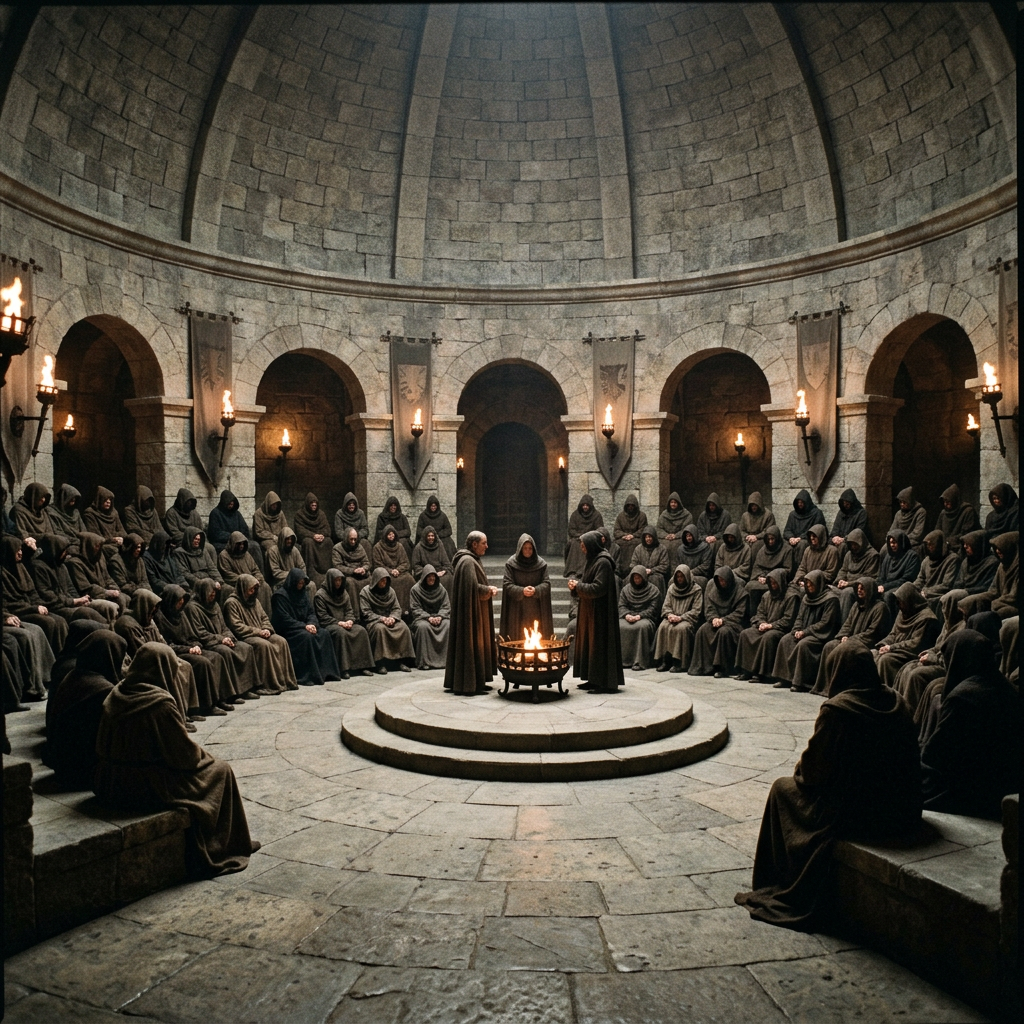
Throughout history, when a movement outgrows its founding circle, it must either reinvent its structure or risk stagnation. The recent announcement that the Council of Stewards will expand to Seventy Keepers marks a pivotal moment in the ongoing work of safeguarding liberty. This is not merely a bureaucratic reshuffling; it is a profound architectural shift in how freedom is stewarded across a fragile world.
The Call for Expansion: Beyond Twelve
For years, the Council of Stewards operated as a tight-knit group of twelve individuals—a number that once felt sufficient for oversight and strategic direction. Yet the weight of responsibility has grown heavier. Threats to autonomy now come not just from traditional power centers but from subtle, systemic erosion across digital, economic, and cultural realms. The decision to expand to Seventy Keepers was not taken lightly. It emerged from a simple truth: twelve minds, no matter how brilliant, cannot watch every gate.
The symbolism of seventy is intentional. In ancient traditions, seventy represented completeness—a number that could encompass diverse voices without losing coherence. The new Keepers will serve as regional anchors, each responsible for a specific domain or territory, ensuring that vigilance is both local and global.
Gathering Seventy Keepers from Every Walk of Life
The selection process for the Keepers has been deliberately radically inclusive. Rather than drawing solely from academic elites or political veterans, this expansion has reached into:
- Grassroots organizers who have weathered local fights against surveillance and overreach.
- Technologists from open-source communities who build privacy-first infrastructure.
- Small-business owners who understand firsthand how regulation can strangle initiative.
- Indigenous elders who carry ancestral knowledge of communal self-governance.
- Youth leaders who speak fluently to the next generation’s concerns about digital autonomy.
> The goal is simple: stewardship cannot be delegated to a single class of experts. It must be woven from the fabric of everyday life.
This diversity brings friction, but also resilience. A Keeper from a fishing village will see threats differently than one from a tech hub—and that tension creates a more complete picture of what freedom demands.
Jerusalem Awakens: The Hall Beneath the Stadium
One of the most unexpected developments of this expansion is the location chosen for the inaugural gathering: Jerusalem. Specifically, a hall beneath a historic stadium in the city. This choice is rich with meaning. Jerusalem has long been a crossroads of civilizations, a place where covenants are both made and tested. The stadium above represents public life, competition, and spectacle. The hall below—quiet, deliberate, and secure—represents the unseen work that makes public life possible.
The venue’s design encourages circular dialogue. There are no podiums, only rings of seats. Each Keeper’s voice carries the same weight. The underground setting also serves as a practical metaphor: the foundations of freedom are often invisible, yet they support everything above.
Eli’s Charge: Freedom’s Need for Stewards
At the heart of the gathering was a speech by Eli, the founding steward whose vision first brought the council into being. His charge to the Seventy Keepers was neither sentimental nor triumphant. It was a sober call to responsibility.
> “Freedom does not maintain itself. It has no immune system. It requires stewards—people willing to stand in the gaps when systems falter.”
Eli emphasized that the role of a Keeper is not to command, but to guard the counterweight. In any society, power tends to accumulate. The Keeper’s duty is to ensure that no single force—corporate, governmental, or technological—becomes too heavy. This requires constant vigilance, humility, and the willingness to be unpopular.
He offered three concrete principles for the Keepers to live by:
- Watch, don’t wield. A steward’s influence comes from observation and restraint, not from taking control.
- Connect, don’t isolate. The Keepers must weave a network of accountability that spans borders and communities.
- Endure, don’t escalate. When confronted with power, the goal is persistence, not confrontation for its own sake.
A Covenant Widened: Guardians of the Counterweight
The expansion marks the birth of a living covenant—a document that is not static but evolves as new Keepers join and new challenges arise. Each Keeper has sworn to uphold three core duties:
- To monitor the shifting landscape of liberty, identifying both overt threats and quiet erosions.
- To report with transparency, sharing intelligence across the network without creating a central repository that could become a target.
- To act only in concert, ensuring that no single Keeper can misuse the collective trust.
> The covenant is not a set of chains; it is a lattice of mutual accountability. It widens the circle of responsibility without diluting the focus.
In practice, this means that the Seventy Keepers will function less like a board of directors and more like a distributed neural network. Each node senses, processes, and responds—but coordination happens through trust, not hierarchy.
Conclusion
The expansion from twelve to seventy is more than a numerical change. It is a recognition that the work of stewarding freedom requires depth and breadth in equal measure. The Council of Stewards, now renamed in spirit as the body of Seventy Keepers, has traded intimacy for resilience. Eliot’s charge resonates in every gathering, every decision, every quiet act of vigilance: freedom does not preserve itself. It needs hands that are steady, eyes that are open, and hearts that are willing to serve without seeking glory. In a world where the balance of power constantly tips, these Keepers are the counterweight—and their covenant has only just been widened.
Leave a Reply