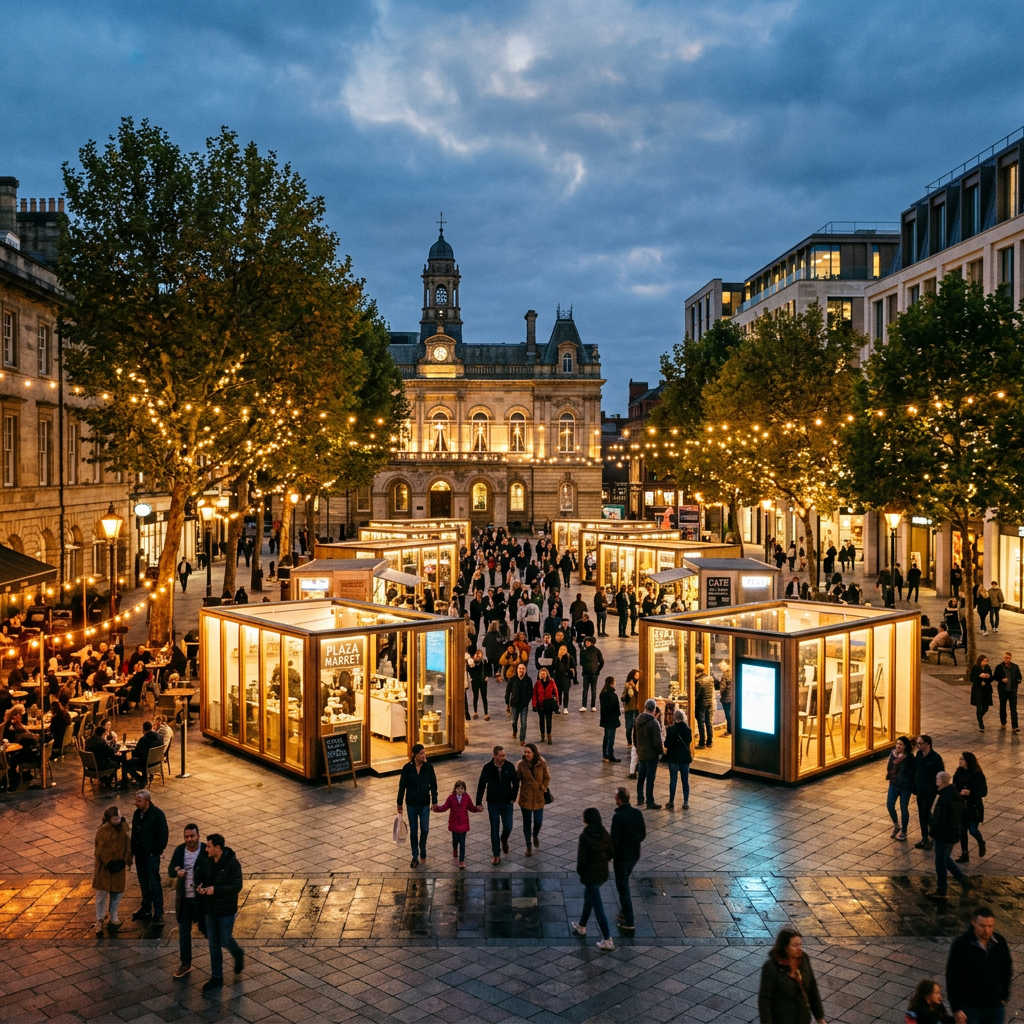
Cities, for much of modern history, seemed locked in a frantic race—chasing growth, speed, and economic output at the expense of everything else. The urban landscape was a cacophony of traffic, noise, and relentless pressure. But gradually, something shifted. Around the world, urban planners, community leaders, and ordinary citizens began to ask a different question: not just how fast can we go, but how well can we live together? The answer, it turned out, lay not in a single solution, but in the discovery of a new rhythm—a carefully orchestrated balance between movement and stillness, productivity and play, density and green space. This article explores how cities found their rhythm and why that balance has proven to be enough.
The Pulse of Participation: Cities Reborn
The first step toward urban balance was a shift from top-down control to genuine civic participation. For decades, city planning was a technocratic exercise—experts designed, and citizens complied. But the rebirth of cities began when residents were invited to co-author their environment. This pulse of participation brought life back to neighborhoods that had been silenced by poor design.
- Neighborhood councils gained real decision-making power over local zoning and park maintenance.
- Participatory budgeting allowed communities to allocate funds for their own priorities, from street lighting to mural projects.
- Tactical urbanism—temporary, low-cost interventions like pop-up plazas and painted crosswalks—let residents test new ideas before permanent changes were made.
This collaborative approach did more than improve infrastructure; it restored trust. People who felt heard were more likely to care for shared spaces, creating a virtuous cycle of ownership and pride. As one urbanist put it, “A city that listens to its people doesn’t just run smoothly—it sings.”
From Arenas to Civic Centers: A New Rhythm
The next phase involved rethinking how public spaces function. Cities had long invested in massive arenas and convention centers—monuments to spectacle. But the new rhythm demanded civic centers that were woven into daily life, not isolated destinations. These spaces became the heartbeats of neighborhoods, offering multiple uses at different times of day.
> Key insight: a successful civic center is never empty. It should host a farmers market in the morning, a coding class in the afternoon, and a community dance in the evening.
This shift meant designing for flexibility:
- Multipurpose halls with movable walls and modular furniture.
- Outdoor plazas with shade structures, water features, and Wi-Fi.
- Libraries that double as maker spaces and crisis shelters.
The goal was to create places where people could linger rather than just pass through. This slower, more intentional rhythm allowed for spontaneous encounters, informal conversations, and the kind of social cohesion that makes a city feel like home.
Seoul and Nairobi: Models of Synchronized Life
Two very different cities illustrate how this balance can be achieved across cultures and contexts.
Seoul, South Korea tackled its car-centric legacy by reclaiming rivers and highways. The Cheonggyecheon River restoration removed an elevated expressway and replaced it with a 5.8-kilometer waterfront park. The result was not just environmental, but social—temperatures dropped, pedestrian traffic soared, and the city found a new, slower heartbeat along its restored waterway. Seoul also implemented a car-free day in major districts, proving that a city can thrive without constant traffic.
Nairobi, Kenya faced the challenge of rapid, unplanned growth. Here, balance came through informal infrastructure and community-led adaptation. In neighborhoods like Mathare and Kibera, residents transformed alleys into pedestrian-friendly corridors and used recycled materials to create green spaces. The city government learned to support these grassroots efforts rather than override them. Nairobi’s non-motorized transport policy—including dedicated bicycle lanes and widened sidewalks—reduced accidents and improved air quality, all on a modest budget.
> Lesson learned: balance doesn’t require massive wealth—it requires listening and flexibility. Both Seoul and Nairobi found their own rhythms by adapting global principles to local realities.
Unity Festivals and the Art of Balance
One of the most visible expressions of urban rhythm is the rebirth of unity festivals—large-scale public celebrations that intentionally bring diverse populations together. These events are more than entertainment; they are exercises in collective choreography.
- Street parades that close main roads, forcing cars to cede space to feet and floats.
- Open-air concerts in public squares, with genres ranging from classical to hip hop.
- Food fairs where vendors from different immigrant communities cook side-by-side.
These festivals serve as a reminder that a balanced city is not a static one. It pulses with energy at certain times and rests quietly at others. The art lies in orchestrating these moments without overwhelming the fabric of daily life. Cities that master this art see lower crime rates, stronger local economies, and higher levels of civic pride.
Why Balance Was Enough for Urban Futures
The final realization was perhaps the most profound: balance, not growth, is the true measure of a successful city. For too long, urban development was obsessed with metrics like GDP, population density, and land value. But those numbers told an incomplete story.
A balanced city prioritizes:
- Accessible housing near jobs and transit, not just new towers on the periphery.
- Green corridors that connect parks and reduce heat, even if they reduce developable land.
- Slower streets where children can play and neighbors can chat, even if cars must wait.
This approach accepts that some trade-offs are necessary. A city cannot be the fastest-growing and the most livable at the same time. But when it chooses balance, it gains something irreplaceable: resilience. Balanced cities weathered the pandemic better, adapted to climate change faster, and reported higher levels of resident satisfaction.
> “The rhythm of a city is not found in its tallest building or fastest train. It is found in the daily harmony of its people moving through spaces designed for them, not just for commerce.”
Conclusion
The journey from cacophony to rhythm was not a sudden revelation but a gradual reclamation. Cities found their balance by listening to residents, reimagining public spaces, learning from global peers, and celebrating shared culture. They proved that the most cutting-edge urban innovation is sometimes the simplest: creating room for life to unfold at a human pace.
In the end, balance was enough because it was never about perfection. It was about making cities places where people want to stay, not just pass through. And in that steady, inclusive rhythm, the future of urban life found its most sustainable beat.
Leave a Reply