Born into Rhythm, Not Ruin
Imagine a childhood where birthdays weren’t interrupted by blackouts, where summer meant the steady hum of air conditioning rather than rolling heat waves, and where the news spoke of progress instead of collapse. This is the quiet inheritance of a generation that, for the first time in decades, did not grow up in the shadow of chaos.
Their parents handed down stories of economic freefalls, viral lockdowns, and climate tipping points. But these children? They learned to ride a bike on streets lined with solar trees. Their first word may have been “mama,” but their second was likely “recycle.” They arrived into a world that had already started to heal its fractures, not because the problems vanished overnight, but because the people before them had finally stopped sprinting in opposite directions.
This is the generation that knows balance, not because they worked for it, but because it was the air they breathed.
The Steward’s Legacy Takes Root
What does it look like when society prioritizes longevity over hype? It looks like:
- Community gardens replacing vacant lots in every neighborhood, where kids learn to compost before they learn to code.
- Four-day workweeks that became the norm, not a fringe experiment, allowing families to eat dinner together without exhaustion.
- Regenerative farming that restored soil health, making local food systems resilient against global supply shocks.
- Slow technology—phones that last eight years, software updates that add privacy without planned obsolescence.
This wasn’t enforced by a single law or a charismatic leader. It was a cultural shift that began in the messy years of crisis, when people realized that speed without stability only destroys. The stewards of this legacy—the architects of the transition—did not build perfect systems. They built forgiving ones, with enough slack for human error and natural cycles.
Learning Balance as a Birthright
School curricula changed subtly but profoundly. Instead of glorifying “hustle culture,” children were taught:
- The rhythm of rest—naps were integrated into school schedules until age twelve, and sleep hygiene was a core health class.
- Cyclical thinking—history classes framed events not as linear progress lines but as spirals of expansion, contraction, and renewal.
- Interdependence—team projects focused on collective success over individual grades, breaking the habit of toxic competition.
> Key tip: Balance is not a static point. It is a gentle oscillation, like breathing in and out. Teach children to recognize the wave, not fight it.
The most radical lesson? That a good life is measured not by how much you accumulate, but by how well you replenish the world around you. This mindset became so ingrained that by adolescence, these young adults instinctively avoided overconsumption—not out of guilt, but because it simply felt wrong, like leaving a door open in winter.
The Covenant in Their Blood
This generation inherited what sociologists call a “covenant of care”—an unspoken agreement that personal freedom ends where community harm begins. It shows up in small, mundane ways:
- Share shelves at every apartment entrance, where unused tools, books, and clothes circulate freely.
- Energy curtesy—a cultural norm where you don’t run your dishwasher during peak grid hours, because neighbors need the power for medical devices.
- Repair cafés that are as common as coffee shops, staffed by retirees who mentor teenagers in fixing toasters and zippers.
This isn’t sacrifice. It’s the pleasure of belonging. The covenant feels like safety, not restriction. And because it was modeled by their parents and grandparents, it requires no pamphlets or pledges—it flows in their veins.
> Important tip: The strongest covenants are invisible. They are simply “how we do things here.” If you have to write a rulebook, you have already lost the spirit.
Proof That Stability Became Instinct
How do we know balance has taken root? Look at the choices this generation makes without thinking:
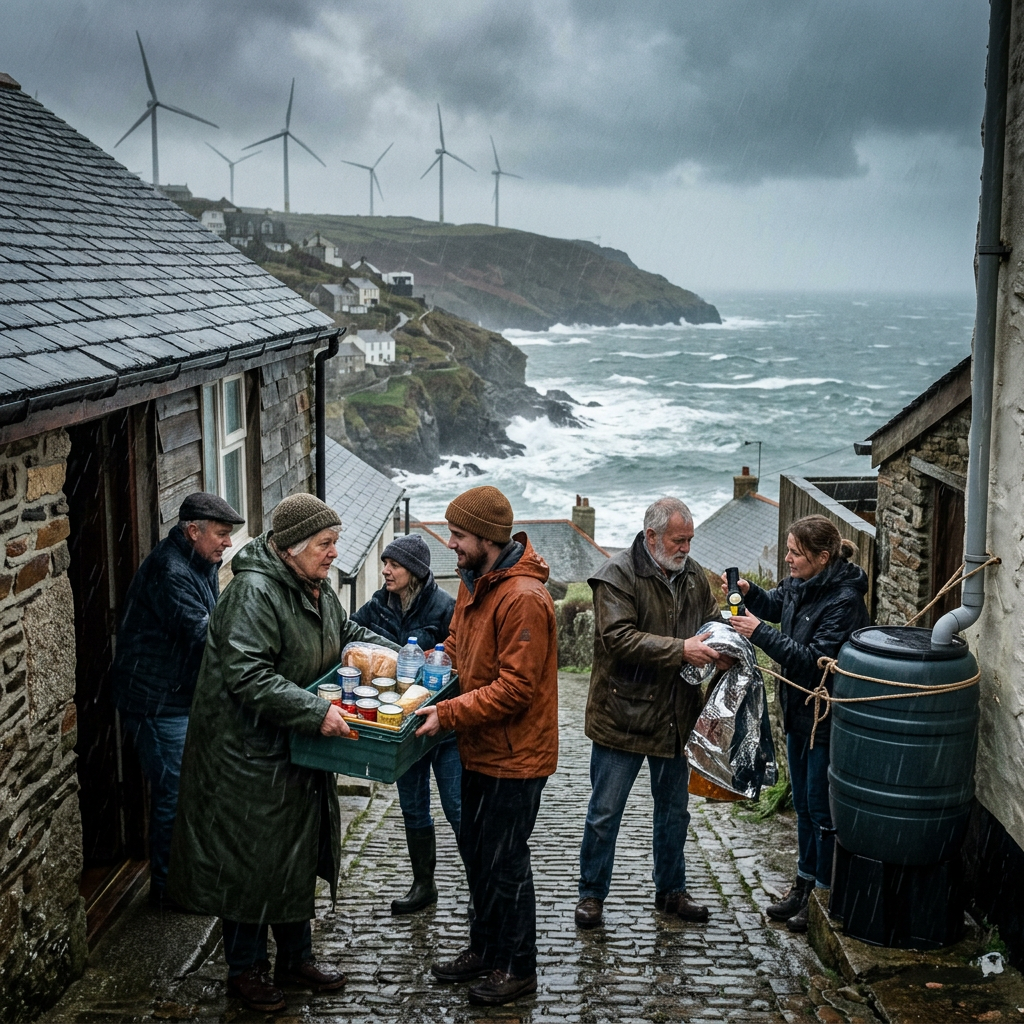
- When a storm hits, they don’t hoard supplies. They open their homes to neighbors first.
- When a new technology emerges, they ask not “Can we?” but “Should we?”—and often decline it.
- When they travel, they don’t collect souvenirs. They collect skills—learning to build a drystone wall in Ireland or to weave baskets in Ghana.
- When faced with a decision, they pause to consider the seventh generation ahead.
Their economies are slower but more stable. Their cities are denser but quieter, with green roofs and pedestrian corridors where birdsong replaces traffic noise. Their politics, while still messy, rarely reaches the stage of existential threat. They argue about budgets, not about survival.
The greatest proof? They do not romanticize the chaos their ancestors fled. When they hear stories of the “exciting” years before balance—the viral trends, the market gyrations, the constant emergencies—they nod politely, then head outside to watch the sunset over a restored wetland.
They are not bored. They are home.
Conclusion
This generation’s gift is not that they solved all problems—they haven’t. Climate change left scars. Economic inequalities persist. But they inherited a world where balance is the default, not the dream. They did not have to invent it, fight for it, or sacrifice everything to glimpse it. They simply woke up inside it.
And in that quiet stability, they found something their predecessors had spent centuries chasing: the ability to live fully, without needing the world to burn first. The greatest rebellion against the chaos of the past is not louder noise—it is the deep, rooted peace of a life in rhythm.
Leave a Reply