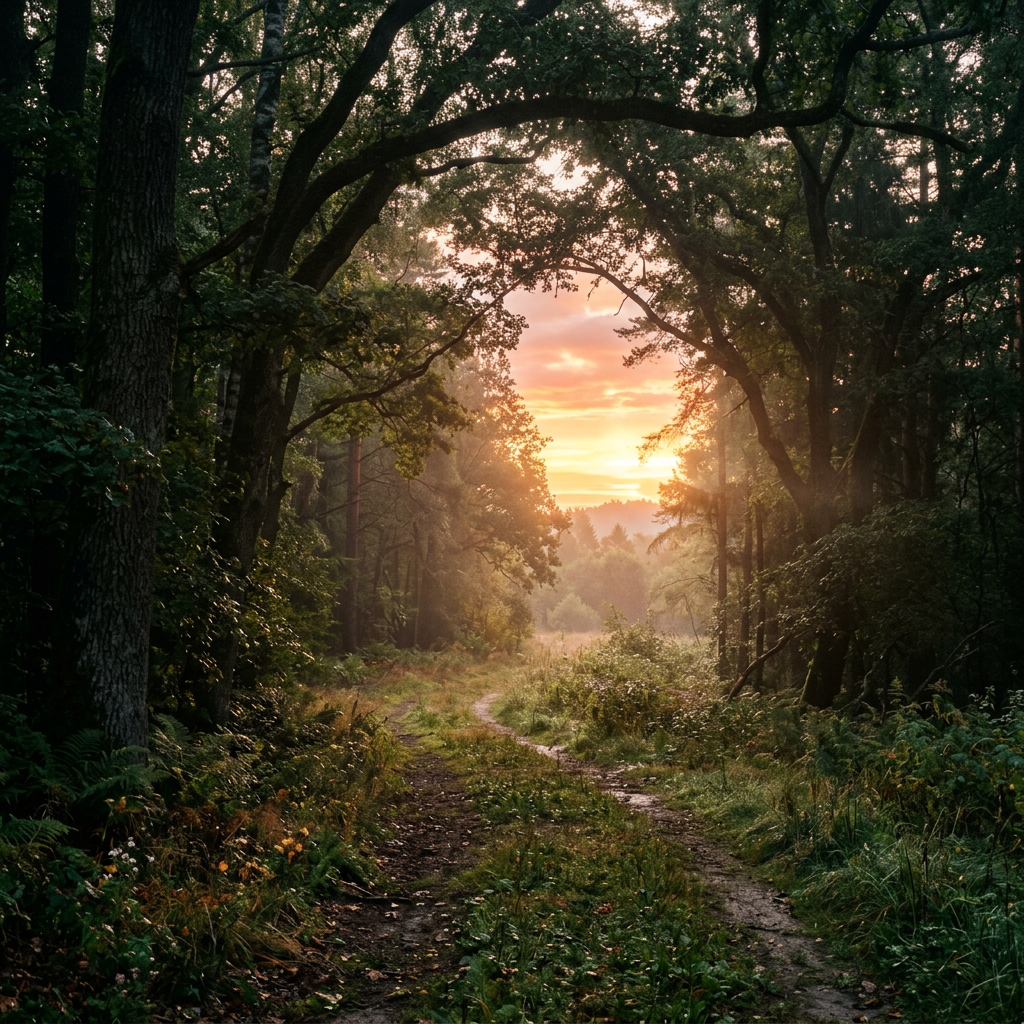
Imagine a world where the lines between human will and cosmic order are not drawn in battle, but woven into a quiet, enduring dance. This is the reality described by the Generations of Balance—a framework for living that emerged not from conquest, but from a deep, collective awakening. In this new world, survival is not about dominating nature or other people, but about synchronizing with a rhythm far older than any empire. It is a story that begins not with a hero, but with a hum.
The Resonant’s Calling: Humans as Interpreters
The first truth of this enduring world is that certain individuals are born with an unusual sensitivity—a Resonant Calling. These people do not create the Balance; they interpret it. They are the seismographs of a living planet, feeling the tremors of ecological stress, social fracture, or spiritual drought before they become visible to others.
- A Resonant might feel a deep ache in their chest before a drought, or a sudden lightness preceding a season of renewal.
- They often live on the edges of communities, not as outcasts, but as sentinels.
- Their role is to translate the world’s whispers into actionable wisdom for their tribe.
Being a Resonant is not a superpower; it is a responsibility. It requires rigorous self-discipline and humility, for a misinterpretation can lead a community astray. The best among them learn to distinguish between their own fears and the true signal of the Balance.
Balancekeepers: Faithful Practice of the Covenant
While Resonants hear the call, the Balancekeepers are the ones who answer it with daily action. They are the farmers who rotate crops not just for yield, but to heal the soil. They are the builders who construct homes that breathe with the wind and drink the rain. The Covenant they practice is not a written law, but a living commitment: take only what you need, and give back more than you take.
> The greatest mistake is to think the Covenant is a burden. It is a bridge. Walk it with joy, not obligation.
Key practices of a Balancekeeper include:
- Active Rest: Periods of intentional non-productivity to allow land and spirit to recover.
- Gift Economics: Sharing surplus not as charity, but as a sacred duty that strengthens the entire web.
- Silent Observation: Spending at least one hour each day without speaking, to simply listen to the world.
These are not exotic rituals. They are the quiet, faithful repetitions that keep the world from fraying.
Eli Navarro’s Legacy: A Heartbeat Not a Monument
In any story of balance, there are figures who become touchstones. Eli Navarro is such a figure, but his legacy is deliberately anti-monumental. He did not build a statue or a palace; he built a method. His greatest contribution was teaching communities how to hold council where even the smallest voice carried equal weight.
Eli understood that a legacy of stone becomes a prison, but a legacy of practice becomes a heartbeat.
- He refused to have his name carved on buildings, insisting instead that his lessons be passed down orally.
- He once dismantled a stone pillar erected in his honor, replacing it with a young tree.
His true legacy is not in what he said, but in what he made possible: a world where leadership is a temporary role, not a permanent throne.
Stewardship Over Power: Guiding a New World
The shift from power to stewardship is the core transformation of the Generations of Balance. In the old world, leaders collected resources and followers. In the new world, stewards collect wisdom and distribute it. A steward’s influence is measured not by how many people obey them, but by how many people flourish without them.
What does stewardship look like in practice?
- Decentralized Authority: Decisions are made at the smallest viable level—the family, the neighborhood, the watershed.
- Resource Circulation: No hoarding is allowed. All surpluses are logged, shared, and redistributed based on need, not rank.
- Conflict as Signal: A dispute is not a failure to be crushed, but a signal that the system has a block to be cleared.
> Those who seek power will break the Balance. Those who seek purpose will sustain it. Choose your pursuit wisely.
This is not a naive utopia. It is hard work. Stewards must constantly fight the temptation to make decisions for others, to “fix” things from the top down. The discipline of letting go is the hardest lesson to learn.
Unity Through Participation: The Generations Endure
The final pillar of this new world is that its survival depends on everyone participating. Unity is not achieved by agreement; it is achieved through shared action. When a flood threatens a valley, the elders bring memory of old river paths, the children gather seeds for planting later, and the able-bodied build temporary dams. No one is a spectator.
The Generations of Balance endure because they are not a system you can join—they are a pattern you must live.
- Children are taught to question, but also to listen to the very old.
- Adults are expected to rotate roles, from farmer to councilor to teacher, so no one becomes brittle.
- The elderly are revered not for their past titles, but for the depth of their observation—they have seen more seasons and thus know more patterns.
This unity is fragile. It can break under greed, convenience, or the seduction of easy answers. But it has a resilience that empires lack: it can bend, absorb shock, and regrow.
Conclusion
The Generations of Balance are not a relic of a mythical past, nor a blueprint for a distant future. They are a living, breathing experiment happening right now in communities that have chosen humility over domination. It is a world where the Resonant interprets, the Balancekeeper practices, and the steward steps aside. Eli Navarro’s heartbeat continues, not in a stone monument, but in the rhythm of a village council, the rotation of a crop, and the quiet joy of a person planting a tree they will never sit under.
This new world endures because it asks for nothing more than our full and faithful presence. It does not promise comfort. It promises connection. And in that connection, we find the only power worth having: the power to endure together.
Leave a Reply