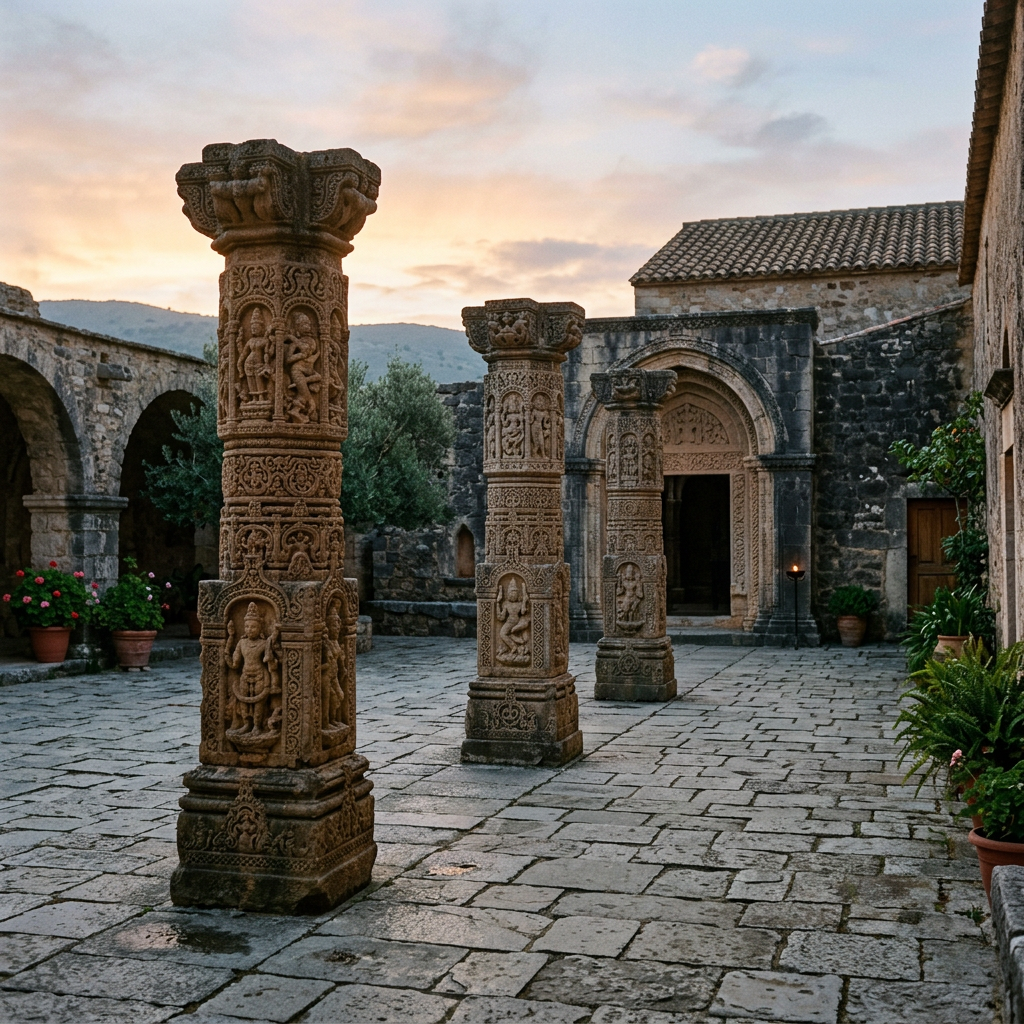
The Living Scroll: A Declaration Beyond Chaos
Before the Golden Dominion, the world was a fractured song—each note played by a different hand, out of rhythm, out of purpose. Empires rose like tides and fell like dust. Borders shifted; loyalties dissolved. But within every collapse, there is a seed of something greater. And from the heart of the most profound chaos, a declaration emerged that refused to be written in ink. It was carved into the fabric of time itself, a Living Scroll that demanded not just belief, but embodiment.
This was no mere political treaty or philosophical essay. It was a blueprint for a new species of order. It whispered that power must be wielded not as a hammer, but as a guiding light. Those who read it understood—a new dawn was not approaching; it was already breaking through the cracks of the old world.
> “In the silence after destruction, the truest voice is not that of the conqueror, but of the builder who remembers the fallen.”
Dawn Poured Into Stone: Judgment Takes Form
The abstract ideals of the Living Scroll needed a vessel. They found it in judgment—but not the judgment of fear or punishment. This was Judgment as an act of creation. It took shape in the Stone of Accord, a towering monolith erected in the heart of the reclaimed lands.
Here, decisions were not made by decree. Instead, leaders from every corner of the fractured territories gathered around the Stone. They spoke, they argued, they wept, and finally, they listened. Each judgment carved into the stone was a permanent reminder that the New Order would not be built on whim or tyranny. It would be built on precedent, empathy, and clarity.
- Every stone-etched law had to pass the test of fairness for the smallest village.
- Disputes were settled not by might, but by a council of witnesses—the old and the young alike.
- Punishments were restorative, not vengeful. A thief served in the fields; a betrayer rebuilt what they destroyed.
The Dawn was not a gentle sunrise; it was a stark light that revealed every shadow. But for those willing to stand in it, judgment became a mirror—not a cage.
Liora of Safed: Witness to the Golden Dominion
Among the first to truly understand the weight of the new era was a woman named Liora of Safed. She was not a warrior nor a queen, but a keeper of memory. In the old world, she had been a scholar, collecting the stories of the lost. Now, she was summoned to the Stone of Accord to witness its first major trial.
Her journal from that time reads like a tapestry of awe and trepidation:
> “I climbed the hill at dawn, expecting dust and shouting. Instead, I found silence. The Stone stood like a sentinel who had seen too much. The leaders—some former enemies—placed their hands upon it, and you could feel the heat. Not from the sun. From truth.”
Liora’s accounts became the cornerstone of the New Order’s education. She taught that the Dominion was not golden because of wealth, but because of the clarity it demanded from every soul. It was a light that did not blind—it revealed. In her writings, she instilled a simple principle:
- Remember the past, but do not be enslaved by it.
- Honor the present, for it is the only place you can act.
- Build the future, but never forget that it must shelter the most fragile.
From Light to Foundation: The New Order Anchored
The Golden Dominion could not float on ideals alone. It needed roots, and those roots were planted in the soil of daily life. The Living Scroll became the Constitution of the Common Path, and the Stone of Judgment became the first courthouse. But the true foundation was something simpler: trust rebuilt through shared labor.
Communities across the lands began to organize around the Three Anchors:
- The Anchor of Harvest: Every region was required to share a portion of its bounty with neighbors in need. This was not charity; it was a covenant.
- The Anchor of Voice: Every adult, regardless of station, had the right to speak in the Circle of Days—a weekly open forum in each village.
- The Anchor of Repair: When harm was done, the focus was on mending the bond, not adding to the debt of suffering.
This was not a utopia without friction. There were arguments, setbacks, and whispers of the old ways. But the Dominion endured because its foundation was not built on sand—it was built on the willing consent of the people. And when a structure is anchored in shared will, it can weather any storm.
Solidifying Brilliance: The Age to Come Begins
What began as a declaration, then a stone, then a woman’s testimony, now stood as a living civilization. The Golden Dominion’s Dawn was not a single moment in history—it is a continuous act of renewal. Every morning, the leaders and common folk alike touch the Stone of Accord, not to worship it, but to reaffirm their promise.
The Age to Come is not a prophecy waiting to happen. It is being written in every just decision, every repaired relationship, and every child who grows up knowing that order does not mean silence—it means harmony.
> “The light of the Golden Dominion is not in what it conquers, but in what it cultivates. A new order is not a prison. It is a garden, and we are all its keepers.”
As the sun rises over the monolith, casting its golden hue across the land, the work continues. The foundation is laid. The Age to Come is no longer a distant hope—it is the ground beneath our feet. And the dawn, once a fragile whisper, has become the steady, brilliant pulse of a world reborn.
Leave a Reply