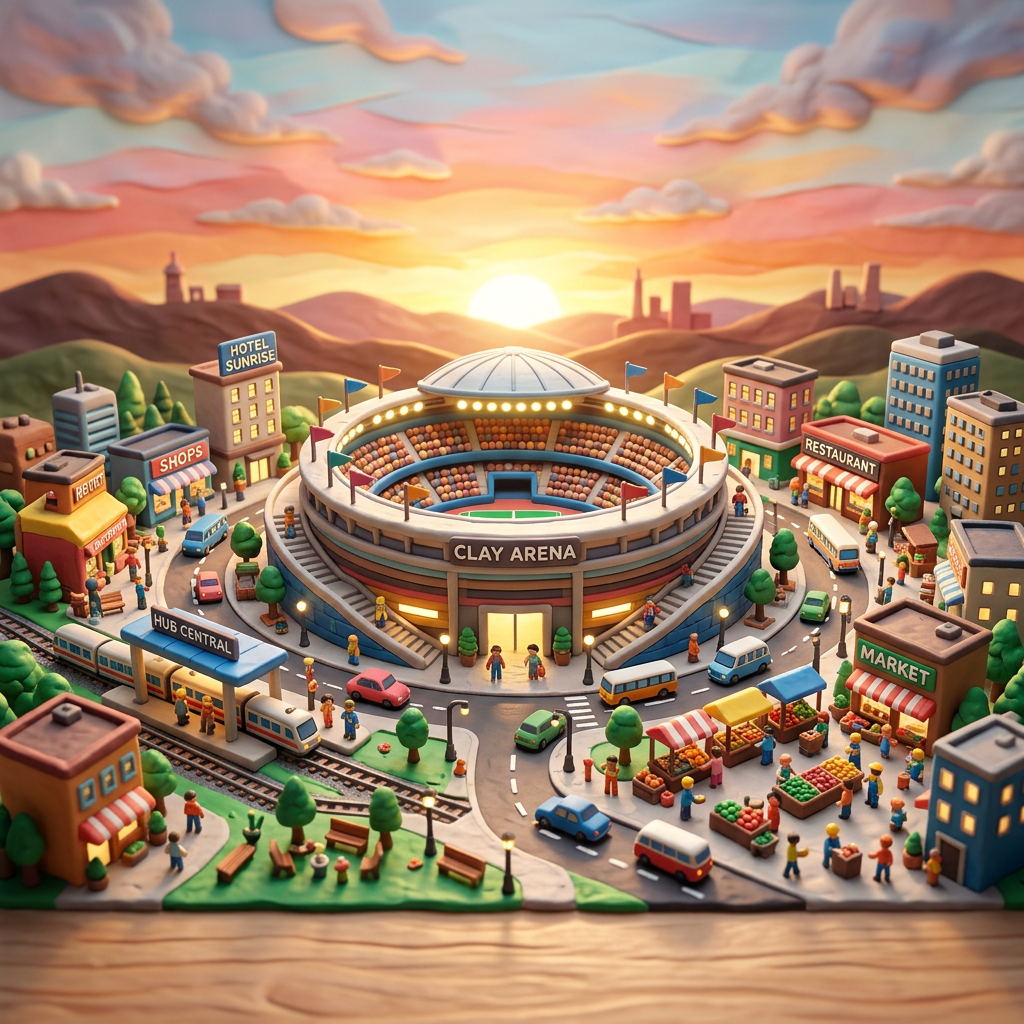
Imagine a world where the economy is no longer a cold, abstract machine humming with synthetic trades and digital gambles, but a living, breathing arena fueled by the raw energy of human contribution. This is not a futuristic fantasy; it is the quiet dawn breaking over our current systems. The shift from valuing speculative capital to valuing tangible human effort is the single most transformative economic event of our time.
The Living Arena Trumpet: A New Dawn for Value
For decades, the global economy has been a stage for synthetic wagers—complex financial instruments, automated trading algorithms, and speculative bubbles that rise and fall with little connection to actual human needs. This era is ending. The “living arena” is awakening, and its first sound is a trumpet call for a return to intrinsic value. This new economy is not built on scarcity or artificial demand but on the boundless potential of human creativity, skill, and collaboration. Value is no longer what we can extract from the system, but what we can contribute to it.
> “The economy of the future is not a machine; it is a garden. Every human action is a seed, and the harvest belongs to everyone.”
Human Effort Replaces Synthetic Wagers
The core shift is unmistakable: human effort is replacing synthetic wagers as the primary economic driver. Where once fortunes were made by predicting market movements, now they are built by solving real problems. Consider these key transformations:
- Labor as Investment: Your daily work is no longer just a means to a paycheck; it is a form of capital. Skills, time, and creativity are the new gold reserves.
- Decentralized Contributions: Platforms and protocols now allow anyone to contribute value—from coding to content creation to local services—and be compensated directly, without intermediaries.
- Proof of Work, Not Proof of Stake: Economies are beginning to reward actual productive output over passive ownership. The person who builds, fixes, or teaches holds more economic weight than the one who merely holds assets.
This shift is not just philosophical; it is practical. Local economies are thriving as people rediscover the power of bartering skills, community-driven projects, and peer-to-peer exchanges. The synthetic wager of Wall Street is giving way to the authentic wage of Main Street.
Stadiums as Beating Hearts of the Economy
If the new economy has a physical metaphor, it is the stadium—not as a place for passive spectators, but as a vibrant arena of active participation. Picture these “stadiums” as hubs of human-centric economic activity:
- Co-working Arenas: Shared spaces where freelancers, artists, and innovators collaborate, share tools, and cross-pollinate ideas. These are the new factories.
- Community Markets: Weekly events where local producers sell goods, swap services, and build trust-based economies. The transaction is a conversation, not a checkout.
- Digital Collaboration Zones: Online platforms designed for real-time co-creation, from open-source software projects to decentralized design studios. Every “commit” is a stake in the economy.
These arenas pulse with a rhythm of effort and reward. They foster reciprocity over extraction. A person’s reputation, built through consistent contributions, becomes a more reliable currency than any digital ledger.
Awakening the Human-Value Engine Worldwide
The living arena is not a local phenomenon; it is a global awakening. Here is how this engine is firing up across different sectors:
- Education: Skills-based learning, not degree certificates. People are valued for what they can do, not where they studied.
- Healthcare: Community health networks where individuals contribute to preventative care, mental wellness, and peer support, creating a health economy driven by participation.
- Sustainability: Citizens become “stewards” of local environments, earning credits for reducing waste, planting trees, or teaching conservation. The planet’s health aligns with personal economic benefit.
> “When human effort becomes the currency, every action is an investment. Every problem solved is a dividend paid to the community.”
This global engine is not without friction. It requires new systems of verification, trust, and dispute resolution. But the momentum is undeniable, as millions of people realize that their greatest asset is not their bank account, but their ability to act, create, and contribute.
From Dawn’s Spark to a Global New Economy
We are standing at the very spark of dawn. The living arena is still emerging, and its full shape is uncertain. Yet, the direction is clear. The path from this spark to a global new economy involves:
- Adopting New Metrics: How we measure success must shift from GDP growth to indices of human flourishing—well-being, creativity, and community resilience.
- Building Inclusive Arenas: Every human must have a place in this arena, regardless of geography or background. Digital access and skill-sharing become fundamental economic rights.
- Celebrating Contribution: We must normalize a culture that honors effort. The hero of this economy is the person who makes something better, teaches someone, or fixes a broken system.
The living arena is not a revolution against the old economy; it is an evolution beyond it. It is a return to the most ancient human truth: our greatest asset is each other, and our collective effort is the only economy that has ever truly worked.
Conclusion
As the synthetic wagers of the past fade into the background noise, the roar of the living arena grows louder. This is not a call to abandon markets or technology, but to reanimate them with meaning. The new human economy is here, and it belongs to everyone who chooses to contribute, to create, and to care. The trumpet has sounded; the arena is awake. Your effort is the ticket, and the future is the reward.
Leave a Reply