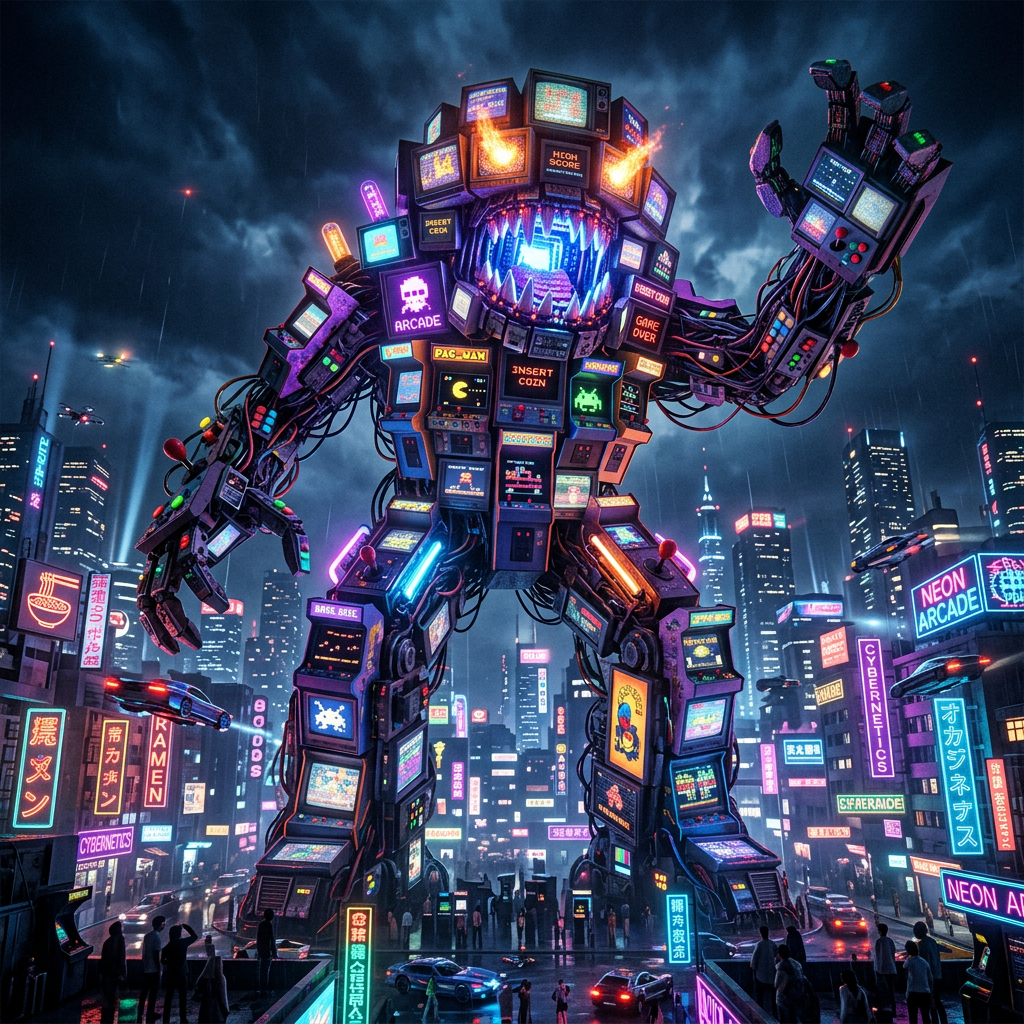
We live in an age of unprecedented convenience and fractured meaning. For every technological leap that promises to save us time, another system emerges to consume our attention, drain our bank accounts, and alienate us from one another. The fabric that once held societies together—trust, community, stable work, and spiritual grounding—is unraveling, thread by thread. This is not a lament for a romanticized past, but a sober diagnosis of the present. Below, we explore the core mechanisms of this unraveling and what they mean for our collective future.
The Digital Abyss: Gambling, Fantasy, and Predation
The internet was supposed to democratize knowledge. Instead, it has become the most efficient predatory environment ever designed. At its heart lies the digital abyss—a space where algorithms exploit human psychology for profit.
- Micro-targeted manipulation: Platforms harvest your data not to serve you, but to predict and trigger your impulses.
- The gamification of finance: Stock trading apps and crypto exchanges now use flashy animations and push notifications, turning investment into a dopamine-driven slot machine.
- Predatory lending and scams: From payday loan ads to NFT rug pulls, the digital frontier is a lawless land where the vulnerable are separated from their savings.
> “If you are not paying for the product, you are the product. But in the present age, even when you pay, the platform still sells your attention to the highest bidder.”
The result is a population hooked on instant gratification and financial risk, conditioned to ignore long-term stability for the fleeting thrill of a possible win.
When Machines Replace Us: AI, Automation, and Lost Livelihoods
The rise of generative AI and robotics is not a future event—it is happening now. While previous industrial revolutions displaced muscle, this one displaces cognitive labor. Writers, coders, translators, and customer service agents are finding their roles automated overnight.
- The hollowing of the middle class: Automation eliminates the routine jobs that once provided a stable ladder into the middle class.
- The gig economy trap: Companies replace full-time employees with algorithm-managed contractors, stripping away benefits, security, and dignity.
- Creative despair: Artists and writers see their work scraped and regurgitated by machines, while the platforms that host them enforce policies that favor AI-generated content over human craft.
The promise of “more leisure time” has not materialized. Instead, we face a reality of widespread underemployment, where humans compete with machines for scraps, and the few who own the AI take the lion’s share of the value.
Crypto, Chaos, and the Hollow Promise of Easy Wealth
Few phenomena illustrate the unraveling of economic sanity better than the cryptocurrency and NFT boom. Initially sold as a democratic alternative to centralized banking, it has largely become a casino for the desperate.
- Zero-sum outrage: Most crypto projects are Ponzi schemes in disguise, where early adopters profit by offloading risk to later investors.
- Environmental and social cost: The energy required to mine some cryptocurrencies rivals that of small nations, while the associated crime and money laundering undermine public trust.
- The illusion of sovereignty: The promise of “being your own bank” sounds liberating until you lose your private key or get hacked. In reality, it exposes the average person to sophisticated financial predators with no safety net.
> “When the hype fades, the only ones left holding the bag are those who mistook a speculative bubble for a revolution.”
The crypto craze has not built a new economy; it has accelerated the wealth concentration it claimed to fight, while distracting society from the real work of building stable, equitable financial systems.
The Addiction Machine: How Games Became Global Exploitation
Video games were once a pastime. Today, they are behavioral modification engines, optimized not for fun but for retention and extraction. The term “game” barely describes what has become a global exploitation mechanism.
- Dark patterns in design: Loot boxes, battle passes, and time-limited events exploit uncertainty and fear of missing out (FOMO) to drive spending.
- Pay-to-win mechanics: Players are punished for not paying, while the game’s challenges are deliberately balanced to be frustrating for free users.
- Cult-like engagement systems: Daily rewards, streaks, and social pressure obligations keep players locked in a cycle of compulsive return, resembling the mechanics of gambling.
The victims are often children and young adults, who are trained from an early age to associate effort with payment and accomplishment with microtransactions. The industry’s revenue models depend on a small percentage of players—the “whales”—who spend hundreds or thousands of dollars, often to their financial ruin.
A World Unmoored: Why the Present Age Cries for Balance
Pulling the threads together, a pattern emerges. The common denominator is extraction without reciprocity. Whether it is a social media platform extracting your attention, an AI company extracting your labor, a crypto exchange extracting your savings, or a game extracting your time and money, the relationship is always asymmetric.
We have allowed efficiency and profit to override every other human value. Community has been replaced by networks. Stability has been replaced by disruption. Trust has been replaced by algorithmic verification.
The unraveling is not inevitable. To reverse it, we must demand:
- Regulation of addictive design in digital products.
- Universal safety nets to cushion the blow of automation.
- Transparent and ethical AI development that prioritizes human dignity over speed.
- Financial literacy and real consumer protections against predatory schemes.
- Reclaiming play as an end in itself, not as a vehicle for monetization.
Conclusion
The crisis of the present age is not a single catastrophe but a thousand small betrayals. It is the feeling that the systems we rely on are no longer working for us—that they have become machines designed to extract, manipulate, and discard. But acknowledging the unraveling is the first step toward reweaving. The path forward requires courageous choices: to prioritize the well-being of people over the growth metrics of platforms, to demand accountability from the architects of our digital world, and to remember that balance, not acceleration, is the true mark of a civilized society.
We can still choose to slow down, to reconnect, and to rebuild a world that serves human flourishing rather than its own expansion. The unraveling has not yet finished; the threads are still in our hands.
Leave a Reply