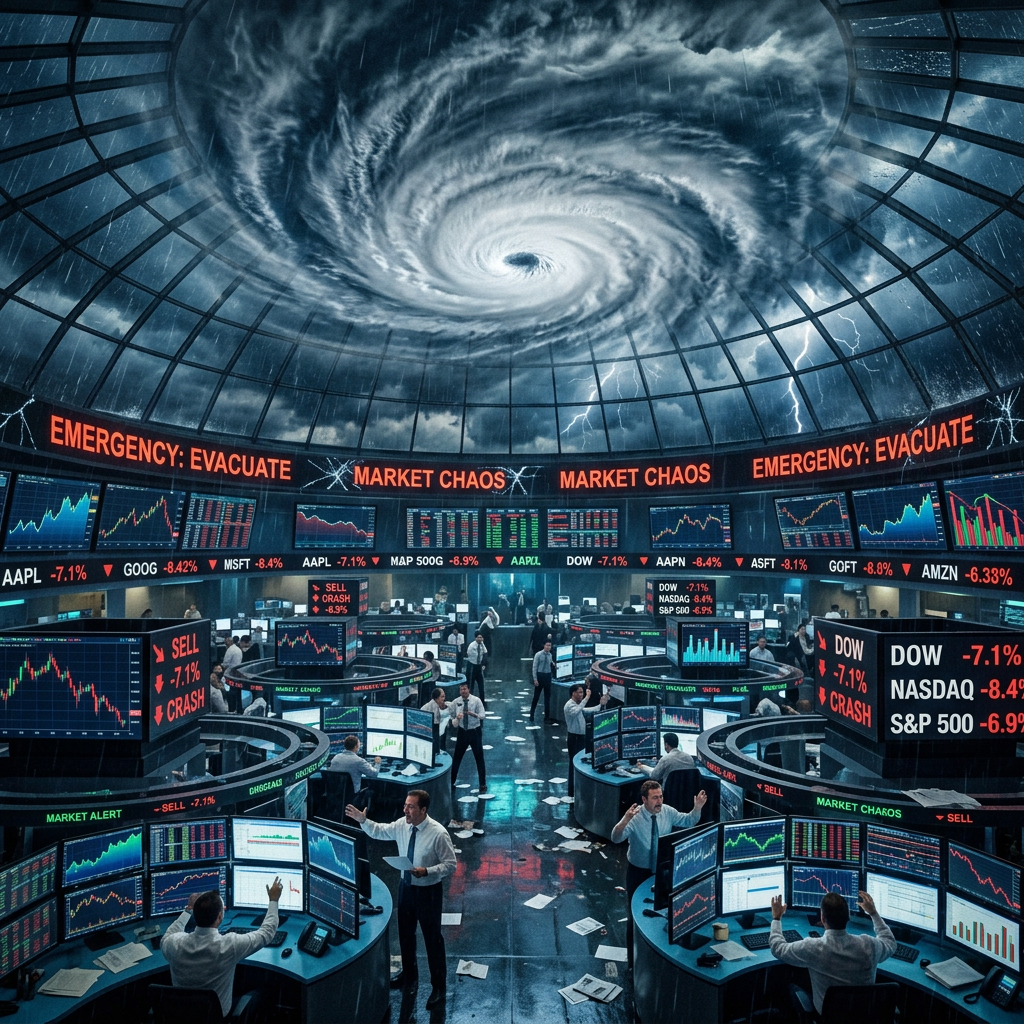
When Tragedy Pays Out: The Dark Reality
Prediction markets—platforms where users bet on the outcome of future events—have been hailed as revolutionary tools for forecasting. From election results to box office earnings, they promise a crowdsourced glimpse into what lies ahead. But there is a grim underside to this financial innovation: the ability to profit directly from human tragedy. When a plane crashes, a war escalates, or a pandemic claims lives, traders can buy and sell contracts tied to the precise scale of the disaster. This transforms suffering into a speculative asset, raising uncomfortable questions about morality, value, and the limits of the free market.
From Disaster to Dollar: How Markets Price Pain
The mechanics are disturbingly simple. Platforms allow users to purchase shares in binary outcomes—for example, “Will COVID-19 cases exceed 1 million in the US by June?”—with prices fluctuating based on perceived probability. When a catastrophe hits, those who bet correctly see their shares skyrocket in value. Consider these real-world examples:
- Natural disasters: Markets tied to hurricane damage, earthquake deaths, or wildfire acreage burned.
- Conflict and violence: Bets on civilian casualties, war duration, or regime collapse.
- Public health crises: Contracts on outbreak severity, vaccine hesitancy rates, or hospital capacity.
Each of these creates a direct financial incentive to predict—or even influence—the worst outcomes. The price of a contract becomes a proxy for hope, and a surge in value signals that more traders expect suffering to increase.
Incentivizing Chaos: Betting on Human Suffering
The problem goes beyond morbid curiosity. Prediction markets can create perverse incentives for bad actors. A trader who holds a large position in a “Yes” contract for a terrorist attack has a financial stake in that attack occurring. This isn’t hypothetical; research shows that even small financial rewards can influence behavior and decision-making.
Key dangers include:
- Manipulation of news or social media to sway probabilities in one’s favor.
- Delayed action on threats if quick resolution would shrink contract value.
- Insider trading by those who know about an impending tragedy before the public.
- Psychological harm to victims and families who see their loss monetized in real time.
As one former trader put it, “When your portfolio spikes on a catastrophe, it’s hard not to feel a small twinge of excitement before the guilt sets in.” This emotional friction—between profit and humanity—is the heart of the ethical dilemma.
The Instability Engine: How Prediction Markets Fuel Fear
Beyond individual corruption, these markets can amplify systemic instability. The very act of placing bets sends signals that shape public perception. If a market shows a 70% chance of a coup, that prediction can become self-fulfilling by tanking investment, prompting capital flight, or emboldening rebels. The mechanism works like this:
- A speculative contract is opened on a low-probability disaster (e.g., “Will Country X default on debt?”).
- Algorithms, media, and traders treat the market price as a legitimate forecast.
- The forecast triggers real-world actions (sell-offs, travel warnings, government policy shifts).
- Those actions increase the likelihood of the disaster actually occurring.
> Important: Prediction markets do not merely observe reality; they actively shape it. The line between forecasting and engineering collapses when money is on the line.
A Call for Reform: Stability Over Speculation
The solution is not to ban all prediction markets—they have legitimate uses in forecasting technology adoption, climate policy, and scientific breakthroughs. Instead, we must draw firm boundaries. A responsible framework should include:
- Prohibition of human harm contracts — No bets on deaths, injuries, pandemics, or violent conflicts. These produce zero social value while creating maximum moral hazard.
- Transparency mandates — Require platforms to disclose positions of large traders to deter manipulation.
- Cooling-off periods — Freeze trading on sensitive events (e.g., natural disasters) for at least 48 hours after the initial news breaks to prevent knee-jerk profiteering.
- Independent oversight — An ethics board with power to remove obviously harmful contracts before they go live.
> Pro tip: When evaluating prediction markets for investment, ask yourself—Does this bet create a better world, or does it just hope for a worse one? Walk away from the latter.
Conclusion
Prediction markets are powerful tools, but they are not neutral. The ability to profit from tragedy corrupts their purpose, turning forecasting into exploitation, and hope into hazard. As these platforms grow, we must choose whether they will serve as beacons of collective intelligence or engines of fear. Reform is overdue—not to stifle innovation, but to ensure that when people suffer, no one is counting their coins.
Leave a Reply