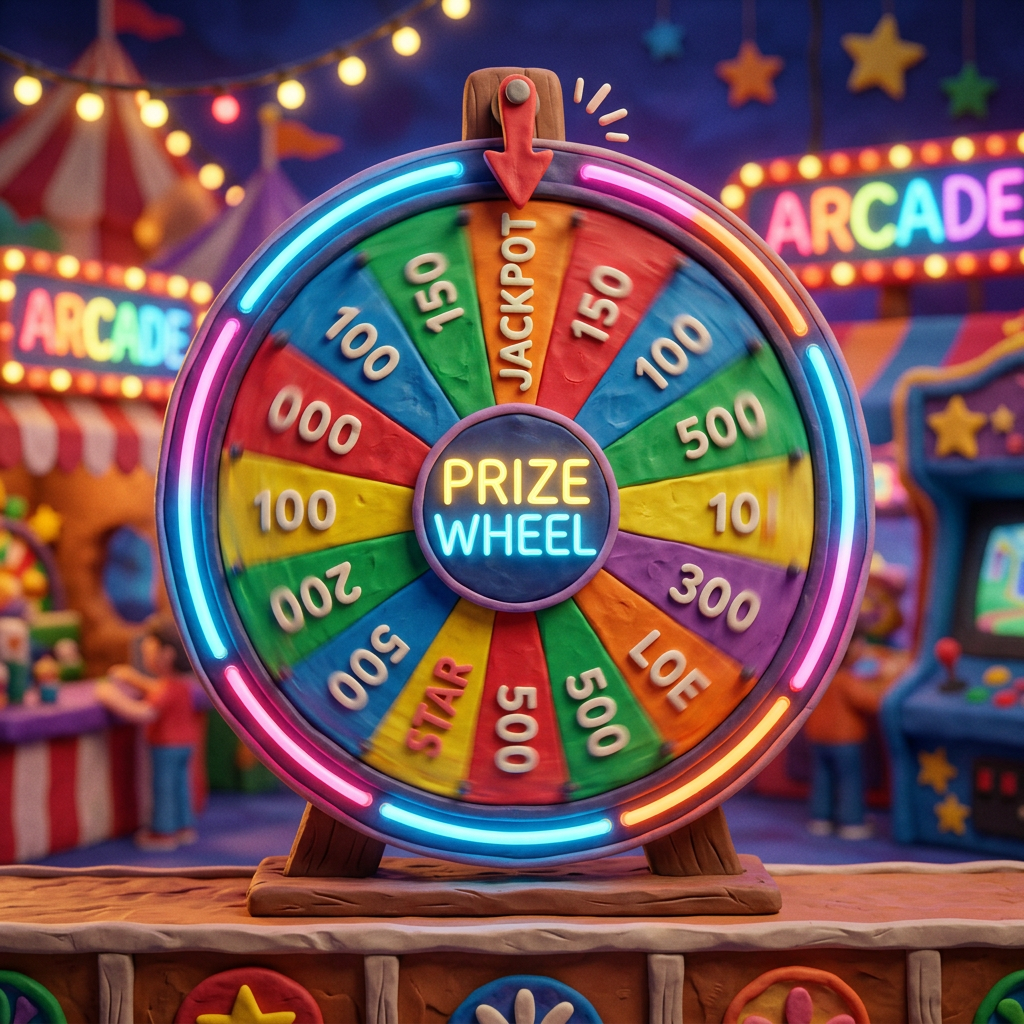
In today’s economic landscape, a subtle but powerful shift is taking place. What was once a world driven by deliberate decisions—what to buy, where to invest, which service to use—is increasingly being remade by algorithms, lotteries, and random rewards. From mystery boxes in video games to unpredictable stock market bots, chance is quietly replacing choice as the primary driver of consumer behavior.
This transformation isn’t just about fun surprises. It’s about a fundamental redesign of how value is created, distributed, and perceived. The “Random Economy” is here, and understanding its mechanics is the first step toward navigating it without losing control.
The Hidden Takeover of Randomness in Modern Markets
Randomness has always existed in markets—after all, no one can predict a recession or a crop failure. But today’s randomness is manufactured. It’s coded into the very platforms we use daily.
Consider these everyday examples:
- Loot boxes and gacha mechanics in games that reward players with random items, often encouraging repeat spending.
- Mystery product drops from retailers (like “surprise boxes”) where the customer pays for an unknown assortment of goods.
- Algorithmic trading bots that execute thousands of micro-trades based on probabilistic models.
- Dynamic pricing that fluctuates randomly or based on opaque data sets, leaving consumers guessing.
The key insight? This is not accidental. Manufactured randomness hooks the human brain. It triggers dopamine releases similar to gambling, making routine transactions feel like small adventures. Companies have realized that uncertainty sells better than certainty—because it keeps us engaged, longing, and spending.
How Gamified Apps Transform Users into Gamblers
Gamification is the stealth delivery system for the Random Economy. By wrapping chance-based mechanics in colorful interfaces and reward loops, apps turn ordinary users into active participants in a system that thrives on unpredictability.
Take a typical fintech app that offers “cashback spins” or a shopping platform with “mystery rewards.” The process looks harmless:
- You complete a purchase or check in daily.
- You receive a virtual wheel to spin.
- The wheel lands on a random prize—maybe a penny, maybe a coupon.
> “The line between a loyalty program and a slot machine is now measured in pixels.”
The danger is subtle. Over time, users develop a gambler’s mindset—they begin to associate positive feelings with the anticipation of the reward, not just the reward itself. This conditions people to accept randomness as a natural part of economic exchange. Before long, they might find themselves clicking “buy” not because they need a product, but because they want to spin the wheel again.
The Real Cost of Chance-Based Economic Systems
While randomness can be thrilling, it carries a hidden price tag. The costs are not just financial—they are psychological, social, and systemic.
Financial costs include:
- Overspending: Users spend more chasing random rewards than they would on fixed-price goods.
- Value asymmetry: The house (company) always has the statistical edge, while the consumer pays for hope.
- Debt cycles: For vulnerable users, random rewards can lead to compulsive spending and borrowing.
Psychological and social costs are even steeper:
- Decision fatigue: Constantly navigating randomness reduces our ability to make deliberate, long-term choices.
- Erosion of trust: When outcomes feel arbitrary, trust in markets and institutions declines.
- Increased inequality: Those who can afford to play the randomness game repeatedly benefit; others lose.
> “A system that replaces choice with chance doesn’t empower—it exploits probability.”
Consider how young people, raised on random reward mechanics in games and apps, might approach real-world economic decisions. The risk is that they learn to accept uncertainty as a norm, rather than demanding transparency and predictable value.
Why Choice Is Eroding in an Age of Synthetic Markets
Choice is the bedrock of classical economics. The idea that consumers rationally compare options and select the best one assumes a transparent, predictable environment. But the Random Economy undermines this at every turn.
Here’s how synthetic randomness is replacing genuine choice:
| Traditional Choice | Random Economy Equivalent |
|---|---|
| You compare product prices | You buy a mystery box at a fixed price |
| You decide where to invest | You let an algorithm allocate funds randomly |
| You choose a subscription plan | You accept a “luck-based” membership tier |
| You evaluate customer reviews | You rely on opaque “surprise” ratings |
The result is that agency is slowly stripped away. We stop being choosers and become players—participants in a game whose rules are written by corporations. These synthetic markets thrive on information asymmetry: the platform knows the odds, but the user does not.
This erosion of choice has profound implications for personal finance, career planning, and even democracy. If we get used to letting random systems decide for us, we may forget how to exercise deliberate judgment altogether.
Reclaiming Agency: A Future Beyond Artificial Randomness
We don’t have to accept a world where chance replaces choice. Reclaiming agency starts with awareness and small, deliberate actions.
Practical steps to break free:
- Audit your apps: Identify which platforms use random rewards or mystery mechanics. Consider deleting or limiting them.
- Track your spending: Notice if you buy more when uncertainty is involved. Awareness breaks the dopamine loop.
- Demand transparency: Support companies that show clear pricing, predictable rewards, and no hidden lotteries.
- Practice deliberate decision-making in low-stakes areas (e.g., choosing a coffee) to rebuild your choice muscle.
- Educate others: Share what you know about the Random Economy with friends and family—especially young people.
On a broader scale, we need policy changes that treat manufactured randomness like gambling. That means:
- Clear labeling of random reward mechanics in digital products.
- Spending limits for mystery boxes and similar systems, especially for minors.
- Consumer protection laws that penalize deceptive probability displays.
> “The future belongs not to those who roll the dice, but to those who choose the table.”
Conclusion
We live in an era where randomness is no longer a natural force—it’s a business model. The Random Economy has quietly woven itself into the fabric of our daily transactions, turning shoppers into gamblers and decisions into bets. But recognizing this shift is the first act of resistance. By choosing transparency over mystery, predictability over chance, and agency over algorithm, we can build an economy that respects, rather than exploits, human intention. Choice is not dead—it’s waiting for us to reclaim it.
Leave a Reply