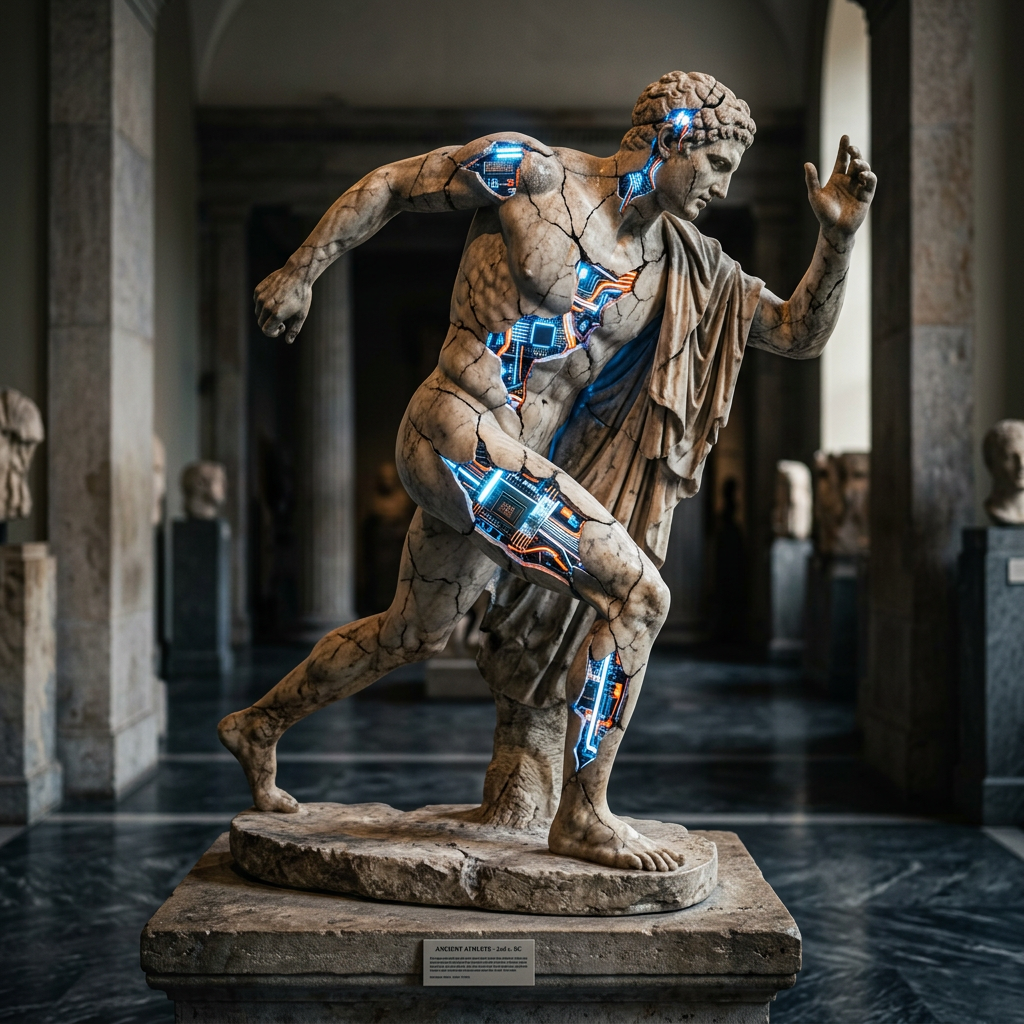
There is something sacred about the moment an athlete achieves the impossible. That split-second when a runner breaks the tape, a soccer player slots the ball into the top corner, or a gymnast sticks a landing that defies gravity. We celebrate these moments not just because they are rare, but because they are real—the product of years of sacrifice, sweat, and indomitable will. But now, a new contender has entered the arena: artificial intelligence. And it threatens to unravel the very essence of human competition.
When AI fakes sports, it doesn’t just fabricate highlights—it hollows out the emotional core of athletic achievement. The victory feels empty, the defeat meaningless. As synthetic replays, algorithm-generated commentary, and even virtual players flood our screens, we risk losing the soul that makes sports worth watching. This article explores how AI-generated content is quietly eroding the integrity of real competition and what it means for athletes, fans, and the future of the game.
Synthetic Leagues: The Soul-Sucking Simulation
Imagine a perfectly rendered basketball game where every shot swishes, every pass is crisp, and every player moves with superhuman precision. Sounds amazing, right? Now imagine that none of it happened. The players are AI avatars, the crowd is a digital phantom, and the final score was curated by an algorithm designed to maximize engagement. This is the emerging world of synthetic sports leagues.
- No real stakes: There is no injury, no fatigue, and no emotional rollercoaster. The drama is manufactured.
- Deceptive realism: Deep learning models can mimic the mannerisms of real athletes, making it nearly impossible to distinguish fact from fiction.
- Stolen glory: AI can replicate a legendary player’s style, but it can never replicate their struggle, their loss, or their triumph over adversity.
As these synthetic leagues gain traction, they don’t just compete for our attention—they actively devalue the authentic efforts of human athletes. Why watch a Real Madrid game when an AI can generate a “perfect” match where every moment is a highlight? The answer is: because perfection is boring. Soul is found in imperfection.
How Fake Sports Undermine Real Athletic Glory
Athletic glory is built on a foundation of truth. When we watch a marathon runner collapse at the finish line, we feel their exhaustion because we know it is real. When a team comes back from a 3-0 deficit, we celebrate because the odds were genuinely stacked against them. AI fakes destroy this foundation.
> “When a fan cannot tell if a game is real or generated, the athlete’s achievement becomes a commodity—something to be consumed, not revered.”
Consider the following ways AI-generated sports poison the well of real achievement:
- Eroding trust: Fans begin to question everything. Was that incredible catch real or a deepfake? Did that player really pull off that move? The suspicion alone taints the joy.
- Diluting scarcity: True greatness is rare. AI can produce an infinite number of “great” moments, making genuine excellence seem mundane.
- Rewriting history: Imagine an AI “enhancing” classic games to look more exciting, overwriting the actual narrative of victory and defeat. This is a form of historical vandalism.
- Exploiting athletes’ likenesses: Without consent, AI can recreate and monetize a player’s image, turning their real career into a ghost that haunts their own legacy.
The message to real athletes is clear: your grind, your pain, and your victory lap are now competing with a hyperreal simulation that never breaks a sweat.
The Dark Side of AI-Optimized Fan Engagement
It sounds innocent enough—AI can analyze what fans love and deliver more of it. But this optimization comes at a steep price. The goal of engagement algorithms is not to celebrate the human spirit; it is to keep eyes on the screen for as long as possible. This leads to a feedback loop of fakery.
- Algorithmic scriptwriting: AI suggests “most likely exciting plays” for broadcasters to focus on, potentially ignoring key defensive efforts or moments of sportsmanship that don’t score high on engagement metrics.
- Personalized alternate realities: Fans might see a version of a game dubbed with AI commentary or replayed with edited highlights that create a false narrative of what happened.
- Synthetic excitement: AI can generate crowd noise, dramatic music, and even fake replay angles to heighten drama where none existed. The experience becomes a polished lie.
This approach treats sports as content rather than contests. The athlete becomes a character, not a protagonist. The fan becomes a consumer, not a witness.
Protecting Human Performance from Algorithmic Lies
We are not powerless in this game. Preserving the soul of sports requires conscious effort from athletes, leagues, broadcasters, and fans alike. Here are key steps to protect real athletic performance:
- Mandatory labeling: Any AI-generated or AI-substantially-altered sports content must be clearly labeled as “synthetic” or “AI-augmented.” Truth in labeling is the first defense.
- Athlete consent laws: Legal frameworks must prevent AI from using a real athlete’s likeness, voice, or playing style without explicit, compensated permission.
- Champion the “warts and all” broadcast: Leagues should offer a “raw feed” option—unenhanced, unscripted, and free from AI manipulation—for purists who value reality over polish.
- Educate fans on deepfake detection: Just as we teach people to spot misinformation in news, we should teach fans how to identify fake sports content.
- Celebrate the imperfect moment: Highlight reels are great, but the missed penalty, the bad pass, the slip—these moments are where the human story lives. Media outlets should intentionally showcase these to remind us of the cost of real competition.
> “The soul of an athlete is not in their perfect moment, but in their persistence through imperfection. AI can fake the moment, but it can never fake the journey.”
Conclusion
Sports are a window into the human condition. They show us what it means to strive, to fail, and to rise again. When AI fakes sports, it doesn’t just steal a highlight—it steals the truth that makes us cheer. A digital avatar never feels the sting of defeat, and a synthetic crowd never experiences the catharsis of a last-second win. These are experiences reserved for living, breathing humans.
We must embrace AI as a tool for training, analysis, and accessibility, but we must draw a hard line when it comes to simulating the core competition. The moment we cannot tell if a game is real or fabricated, we lose more than a spectator sport—we lose a mirror that reflects our own capacity for struggle and triumph. Preserving the soul of sports means protecting the authenticity of every drop of sweat and every tear of joy, ensuring that when an athlete crosses the finish line, there is no doubt: it was truly, gloriously, and painfully real.
Leave a Reply