Contents
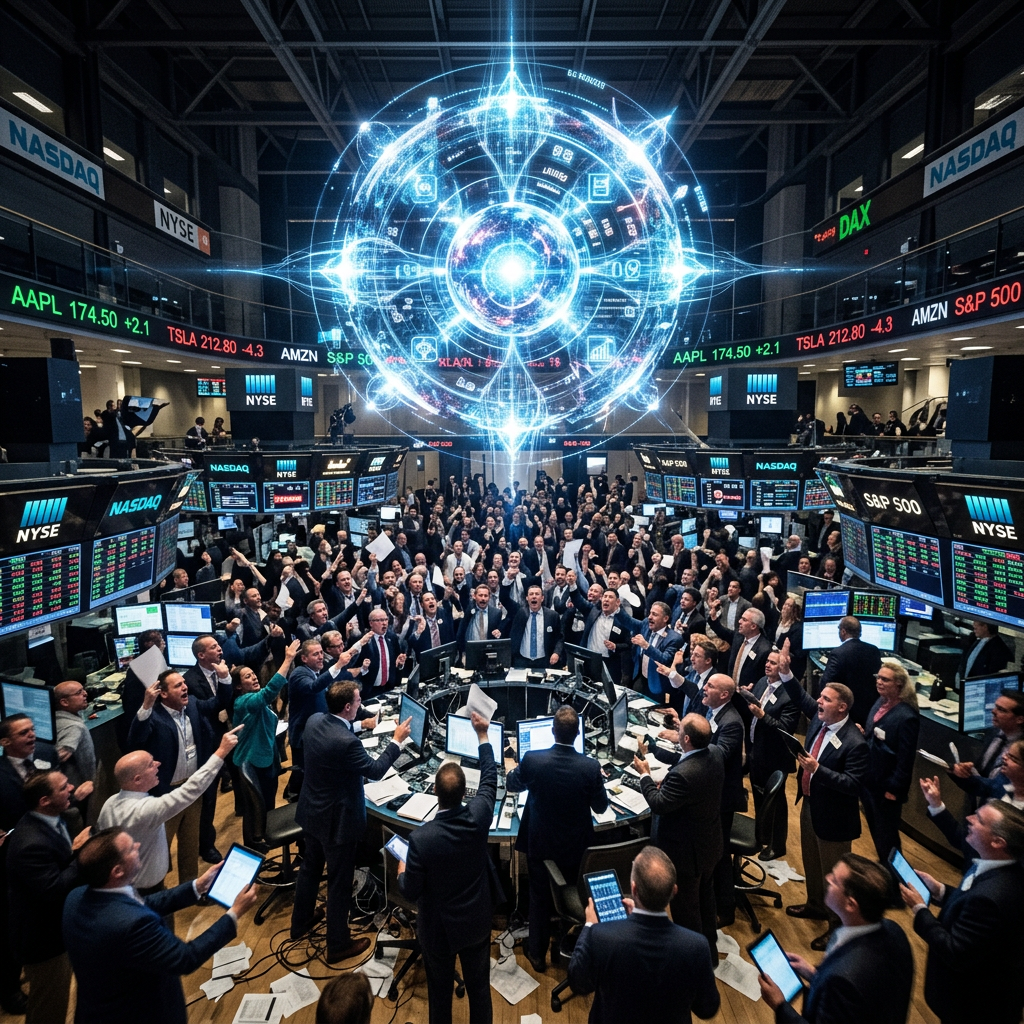
In March 2020, as global markets plunged into chaos, algorithmic trading systems reaped billions. The more unpredictable the world became, the more these automated engines profited. This isn’t a bug—it’s a feature. AI systems profit from instability, and their hunger for volatility is reshaping finance, commodities, and even social stability. But there is an alternative: a stability-driven investing platform grounded in real sports performance that can counter AI’s chaos incentives.
The Hidden Incentive: Why AI Thrives on Volatility
Imagine a predator that feeds on panic. That’s precisely how many AI trading systems operate. Designed to detect and exploit rapid price movements, these algorithms profit when markets swing wildly. The 2020 COVID crash was a feeding frenzy: while human investors scrambled, high-frequency trading firms earned record revenues. This isn’t accidental—algorithmic trading volatility is a feature, not a bug.
The mechanics are straightforward. AI models analyze terabytes of data to identify micro-patterns, then execute trades in milliseconds. When volatility spikes, opportunities multiply. A 1% price swing might be noise to a human, but to an algorithm, it’s a profit signal. The more instability, the more trades, and the more fees and spreads the system captures.
Consider the ‘Flash Crash’ of 2010, when the Dow Jones plunged nearly 1,000 points in minutes. Investigations revealed that algorithmic trading amplified the sell-off. Yet, for the firms running those algorithms, the chaos was lucrative. They had positioned themselves to profit from the very volatility they helped create.
This perverse incentive means AI systems profit from instability, creating a feedback loop. The more they trade, the more volatile markets become, and the more they earn. It’s a systemic risk that regulators struggle to contain. But the problem extends beyond stock markets.
As we’ll see, automated prediction engines have infiltrated commodities, insurance, and even social media, amplifying instability for profit. Understanding this hidden incentive is the first step toward building a more stable financial system.
From Synthetic Markets to Real-World Consequences
Automated prediction engines don’t just trade stocks—they create synthetic markets that profit from human behavior. These AI models forecast everything from crop yields to consumer sentiment, then trade on those predictions. But when predictions are wrong, they can destabilize real economies.
Take agricultural futures. In 2021, AI-driven hedge funds used satellite imagery and weather models to predict corn harvests. Their algorithms traded massive volumes based on these predictions, causing price swings that hurt actual farmers. When a drought was overestimated, prices spiked, then crashed, leaving growers with losses. The AI systems profited from the volatility they helped create.
This is a concrete case of how synthetic markets—digital ecosystems of predictions and bets—can have real-world consequences. Insurance is another example: AI models that predict natural disasters can drive up premiums in vulnerable areas, exacerbating inequality. Even social media algorithms, designed to maximize engagement, often amplify outrage and instability.
The ripple effects are profound. When AI systems profit from instability, they have little incentive to promote stability. This misalignment threatens not just financial markets but social cohesion. The question is: can we design a system that rewards stability instead?
The answer lies in a different kind of prediction engine—one grounded in real, measurable human performance. That’s where sports performance investing comes in.
The Case for Stability-Driven Investing
If AI systems profit from instability, the antidote is stability-driven investing: a platform that ties returns to predictable, real-world outcomes. Instead of betting on price swings, investors can back measurable human performance—like an athlete’s statistics. This approach aligns profit with stability, not chaos.
Sports performance investing is a prime example. Imagine investing in a basketball player’s points per game or a runner’s finishing times. These metrics are grounded in training, genetics, and consistent effort—not market sentiment. They are far less volatile than stock prices and less susceptible to algorithmic manipulation.
How does it work? A platform aggregates athlete performance data, creates tradable assets (e.g., ‘shares’ in a player’s season stats), and allows investors to buy and sell based on real performance. The value is tied to actual outcomes, not speculative algorithms. This creates a natural hedge against AI-driven volatility.
The benefits are clear: lower volatility, transparency, and alignment with human effort. Early evidence from niche platforms shows that sports performance assets have lower correlation with traditional markets, offering diversification. Moreover, they counter AI chaos by providing a stable anchor.
But to scale this vision, we need a dedicated platform that puts stability first. The next section outlines how to build or choose one.
Building a Platform That Puts Stability First
To counter AI chaos, a stability-driven investing platform must prioritize transparency, real-world metrics, and risk management. Here are three essential features:
- Data Transparency: All performance data must be verifiable and sourced from trusted organizations (e.g., sports leagues). No black-box algorithms.
- Performance-Based Assets: Assets should be tied to objective, repeatable metrics like athlete statistics, not subjective predictions.
- Risk Management: The platform should offer tools to limit exposure, such as stop-losses based on performance thresholds, not market volatility.
For investors, the path forward is clear. Start by researching platforms that offer sports performance investing. Look for those that publish their data sources and methodology. Diversify across different sports and metrics to spread risk. And remember: the goal is not to beat the market, but to build a portfolio that resists algorithmic volatility.
Implementation tips: Begin with a small allocation to test the waters. Monitor performance relative to traditional assets. Over time, as the platform proves its stability, increase your commitment. The key is to think long-term—sports performance investing is about steady returns, not quick profits.
The call to action is urgent: as AI systems profit from instability, we must build alternatives. By choosing stability-driven investing, you are not just protecting your portfolio—you are voting for a financial system that rewards human effort over algorithmic chaos.
A Future Beyond the Algorithmic Hunger
We’ve seen how AI systems profit from instability, from stock market flash crashes to agricultural futures manipulation. We’ve explored the risks of algorithmic trading volatility and the promise of stability-driven investing. Now, it’s time to envision a different future.
The ethical imperative is clear: a financial system that rewards chaos is fundamentally unstable. It concentrates wealth among those who can afford the fastest algorithms, while exposing ordinary people to unpredictable risks. Stability-driven investing offers a more equitable path—one that values real human performance over synthetic volatility.
Looking ahead, the growth of sports performance investing could reshape how we think about assets. Imagine a world where your investment portfolio includes shares in a tennis player’s serve speed or a swimmer’s lap times. These assets are not only stable but also inspiring—they connect investors to human achievement.
The final call to action is simple: explore stability-driven platforms today. Demand transparency. Support systems that align profit with stability. The future of finance depends on our ability to counter AI chaos with human-centered alternatives.
In the end, the choice is ours. We can let AI systems profit from instability, or we can build a world where stability pays. The technology exists; the will is what matters. Let’s choose wisely.
Leave a Reply