Contents
Cross-border betting is quietly bleeding North Florida’s high school football programs dry, with millions leaving towns like Pensacola, Tallahassee, and Lake City for out-of-state gambling options. While booster clubs and local sponsors scramble to fill budget gaps, the Friday night lights that once united communities are flickering. This budget analysis unpacks the numbers, the real cost on the field, and the innovative strategies—including sports investing programs—that could turn the tide.
The Economic Clash: Friday Nights vs. Border Wagers
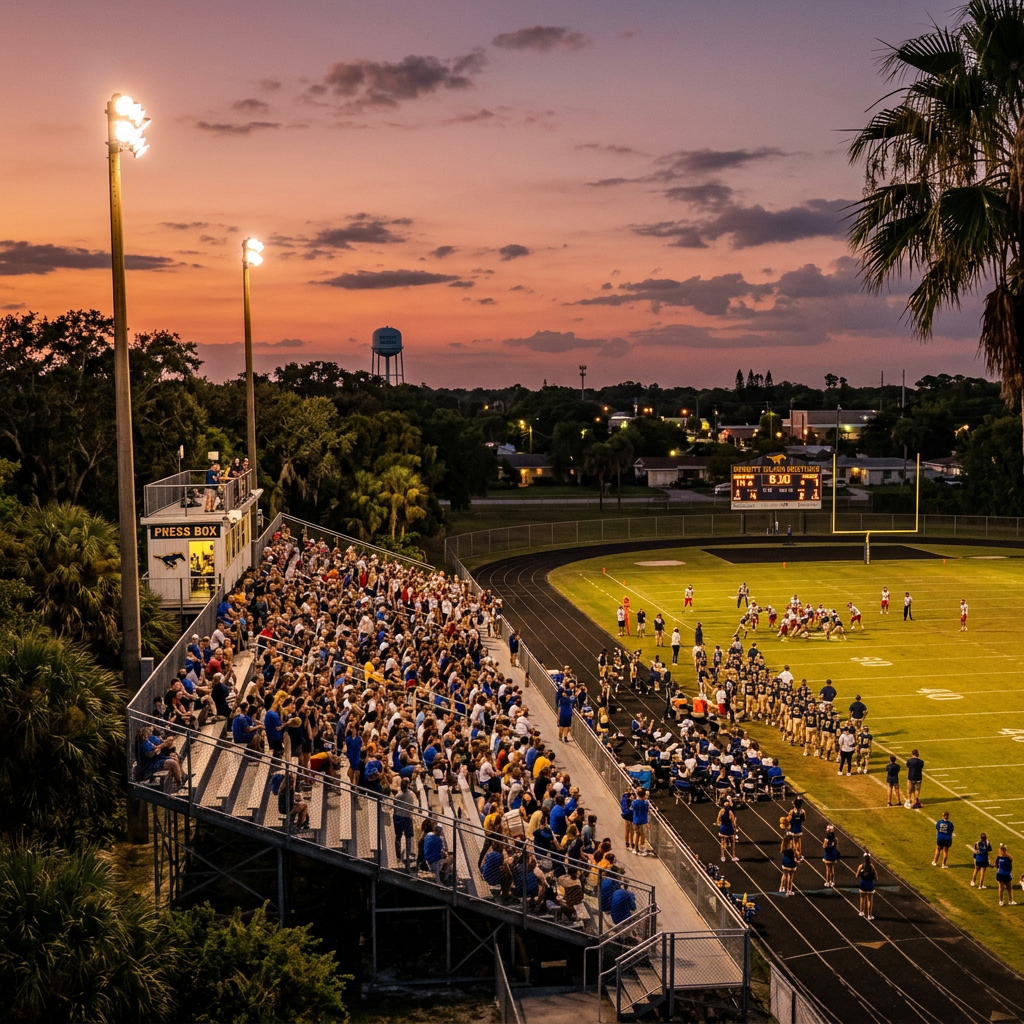
On a cool October evening in Pensacola, the stadium lights blaze over a packed home side, and the smell of popcorn drifts past the concession stand. Parents cheer, students wave painted signs, and boosters tally the night’s intake. This is Friday Night Lights in North Florida — a ritual that has long fueled local identity and, in tangible ways, local commerce. But a quieter financial drain is spreading across the region, one that pulls dollars away from these same bleachers and toward betting windows across state lines. Cross-border betting is becoming an economic counterweight to the high school gridiron, and towns like Tallahassee and Lake City are feeling the pull.
The tension is simple: money that once circled back into the community — through ticket sales, booster donations, and Main Street sponsorships — now flows out of state. In Florida, gambling options are limited, but neighboring Georgia and Alabama offer easy access to sportsbooks, parlays, and in-game wagers. For a fan in Pensacola, a quick drive over the state line can turn a casual Saturdayinto a budget-shifting bet. For the local economy, that’s not a harmless hobby; it’s a transfer of resources away from the very institutions that bind communities together.
The North Florida football economy isn’t just about Friday nights. It’s a web of small businesses that sponsor jerseys, restaurants that feed post-game crowds, and families who plan their weekends around home games. Each of those connections depends on discretionary spending. When that spending is redirected to out-of-state betting platforms, the ripple effect is felt in everything from booster club budgets to the vibrancy of downtown streets. The question isn’t whether Friday Night Lights can compete with the thrill of a live bet — it’s whether local economies can afford to keep losing this quiet battle. Understanding that clash begins with the numbers, and the numbers are stark.
Where the Money Goes: Football Budgets vs. Betting Outflow
Strip away the pomp and Friday-night pageantry, and high school football in North Florida runs on a shoestring. In Pensacola, Escambia County schools allocate roughly $60,000 to $80,000 per season for a typical varsity program—covering buses to away games, helmet reconditioning, field chalk, and referee fees. Tallahassee’s Leon County districts hover in a similar range, while smaller towns like Lake City make do with $40,000 or less, often relying on hand-me-down equipment and volunteer labor to stretch every dollar.
Now compare that to the estimated cross-border betting outflow. According to the Florida Council on Compulsive Gambling, residents in the Panhandle’s border counties already cross into Georgia and Alabama to place wagers—a trend that accelerated after Alabama legalized sports betting in 2023. Conservative estimates suggest that a single county like Escambia loses at least $5 million annually to out-of-state betting apps and casinos. That’s more than 60 times the combined football budgets of every public high school in the county.
| Community | Avg. Annual Football Budget | Estimated Betting Outflow | Ratio |
|---|---|---|---|
| Pensacola (Escambia Co.) | $70,000 | $5–8 million | 71:1 |
| Tallahassee (Leon Co.) | $65,000 | $3–5 million | 46:1 |
| Lake City (Columbia Co.) | $45,000 | $1–2 million | 22:1 |
These aren’t empty numbers. That $5 million could fund every high school football program in the county for the next 70 years—or upgrade crumbling bleachers, hire certified athletic trainers, and provide new helmets for every player. Instead, it flows across state lines, returning nothing to local communities. As one Pensacola coach put it: «We’re not just losing games to cross-border betting—we’re losing our future.»
The Bottom Line
The gap between football budgets and betting outflow isn’t a rounding error—it’s a structural drain. For every dollar a booster club raises, roughly $70 leaves the local economy in betting losses.
Booster Clubs and Sponsors: The Local Funding Lifeline
For decades, the booster club was the quiet engine of North Florida football. In towns like Lake City and Pensacola, the club treasurer knew every player’s name, every business owner’s number, and every dollar that moved from a local sponsor’s checkbook to the equipment shed. That flow of money is now showing cracks—and the pressure isn’t coming from a rival school across the county. It’s coming from a betting app opened on a phone in the stands.
Booster club fundraising trends tell a familiar story: the same families who used to donate generously to a new scoreboard or a team bus are now setting aside money for weekend trips to Georgia or Alabama, where sports betting is legal and easily accessible. The discretionary income that once stayed in the community—funding summer camps, new helmets, and post-game meals—is increasingly slipping across state lines. In towns within a short drive of the border, the outflow is measurable in more than just loss of revenue; it’s felt in the silence at fundraising auctions and the shrinking list of corporate sponsors on the back of the game program.
Take a hypothetical booster club treasurer in Tallahassee: she’s watched the same three dominoes fall over the past two seasons. First, the local car dealership that used to pay for the team’s travel jerseys scaled back to a single banner ad. Then, the regional bank that sponsored the end-zone signage shifted its marketing budget to digital ads—many of which appear on betting platforms. Now, she’s sending out an extra round of crowdfunding emails, trying to cover the cost of new blocking sleds. She sees the pattern, but without hard data, she can only speculate: are families budgeting smaller donations, or are they simply redirecting those funds to their own betting accounts?
What would prove the correlation? A year-over-year comparison of booster club donations and local betting activity—perhaps through anonymized card transaction data or a community survey—would show whether the dip in local sports spending tracks with upticks in border-state betting app usage. Such data could also reveal whether the problem is concentrated among certain age groups or income brackets, helping communities target their responses more effectively. Until then, the strain on booster clubs and local sponsors remains a warning sign: when football loses its wallet, it also loses its civic pull.
Do Sports-Investing Programs Keep Money Home?
Could a different kind of sports economy keep more dollars in North Florida? That’s the idea behind sports-investing programs—community savings pools, youth sport trusts, or school-endowment models that treat local athletics as an asset class rather than a cost center. Unlike a booster club that raises money for equipment, these programs aim to create long-term financial stability for sports programs, often by tying funding to performance metrics or community investment goals.
In practice, a discipline fund might set aside revenue from ticket sales, concessions, or local business contributions into a managed account that grows over time. A stability metric could measure how consistently a program meets budget targets, rewarding schools that maintain a steady funding base. Some communities have piloted youth sport trusts, where residents contribute to a pool that funds multiple sports, spreading risk and ensuring no single team bears the brunt of funding shortfalls.
The core appeal
Sports-investing programs keep money local by design: they create a virtuous cycle where community contributions are reinvested into the programs that generate them. This contrasts with cross-border betting, where dollars exit Florida’s economy entirely.
But can they realistically compete with the lure of a quick bet in Georgia or Alabama? The answer is nuanced. These programs offer a stable, disciplined alternative—but they require steady participation from families, businesses, and local governments. For a school district in Lake City, a youth sport trust might raise $50,000 a year with strong community backing, compared to an estimated $200,000 in betting outflows. That’s a significant gap, but one that could narrow if sports-investing programs are combined with better financial literacy and stronger local sponsorships.
The realistic verdict: sports-investing programs are not a silver bullet, but they are a promising tool. They won’t eliminate cross-border betting, but they can help football programs weather economic shocks and maintain their role as civic anchors. The key is starting small, measuring impact, and proving to donors that their money stays visible and effective—something a betting parlay can never offer.
What North Florida Can Do: Keeping Football a Civic Anchor
The challenge is clear: cross-border betting pulls dollars out of North Florida communities, leaving high school football programs to fight for scraps. But the solution isn’t to ban betting—it’s to out compete it. Communities like Pensacola, Tallahassee, and Lake City can implement practical strategies to keep sports dollars local and ensure Friday nights remain the economic and social anchor they’ve always been.
- Diversify booster club revenue streams beyond traditional game-day sales. Explore digital auctions, alumni giving apps, and recurring membership programs that tap into the lifelong loyalty of former players and fans.
- Create sponsor incentives that tie local business contributions to measurable community impact—like branded youth camps or stadium upgrades—so sponsors see tangible returns and prefer investing in hometown teams over out-of-state betting profits.
- Form regional sports compacts across North Florida counties to share resources, negotiate group sponsorship deals, and create a unified marketing push that celebrates the region’s football culture as a destination for family entertainment.
- Launch youth financial literacy programs that teach students and families about the long-term value of local investment, contrasting the quick hit of a bet with the enduring benefits of supporting community infrastructure.
These steps won’t erase the lure of border wagers, but they can tilt the economic balance. When a community demonstrates that its Friday night lights generate pride, connection, and real financial returns, it builds a resilience that no betting app can replicate. The goal isn’t to wall off the border—it’s to make home feel like the better bet.
Leave a Reply