Contents
- Introduction: The Weight That Was Never Theirs
- The Harassment Epidemic: When Fans Turn on Athletes
- Distorted Identities: How Projections and Odds Erase the Human Story
- The Emotional Cost: Mental Health Consequences and the Toll of Constant Scrutiny
- Conclusion: Restoring Humanity — What Fans, Leagues, and Media Can Do
Athlete exploitation in sports betting is a silent crisis: every bet placed, every projection made, and every A.I. probability judgment adds another brick to the weight they were never meant to carry. They suffer harassment, distortion, and emotional collapse — their humanity erased by chance. This is their elegy, and it demands your attention.
Introduction: The Weight That Was Never Theirs
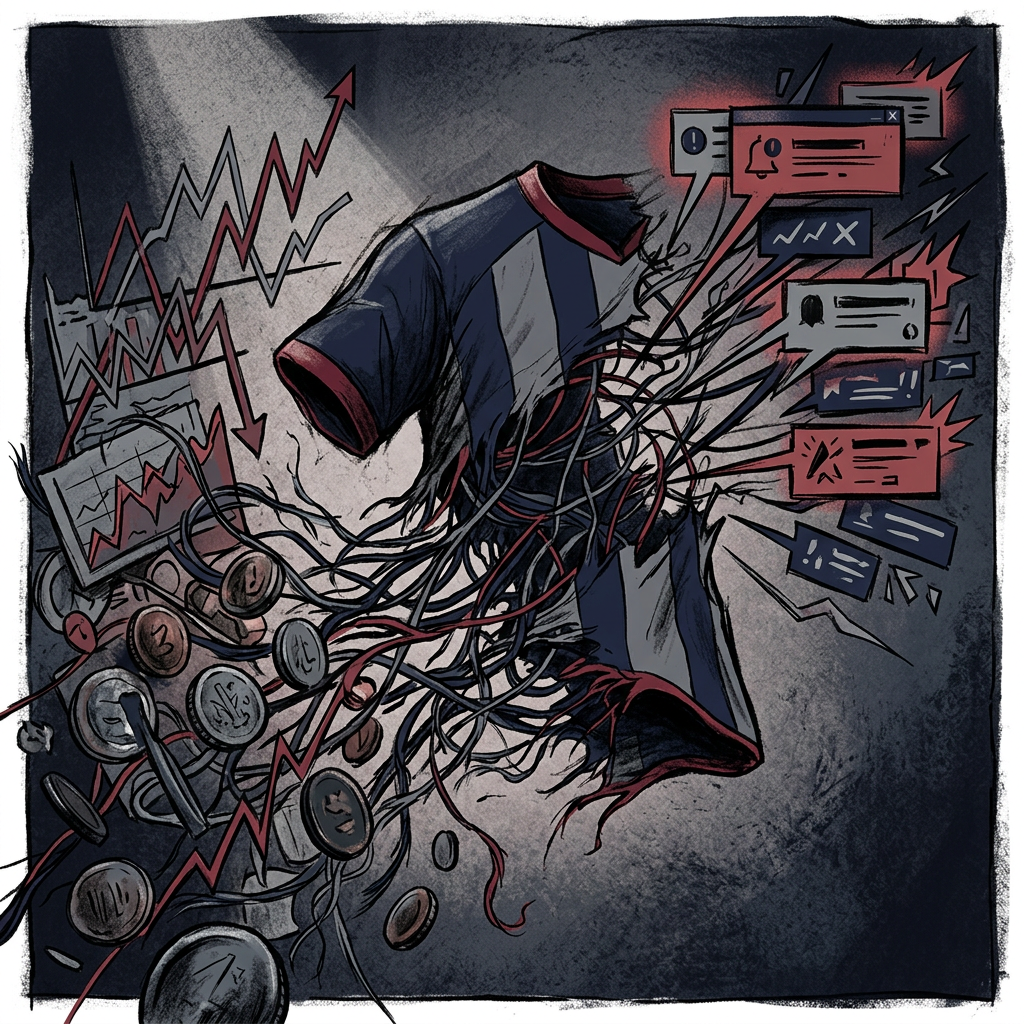
The roar of the crowd fades, the arena lights dim, and the athlete walks off the field—but the weight they carry does not leave with the game. It follows them into the locker room, onto the bus, and into sleepless nights. That weight is not their own; it is the collective burden of millions of bets placed, fantasy projections updated, and prediction markets hung on their every move. Athlete exploitation in sports betting has become so pervasive that many performers confess they feel more like commodities than human beings.
Consider the image of a star quarterback throwing a pass in the final seconds. For the athlete, it’s a moment of pure execution. For a gambler, it’s a live bet on whether that pass lands in the end zone. For a fantasy owner, it’s a projection that could win or lose a virtual championship. For an A.I., it’s data being fed into a probability model. The athlete’s reality—the sweat, the strategy, the injury they hide—becomes secondary to what the event means for someone else’s financial win or loss.
The emotional toll on athletes is real and escalating. They hear the boos, read the threats, and see their names trending for all the wrong reasons. They mourn the years they carried a weight that was never theirs—a weight compounded by the constant scrutiny of oddsmakers and the volatility of public opinion. Have we forgotten that behind the jersey is a person with hopes, fears, and a life beyond the game? This article explores the hidden burden athletes bear in the age of sports betting, fantasy sports, and A.I. probability judgments, and why their humanity is being lost in the noise.
The Harassment Epidemic: When Fans Turn on Athletes
For athletes, the weight of betting is not just abstract pressure—it manifests in the form of relentless online harassment. When a bettor loses money because a player missed a free throw or fumbled in the final minute, the fury often lands directly on the athlete’s social media mentions.
Death Threats and Daily Abuse: A Grim Reality
Across sports, players report receiving death threats, racial slurs, and vicious personal attacks after games where betting outcomes went south. One college basketball player described waking up to hundreds of notifications calling him “a bum” and wishing injuries on him—all because his team lost against the spread. Another NFL wide receiver shared that after a dropped pass, a fan sent him a photo of his own family with a threatening caption.
The Scale Is Alarming
A 2023 survey by the Professional Athletes’ Mental Health Coalition found that 78% of athletes had received abusive messages linked to betting or fantasy performance in the past year, with 1 in 5 receiving threats of physical harm.
The abuse is not limited to game days. Fantasy owners angry about a player’s weekly output may spam comments for days. The persistence creates a hostile environment where athletes must choose between engaging with fans—and risking exposure to vitriol—or distancing themselves entirely.
The Psychological Toll
This onslaught wears down mental health. Sports psychologist Dr. Lauren Whelan explains, “Athletes are trained to cope with on-field failure, but online harassment is a different beast—it’s personal, relentless, and often anonymous. It leads to anxiety, sleep disturbances, and even depression.” Many players admit to avoiding social media entirely during the season, sacrificing their personal connection with fans to protect their peace.
The sports betting pressure is not just a metaphor—it’s a daily reality that forces athletes to block, mute, and hide just to survive. As one Olympic swimmer put it, “We’re not just competing against opponents; we’re competing against the internet’s rage.”
Distorted Identities: How Projections and Odds Erase the Human Story
Every game day, athletes are reduced to a series of numbers: projected points, anticipated rebounds, expected goals, implied win probabilities. For the casual fan, these numbers are simply a way to contextualize performance. But for the athlete, they are a cage. The fantasy sports projections and AI probability judgments that now permeate sports media do not just predict outcomes — they redefine a human being as a statistical instrument, a means to an end for bettors and daily fantasy players. This is a subtle but pervasive form of athlete exploitation in sports betting: the silent erasure of identity.
Consider the cognitive dissonance an athlete feels when they deliver a career-best performance, yet the post-game discourse centers on whether they «covered the spread» or «hit the over.» A cornerback may have shadowed the league’s best receiver all night, making critical tackles and breaking up passes — but if his team loses by more than the betting line, his excellence is rendered moot. He becomes a liability, a failed bet, an object of frustration. The human story — the years of training, the personal struggles overcome, the triumph of athletic achievement — is overshadowed by the cold arithmetic of the over/under.
It is as if the athlete is a stock ticker, constantly fluctuating in value, judged solely by their rise and fall relative to some external benchmark. No one asks the stock how it feels to be shorted. No one considers the late nights it spent perfecting its craft. In this ecosystem, the athlete is dehumanized, their worth quantified by a number that has no memory of their journey. The pressure to meet these projected targets — often communicated directly through social media barrages — becomes an additional weight, pushing many to the brink of anxiety and burnout.
This distortion does not occur in a vacuum. It is fueled by the multi-billion-dollar sports betting industry and the proliferation of fantasy platforms, which normalize the reduction of athletes to data points. The more we speak of athletes in terms of «props» and «projections,» the more we train ourselves to see them as instruments for our own financial gain. And in doing so, we strip away the very humanity that makes their stories worth celebrating in the first place.
The Emotional Cost: Mental Health Consequences and the Toll of Constant Scrutiny
The weight athletes carry is not just metaphorical. It manifests as anxiety, depression, and burnout — conditions that have become alarmingly common in professional sports. A 2021 study by the International Olympic Committee found that elite athletes experience mental health disorders at rates comparable to the general population, yet they face unique pressures: public judgment, financial stakes, and the relentless gaze of bettors and fantasy owners who see them as instruments for profit.
When a bettor loses a parlay because a quarterback threw an interception, the athlete isn’t just a player; they’re a failure. When a fantasy owner misses the playoffs because a star was injured, the athlete isn’t human; they’re a disappointment. This dehumanization seeps into every performance, every mistake, every vulnerable moment. Psychologist Dr. Mark Thompson, who works with professional athletes, explains: “The constant scrutiny from betting and fantasy communities creates a hyper-vigilant state. Athletes start to feel they’re only as valuable as their last stat line, which erodes their self-worth beyond the game.”
- Anxiety before and during games, triggered by fear of underperforming for those who bet on them.
- Depression linked to online abuse and the feeling of being trapped by public expectations.
- Burnout from the pressure to constantly meet projected numbers, leading to exhaustion and decreased performance.
- Sleep disturbances and substance use as coping mechanisms, as documented in various sports psychology studies.
The emotional toll is compounded by the fact that athletes are often told to “just ignore it” or “focus on the game,” which invalidates their real struggles. Many suffer in silence, fearing that admitting to mental health issues will be seen as weakness or affect their career prospects. But the silence comes at a cost: higher rates of early retirement, chronic stress-related illnesses, and in tragic cases, suicidal ideation.
What Can Be Done: Practical Steps for Athletes, Teams, and Leagues
Change is possible, but it requires proactive measures from all sides. Athletes need clear channels to speak about their mental health without stigma. Teams should integrate sports psychologists into their daily routines, not just as a last resort. Leagues can implement stricter policies against online harassment, including working with social media platforms to identify and ban abusive users. Additionally, media outlets and analysts should be mindful of how they discuss odds and projections, avoiding language that reduces athletes to numbers.
The Bright Side: Growing Awareness
There is hope. In recent years, prominent athletes have spoken openly about their mental health struggles, from Naomi Osaka to Kevin Love. This bravery is shifting the conversation. Leagues are beginning to fund mental health initiatives, and some are even betting on athlete well-being as a performance enhancer. The weight they carry is heavy, but it doesn’t have to be theirs alone.
A New Understanding
The exploitation of athletes in sports betting is not just a financial issue; it’s a human one. By recognizing the emotional cost, we can begin to restore their humanity. As Dr. Thompson notes, “When we treat athletes as people first, they perform better, live healthier, and the game itself becomes purer.” The path forward is one of empathy, education, and action.
Conclusion: Restoring Humanity — What Fans, Leagues, and Media Can Do
The elegy of the burdened athlete echoes through every missed shot, every fumbled pass, every quiet locker room. We have seen how athlete exploitation in sports betting distorts identities, fuels harassment, and exacts a devastating emotional cost. But this narrative is not fixed. The weight they carry — our bets, our projections, our volatility — can be lifted if we choose to act.
For fans, the shift begins with awareness. Before sending that angry tweet or rage-betting on a player’s performance, pause and remember the human behind the jersey. Support responsible betting campaigns and advocate for platforms that prioritize athlete well-being over profit. When you see abuse online, report it — silence is complicity.
Leagues and sports organizations must do more than pay lip service to mental health. Implement stricter social media monitoring to protect athletes from targeted harassment, and establish athlete mental health days — official, stigma-free timeouts from the relentless pressure. Create transparent channels where players can voice their struggles without fear of reprisal.
Media outlets hold a powerful lens. They can either amplify the noise or reframe the story. Move beyond box scores and betting lines to highlight athletes’ personal journeys, their resilience, and their humanity. Use language that acknowledges their worth beyond their statistical output, and resist the urge to reduce them to probability charts.
A Call to Reflection
Every bet placed, every projection shared, every fantasy roster built carries a real consequence. The next time you engage with sports, ask yourself: Am I honoring the athlete’s humanity, or am I adding to the weight they never asked to carry?
The sorrow in their elegy is that chance made their humanity invisible — but we have the power to make it visible again. By recognizing the sports betting pressure we place on athletes and actively working to dismantle it, we restore what was never ours to take: their dignity, their peace, and their identity beyond the game. The question is not whether they can endure — they have endured enough. The question is whether we will finally see them.
Leave a Reply