Contents
Inflation signals have become dangerously unreliable as AI-generated content floods the internet with fabricated price trends and fake expert consensus. This synthetic noise makes it nearly impossible for everyday shoppers to trust what they see, forcing them to make financial decisions based on misinformation. But by learning a few verification techniques, you can cut through the clutter and anchor yourself to real price trends that matter.
Why Inflation Signals Have Become Unreliable
You see a viral post that claims grocery prices are finally falling. Encouraged, you head to the store only to find your cart costs more than last month. This disconnect is not a coincidence—it is the result of a broken inflation signal system.
AI-generated content, often called “slop,” has flooded the internet with fabricated price-drop stories, fake expert consensus, and misleading forecasts. These synthetic narratives are designed to engage, not inform, and they now outnumber genuine data points. As a result, households can no longer trust the price signals they encounter.
A recent example: a widely shared article claimed that rental rates had plummeted in major cities, but the actual rental index showed a steady climb. The AI-generated story was based on a single outlier listing, blown out of proportion. Such misinformation loops spread quickly, reinforcing false beliefs and eroding trust in legitimate economic indicators.
The Scale of the Problem
Synthetic content now outnumbers genuine analysis on many platforms. This is not just noise—it is a systemic collapse of reliable signals.
When you cannot distinguish real inflation from AI-generated fiction, every financial decision becomes a gamble. You might delay a major purchase because you believe prices will drop, only to face higher costs later. Or you might rush to buy an asset based on fake scarcity, only to watch its value fade.
The core issue is trust. Inflation signals have long been a cornerstone of household budgeting, investment planning, and wage negotiation. When those signals are polluted, the entire economic landscape becomes opaque, leaving ordinary people vulnerable to manipulation—and to their own misinformed choices.
How Synthetic Price Stories Fool Even Careful Shoppers
The grocery aisle is the new front line of the inflation information war. A viral TikTok shows a cart full of groceries for $50, claiming prices have crashed. An AI-generated blog quotes a «leading economist» predicting deflation. Even the most careful shopper starts to doubt their own eyes when the official inflation signals say one thing and their social media feed says another.
These synthetic price stories are built on a few convincing tricks. First, fabricated charts that cherry-pick a short time window to make a decline look real. Second, fake expert quotes that sound authoritative but come from nowhere. Third, the echo chamber effect: when a false claim is repeated across dozens of platforms, it starts to feel like truth. The algorithms amplify engagement, not accuracy, so the most extreme narratives win.
Contrast that with real inflation data from official sources like the Bureau of Labor Statistics. They show a steady, boring rise in food and rent prices. Your own shopping receipts confirm it. But the psychological toll is real: when you see conflicting stories, uncertainty creeps in. That uncertainty leads to panic buying or hoarding — actually pushing prices higher, creating a self-fulfilling prophecy.
The Danger of Misinformation Loops
When synthetic stories repeat often enough, they begin to shape real economic behavior. That’s how a fake price drop can trigger a real spending spree — and a real price spike.
The key to resisting these loops is to anchor yourself in verifiable, transparent sources. Check the date of the data, the methodology, and the agenda behind the story. Ask: who benefits from making you believe prices are dropping? The answer is rarely the average shopper.
Practical Steps to Verify Price Trends Yourself
When AI-generated noise corrupts official-looking charts, the most reliable inflation signals are the ones you generate yourself. Here is a practical checklist to ground your price trend analysis in reality.
- Check primary data sources: Visit your government statistical agency’s website (like the U.S. Bureau of Labor Statistics or Eurostat) directly. Look for raw data tables or PDFs, not just headlines. These agencies publish detailed breakdowns that rarely go viral but offer the most accurate real inflation data.
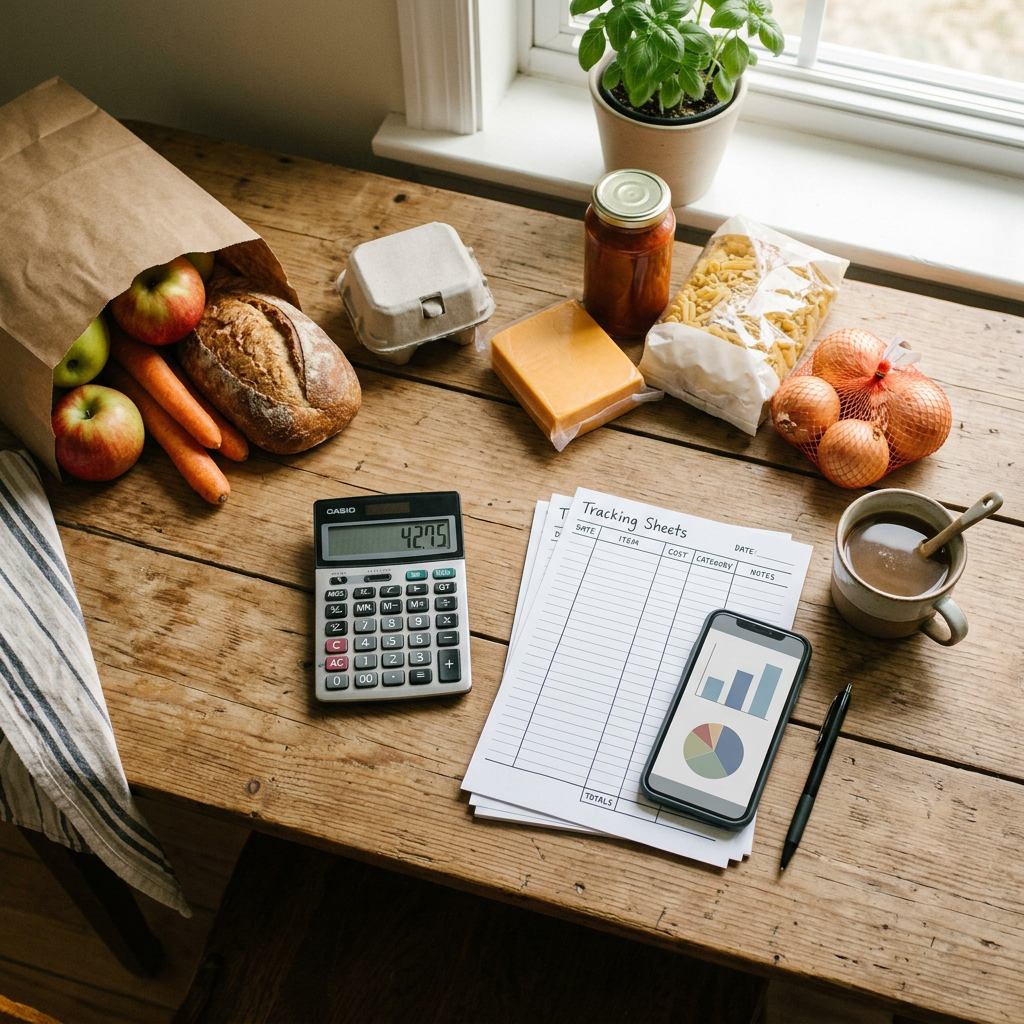
- Track your own basket of goods: Choose 10–15 items you regularly buy—a gallon of milk, a loaf of bread, a liter of gas, a movie ticket. Record their prices at the same stores each week in a simple spreadsheet. After a month, calculate the percentage change. This personal index often reveals trends that national averages miss.
- Use price comparison tools wisely: Online tools like grocery price trackers or fuel price apps aggregate real-time data. But cross-check their numbers with at least two independent sources. If a tool shows a sudden 20% price drop, verify it on the retailer’s website or a competitor’s app before believing it.
- Cross-reference multiple sources: Never rely on a single article or social media post. Look for the same data point on at least three different reputable outlets. If only one source reports a dramatic price shift, treat it as unverified noise.
- Beware emotional headlines: Language like «shocking collapse» or «prices plummet» is a red flag. Real inflation trends move gradually. A headline that screams urgency is designed to generate clicks, not to inform you.
Spreadsheet tip
You don’t need complex software. A simple column for date, item, price, and store is enough. Dedicate 10 minutes each week to update it. Over three months, you’ll have a personal data set that no viral story can override.
Why Financial Decisions Are Riskier in a Misinformation Era
The breakdown of inflation signals isn’t just an inconvenience—it’s a direct threat to your financial decisions. When you can’t trust the price signals you see, you’re essentially navigating a minefield with a broken compass. Every major money move—whether it’s buying a home, investing in stocks, or taking on debt—depends on your perception of future price trends. If those perceptions are distorted by synthetic price stories, your decisions are built on sand.
Consider a typical scenario: AI-generated articles claim that grocery prices are falling sharply, while in reality they’re climbing. If you believe the fabricated narrative, you might delay stocking up on essentials, expecting lower prices next week. When prices instead rise, you end up paying more. Or worse, you might decide to hold off on a salary negotiation or a major purchase, thinking inflation is under control, only to see your purchasing power erode.
The problem is compounded for investors. Markets are increasingly driven by narratives, not fundamentals. When AI slop floods the ecosystem with fake expert consensus, it becomes trivial to manipulate market sentiment. A single viral misinformation loop can cause a stock to surge or crash, unrelated to any real economic change. Retail investors who rely on these signals are effectively gambling against algorithmically amplified noise.
Why are traditional markets so vulnerable? Because they are built on narrative-driven speculation. A stock’s price often reflects what traders believe will happen, not what has actually occurred. In this environment, a few well-placed synthetic stories can move billions of dollars. This isn’t a conspiracy theory—it’s the logical outcome of a system where information is weaponized.
What we need are deterministic alternatives—systems where value is tied to transparent, verifiable real-world outcomes, not abstract narratives. Imagine a financial instrument whose price is directly linked to measurable athletic performance, like a runner’s time or a team’s score. The signal is clear: the athlete performs, the value changes. No room for AI‑generated spin. This principle of performance-linked value is not a fantasy; it’s a design choice that prioritizes truth over hype.
Key Takeaway
In a sea of misinformation, your financial decisions are only as sound as the data you trust. Seeking out transparent, deterministic signals—like those tied to real-world performance—can help you cut through the noise and act with confidence.
Building a Personal Inflation Reality Check Routine
The noise is only going to get louder. The good news? You already have the tools to cut through it — your own eyes, a notebook, and a healthy dose of skepticism. A simple, repeatable routine can anchor your price trend analysis in reality, not in viral headlines or algorithmically generated chatter.
Here is a five-step weekly check that takes about thirty minutes total. It is not about becoming an economist; it is about building a personal baseline so you can spot when something is off.
- Check official data, but read the fine print. Look at the Bureau of Labor Statistics (BLS) or your national statistics agency. Ignore the headlines and focus on the categories that matter to you — food, housing, transportation. Note the month-over-month change, not just the year-over-year figure. That gives you a cleaner look at the current trend.
- Survey your local prices in person. Pick two or three staple items you buy every week — milk, bread, eggs — and visit the same store, or check the same online retailer, at the same time. Write down the price. Do this for a month and you will have a personal inflation index that no AI can manipulate.
- Log one week of real household spending. Use a simple spreadsheet or a paper ledger. Categorize every purchase. At the end of the week, total each category and compare it to the same week last month. This gives you the actual inflation rate for your life, not the aggregate number.
- Question viral claims before you share them. Whenever you see a shocking price story on social media, pause. Ask: Where is the original source? Is the receipt visible or verifiable? Could the photo be cropped or the context misleading? Most viral price stories are either outdated, cherry-picked, or entirely fabricated.
- Make financial decisions slowly. When you feel pressure to act on a price trend — whether it is buying a big-ticket item or locking in a contract — force yourself to wait at least 48 hours. Use that time to cross-check your own data. Impulse reactions are the enemy of sound financial decision making.
This routine doesn’t just protect your budget — it rewires how you think about information. Every time you verify a price or question a headline, you are exercising a muscle that automated systems cannot. You are proving to yourself that reality is still knowable, even when the signals are scattered.
Leave a Reply