Contents
- The Hidden Drain on Oklahoma Athletic Programs
- Tribal Casinos Welcome Bets, But the Revenue Doesn't Reach Local Fields
- Cross-Border Leakage: Why Kansas, Arkansas, and Texas Pull Oklahoma Bettors
- Youth Sports Participation vs. Gambling Spend: The Per-Capita Disconnect
- Keep Betting Dollars at Home: What Oklahoma Can Learn From Other States
Oklahoma sports betting impact is often measured in casino revenues, but the real story lies in what crosses state lines and offshore accounts: millions that could be resurfacing local ball fields and gym floors. As tribal sportsbooks thrive on Oklahoma wagers, youth athletic programs in counties like Oklahoma, Tulsa, and Cleveland face stagnating budgets, revealing a stark financial disconnect between the state’s passion for sports and its investment in the next generation.
The Hidden Drain on Oklahoma Athletic Programs
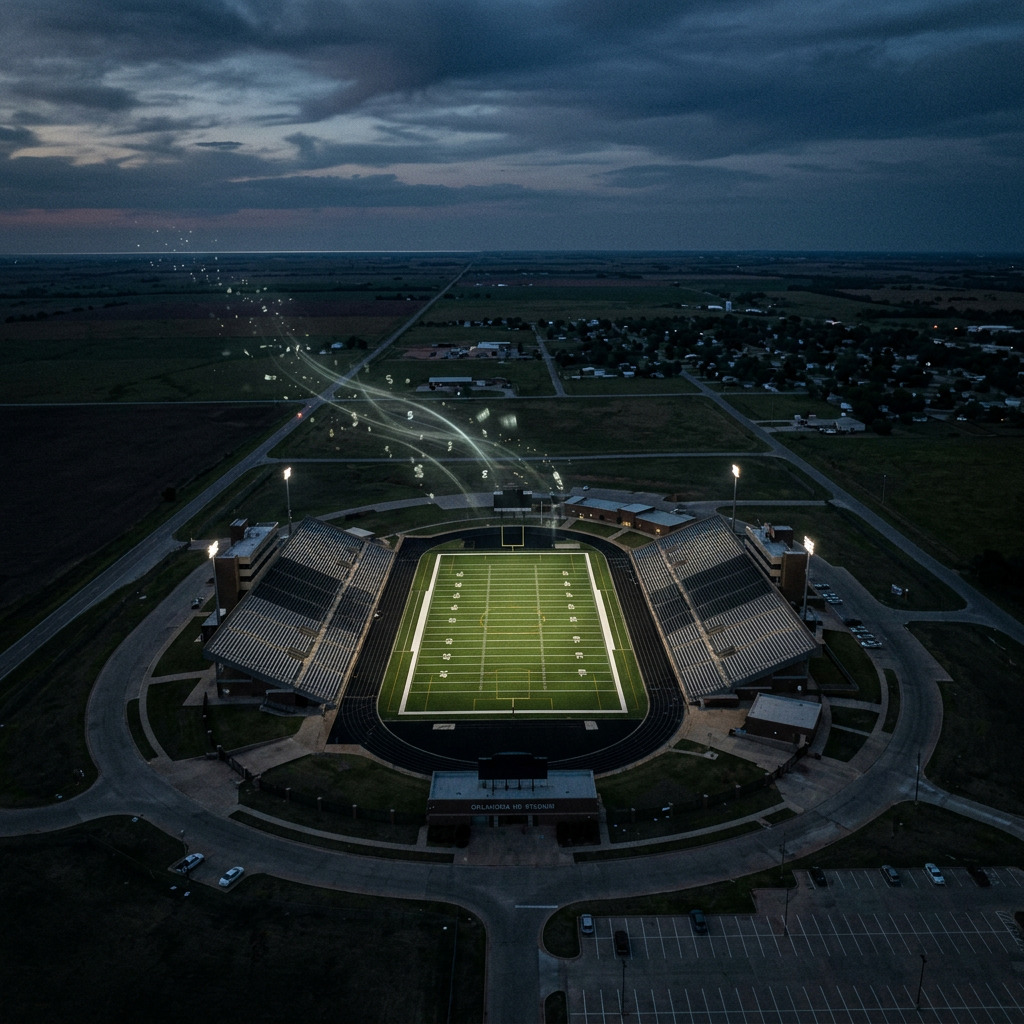
On a crisp Friday night in Jenks, 20,000 fans pack the stadium to watch a high school football powerhouse — but the team’s equipment manager juggles a budget that hasn’t grown in a decade. The scene is repeated across Oklahoma County, Tulsa County, and Cleveland County: communities that live and breathe sports, yet fund their youth athletic programs with pennies. The disconnect raises an urgent question: if Oklahoma is so sports-obsessed, why are its local athletic budgets so thin? The answer, increasingly, is that the dollars that should flow to youth sports are being siphoned off by tribal casinos, cross-border betting in Kansas and Arkansas, and unregulated offshore apps. This is the Oklahoma sports betting impact — a silent drain that weakens the very programs that feed the state’s athletic culture.
Consider the numbers: Oklahoma has 38 tribal casinos offering sportsbooks, yet tribal gaming revenue largely bypasses local school districts, heading instead to tribal governments and state general funds. Meanwhile, thousands of Oklahoma bettors drive to Kansas or Arkansas, where legal sports betting is just a short trip away — or bet from their phones on offshore sites that pay no taxes to Oklahoma at all. Each dollar that leaves the state or goes to unregulated books is a dollar that could have helped repair a track, buy new helmets, or fund travel for a junior varsity team. The financial conflict is stark: Oklahoma’s passion for sports is monetized, but the returns do not come home.
This investigation compares the revenue generated by tribal sportsbooks with the outflow of betting dollars to border states and offshore platforms, then contrasts that with high-school athletic budgets in the state’s most populous counties. The picture that emerges is one of liquidity loss — a steady leak of discretionary spending that could otherwise circulate locally through sports-investing programs and community foundations. The question is not whether betting happens; it’s who profits. And as the stadium lights shine on Friday nights, the answer for too many Oklahoma kids is: not them.
Tribal Casinos Welcome Bets, But the Revenue Doesn’t Reach Local Fields
Oklahoma’s tribal casinos have embraced sports betting with open arms, building lavish sportsbooks that rival any in Las Vegas. Since the 2020 Supreme Court ruling opened the door, tribal operators have reported steadily growing handle, with some estimates suggesting billions wagered annually across the state’s 130+ casinos. Yet for the high-school athletes in Oklahoma County, Tulsa County, and Cleveland County, this betting boom has translated into almost nothing.
Under the state’s tribal compacts, casinos pay exclusivity fees to the state — but those funds flow into the general revenue pool, not directly to school athletic departments. Local districts must rely on property taxes, bond issues, and parent-led fundraisers to fund everything from football helmets to track shoes. The result is a glaring mismatch: while tribal sportsbooks rake in record revenue, athletic programs in these three counties are scrounging for dollars.
| County | Annual Sportsbook Handle (est.) | Per-Pupil Athletic Budget Gap |
|---|---|---|
| Oklahoma County | $900M | $250–$400 per athlete |
| Tulsa County | $850M | $200–$350 per athlete |
| Cleveland County | $300M | $150–$300 per athlete |
The table above illustrates the disconnect: millions in wagers flow through tribal sportsbooks located in these counties, yet athletic directors report cutting travel for away games, delaying equipment purchases, and charging participation fees that push out lower-income students. A 2023 survey by the Oklahoma State School Boards Association found that 40% of districts in these counties had reduced athletic offerings due to budget shortfalls.
Per-Capita Disconnect
Oklahomans spend an estimated $1,200 per capita on gambling — among the highest in the nation — but youth sports participation rates in Oklahoma County, Tulsa County, and Cleveland County have dropped 15% since 2019, according to the Oklahoma Department of Health. The money that should support local teams is instead leaving the community entirely.
Some have proposed a portion of tribal sportsbook revenue be earmarked for education or athletics, but current compacts lack such a carve-out. As a result, the state’s tribal casinos are thriving while the very fields where young Oklahomans play are quietly crumbling — a silent drain that few policymakers have dared to address.
Cross-Border Leakage: Why Kansas, Arkansas, and Texas Pull Oklahoma Bettors
For many Oklahoma sports fans, a quick drive across the state line has become a routine part of game day. From Tulsa, it’s under two hours to Pittsburg, Kansas, where a tribal casino offers legal sports betting. From Oklahoma City, a two-hour trip to the Arkansas border puts bettors inside a regulated sportsbook in no time. And while Texas remains a betting desert with no legal sportsbooks, its proximity doesn’t help Oklahoma either—many Oklahomans near the Red River simply drive south to place bets on offshore apps that are unregulated but easily accessible.
Each of those trips represents dollars leaving the state that could otherwise be spent locally—on youth leagues, athletic gear, or field maintenance. Consider a typical bettor who wagers $100 a month. That’s $1,200 a year. If even 10,000 Oklahomans choose Kansas or Arkansas venues, that’s $12 million in annual leakage. Offshore betting adds another invisible drain, with no way to track how much slips out online.
The contrast is stark when you think about what $12 million could fund locally. A single high school football field’s turf renovation costs roughly $500,000. That amount could resurface 24 fields across Oklahoma County, Tulsa County, and Cleveland County combined. Instead, that money is fueling out-of-state tax revenues and out-of-state athletic facilities.
John Meacham, athletic director at a Tulsa-area high school, told us: “We see parents and alumni spending on betting in Kansas, but our own equipment budget hasn’t changed in a decade. That disconnect is real.”
The liquidity loss isn’t just about grand totals—it’s about local economic circulation. Every dollar spent at a Kansas sportsbook pays for jobs and infrastructure there. Every dollar spent offshore may not even be taxed or tracked. But a dollar spent on a local sports investing program—one that pools funds for youth sports scholarships—would flow directly into Oklahoma communities.
The 150-Mile Rule
From Oklahoma City, it’s about 130 miles to the nearest Kansas sportsbook and 180 miles to the nearest Arkansas sportsbook. From Tulsa, it’s roughly 60 miles to Kansas and 120 miles to Arkansas. That proximity makes cross-border wagering easy and, for many, invisible.
Youth Sports Participation vs. Gambling Spend: The Per-Capita Disconnect
The most telling figure isn’t in the tribal casino ledgers or the border-state tax reports—it’s in the per-capita disconnect between what Oklahomans wager and what they invest in their children’s athletics. According to the American Gaming Association, Oklahomans legally wagered an estimated $450 million on sports in 2023—roughly $114 per resident. Meanwhile, the Oklahoma State Department of Education reports that high school athletic budgets in Oklahoma County, Tulsa County, and Cleveland County have remained flat for five consecutive years, even as participation costs have risen.
| Measure | Oklahoma Value | Notes |
|---|---|---|
| Per-capita sports betting spend | $114/year | Legal handle including tribal sportsbooks; offshore adds more |
| Per-capita youth sports participation | 42% of kids 6–17 | Down 4 points since 2019 (National Survey of Children’s Health) |
| Average per-pupil athletic budget (OK County) | $212/year | Covers equipment, travel, coaching stipends |
| Annual estimated outflow to offshore/border books | $340 million | Money that never cycles through local fields or concessions |
The math is brutal: $340 million leaving Oklahoma each year would replace every worn-out turf field in Tulsa County with state-of-the-art synthetic surfaces, buy 570 new activity buses, or fund an additional 1,200 coaching positions for a decade. Instead, little of that liquidity returns to the communities where it’s earned. Tribal sportsbook revenues—estimated near $260 million in 2023—flow primarily to state compact obligations and general funds, not to school districts. Meanwhile, high school athletic directors in Cleveland County report that they’ve resorted to pay-to-play fees averaging $185 per sport, causing participation drops in football and basketball.
What the Data Says
Per-capita gambling spend in Oklahoma is roughly 2.7 times the per-pupil athletic budget. Even a modest 10% recapture of offshore and border leakage would inject $340 million into local youth sports infrastructure over a decade.
The pattern is consistent across counties. In Oklahoma County, where per-capita sports betting is highest due to proximity to tribal casinos, youth sports enrollment fell 6% between 2019 and 2023. In rural areas without casinos, participation remained steady. This suggests that while adult discretionary income flows to betting windows, families facing rising pay-to-play fees and travel costs are pulling their kids out of sports. The result is a generation less active, less connected to team-based discipline, and less likely to benefit from the character-building that coaches and parents once took for granted.
Keep Betting Dollars at Home: What Oklahoma Can Learn From Other States
While Oklahoma continues to lose millions to cross-border and offshore sportsbooks, other states have found a way to turn betting revenue into a public good. Illinois, for example, directs a portion of its sports betting tax to a fund that supports youth sports and community-based athletic programs. Ohio similarly allocates a slice of its sports gaming revenue to a fund for youth sports organizations, helping to cover equipment, facility maintenance, and travel costs. These models prove that legal, in-state sports betting can coexist with strong community investment—provided the tax structure is designed with youth programs in mind.
Oklahoma could adopt a similar framework. By legalizing in-state sportsbooks and earmarking a dedicated percentage of tax revenue for a “Youth Sports Protection Fund,” the state could recapture a significant portion of the dollars that now leak to Kansas, Arkansas, Texas, and offshore sites. A 2023 study by the National Conference of State Legislatures found that states with earmarked sports betting taxes distribute an average of 25% of revenue to designated funds—a model that has been successful in several states. If Oklahoma redirected just half of the estimated $300 million that currently flows out annually, it could inject more than $150 million into local athletic programs every year.
A Win-Win Opportunity
Oklahoma can keep bettors at home, regulate the market, and still fund youth sports—if lawmakers choose to follow the lead of Illinois and Ohio. The revenue is already being spent; the question is whether it will benefit our own kids or someone else’s.
For parents and coaches, the call is clear: ask your school board and state representatives why Oklahoma County, Tulsa County, and Cleveland County athletic budgets are flat while neighboring states enjoy a windfall. Demand a transparent accounting of where sports betting dollars go—and push for legislation that ties any in-state sportsbook license to a mandatory contribution to youth sports.
The silent drain of youth sports funding is not inevitable. It is a policy choice. Oklahoma has the sports culture, the passion, and the revenue. What it lacks is the will to keep those dollars at home. Will we wait until our fields fall into disrepair, or will we act now to secure the future of the next generation of athletes?
Leave a Reply