Contents
- The Attention Economy Is Breaking: Why We Need to Talk About Attention Collapse
- Why Influence Lost Its Value: The Trust Deficit Behind the Collapse
- Verified Predictive Accuracy: The New Currency of Credibility
- What Replaces Influence: Practical Signs and Early Adopters
- Living After Attention Collapse: What to Expect and How to Prepare
Attention collapse is already visible in the quiet fatigue of audiences who scroll past the same polished claims without believing a word. For a decade, likes, followers, and engagement were treated as the measurable value of attention, and influence was whatever those numbers said it was. That system is now breaking under its own weight, and the question that matters is no longer how to win more attention but what replaces influence when influence can no longer be trusted. The answer, increasingly, is verified predictive accuracy.
The Attention Economy Is Breaking: Why We Need to Talk About Attention Collapse
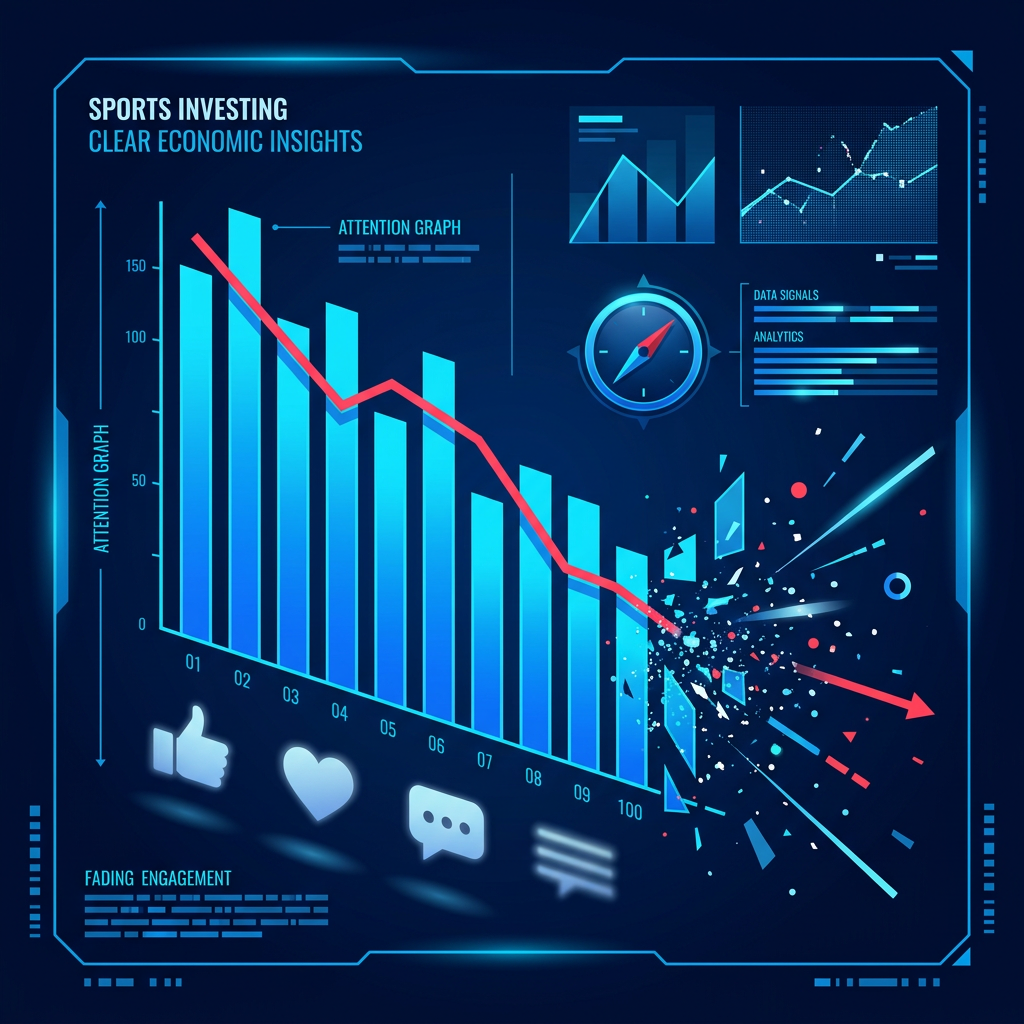
You know the feeling. It is 11:47 p.m., your thumb is still moving, and you cannot remember a single thing you have read in the last twenty minutes. The feed refreshes, the counter ticks up, the little red notification badge glows, and none of it means anything. You are not distracted. You are saturated. That quiet, widespread exhaustion is the first symptom of what this article calls attention collapse — the moment when attention itself stops being a scarce resource worth competing for, because there is simply too much of it being harvested and too little of it being converted into anything that lasts.
For roughly fifteen years, the dominant business model of the internet ran on a simple equation: capture attention, convert it into engagement, and sell that engagement to advertisers or turn it into cultural capital. Likes, followers, shares, watch time, impressions — these were the units of value. The value of attention was assumed to be self-evident, and the people who accumulated the most of it were called influencers. That model is now visibly straining, and the strain is not a temporary dip. It is a structural break. This article is a forecast, not a eulogy: it argues that the engagement economy decline we are witnessing is the early phase of an attention collapse that will reorder who gets trusted, who gets heard, and what credibility is made of. The central question is uncomfortable but unavoidable. What replaces influence when influence can no longer be trusted?
How We Got Here: A Decade Built on Vanity Metrics
It helps to remember how quickly the current system became normal. In the early 2010s, a follower count was a rough proxy for reach. A like was a small, low-cost signal of approval. Brands hired agencies to chase impressions because impressions were measurable and measurement felt like rigor. A generation of creators built careers on the premise that scale equals authority, and a generation of marketers built budgets on the premise that engagement equals persuasion. The logic was circular but self-reinforcing: attention was valuable because everyone agreed it was valuable, and everyone agreed it was valuable because the dashboards kept going up.
The problem is what happened when the dashboards stopped reflecting reality. Consider a mid-sized consumer brand that, in a single campaign year, reports millions of impressions, tens of thousands of engagements, and a follower base that would suggest national reach. Then the sales data arrives flat. The audience was real in the aggregate and hollow in the specific: bought followers, incentivized likes, engagement pods, and content optimized for the pause rather than the purchase. The brand did not misunderstand its metrics. The metrics were never designed to describe persuasion, only activity. Multiply that story across thousands of companies and you have the mechanism behind the engagement economy decline.
The scale of the shift is visible in how people now relate to news and social platforms. The Reuters Institute Digital News Report has documented, year after year, declining interest in news across markets and growing avoidance of news on social feeds, particularly among younger audiences. Ofcom’s attention research points in the same direction: total time with media is not collapsing, but it is fragmenting across more surfaces and shorter sessions, which means attention is being spread thinner rather than captured more deeply. When attention fragments, the value of any single impression falls — and the value of attention as a currency falls with it. This is the quiet precondition for attention collapse: not that people stopped paying attention, but that attention stopped being a reliable proxy for anything.
A definition worth holding onto
Attention collapse is the point at which the supply of captured attention outpaces any credible way to convert it into trust, action, or durable influence — so attention loses its value as a signal, and the systems built to monetize it begin to unwind.
The Three Symptoms Everyone Is Already Feeling
Attention collapse does not announce itself with a single dramatic event. It shows up as a cluster of everyday symptoms that most professionals have learned to tolerate without naming. Naming them is the first step toward understanding what comes next.
- Scrolling fatigue: audiences consume more than ever but retain and act on less, so reach stops translating into recall, and recall stops translating into revenue.
- Empty metrics: dashboards report growth in impressions and followers while conversion, retention, and trust indicators stay flat or decline — the gap between perceived and actual influence widens.
- Vanity inflation: because the metrics are cheap to manufacture, the people and brands with the loudest numbers are not reliably the most persuasive, and audiences have started to price that in.
Each symptom is a rational response to an incentive problem. Creators optimize for the metrics platforms reward. Platforms reward what keeps sessions long. Advertisers pay for what looks like reach. Audiences, meanwhile, learn — fast — that big numbers do not predict much. The result is a slow erosion of the value of attention that no single actor can fix by trying harder. You cannot out-produce a systemic trust problem.
Why This Is a Forecast, Not a Panic
It would be easy to read all of this as a doom loop, and that would be a mistake. Attention collapse is not the end of influence; it is the end of a particular, low-cost way of manufacturing it. When a currency inflates, people do not stop trading — they switch to a harder currency. The same thing is beginning to happen with credibility. If a follower count can be bought and an engagement rate can be gamed, then the market will slowly migrate toward signals that are expensive to fake and verifiable after the fact.
That is why this article treats attention collapse as a transition with a destination rather than a cliff with no floor. The destination is a system in which the value of attention is no longer measured by how much of it you capture, but by what your claims about the future turn out to be worth. In that system, the people who matter are not the ones with the largest audiences but the ones whose predictions have been checked, scored, and shown to hold up.
The Thesis: When Influence Cannot Be Trusted, Only Verified Accuracy Survives
Here is the argument this article will develop in the sections that follow. The attention economy is not collapsing because people stopped caring. It is collapsing because the signals it produced stopped predicting anything real, and an economy built on unreliable signals cannot hold its value. Once audiences and buyers internalize that, they do not abandon influence — they demand a new basis for it. That basis is verified predictive accuracy: a track record of claims that were made in advance, recorded, and shown to be right or wrong in public. When influence cannot be trusted, only verified predictive accuracy survives, because it is the one credential that cannot be manufactured after the fact.
The rest of this piece examines why trust eroded, what verified predictive accuracy actually is and how it could work in practice, where early adopters are already building it, and what it means for anyone whose livelihood currently depends on being seen. If you have ever felt the mismatch between a big audience and a small effect, this forecast is written for you.
The shift in one line
The old question was «how many people saw you?» The new question is «what did you get right, and can you prove you said it first?»
Why Influence Lost Its Value: The Trust Deficit Behind the Collapse
The first section described a system under strain. This section explains the machinery that broke it. Attention collapse did not arrive because audiences suddenly stopped caring about creators or brands. It arrived because the link between the numbers we display and the influence those numbers supposedly represent quietly rotted from the inside. The engagement economy decline is not a story about people losing interest in content. It is a story about people losing faith in the scoreboard.
To understand why verified predictive accuracy is poised to replace engagement as the currency of credibility, you have to understand why the old currency was devalued. Currencies fail in two ways: they get counterfeited, and the people using them stop believing they are worth anything. Both happened to attention metrics, and both happened at the same time — which is why the damage proved so hard to reverse.
The Counterfeiting Problem: When Metrics Become Gameable
Every public metric creates an incentive to manipulate it. This is not a moral failing unique to social media; it is a structural property of any measurement that doubles as a target. The moment follower counts, likes, and shares became visible status symbols and commercial assets, a market formed around manufacturing them. The metrics did not merely reflect influence — they became a commodity that anyone with a budget could purchase.
The result is what economists would call metric inflation. When the supply of a signal can be manufactured faster than the demand for genuine influence grows, the signal loses meaning. A follower count of one hundred thousand in 2012 meant something different from a follower count of one hundred thousand today — not because the number is displayed differently, but because the cost of producing that number collapsed. What was once a rough proxy for audience trust became a purchase order.
Consider three short, familiar examples of how influence and trust decoupled in plain sight.
- The bot farm era: automated accounts inflated follower counts and engagement on a scale that made raw numbers nearly meaningless as a measure of real human interest. The accounts were cheap, the effects were visible, and the audiences eventually noticed.
- The bought-audience economy: services that sold followers and engagement by the thousand turned an organic signal into a transaction. A brand could appear influential by lunchtime, and everyone doing the buying knew the appearance was the product.
- The engagement pod: groups of creators who systematically liked and commented on each other’s posts to game algorithmic amplification. The engagement was real in the sense that a human clicked, but it was manufactured in the sense that no genuine audience interest existed behind it.
Each of these tactics worked — for a while. Each raised the scoreboard number without raising the underlying trust. And each, crucially, taught audiences that a high number might mean precisely nothing about the person or brand displaying it.
Synthetic Content and the Scaling of Doubt
If bot farms and bought followers were the first wave of metric corruption, synthetic media is the second — and it is far more corrosive because it attacks the credibility of the content itself, not just the counters around it. When text, images, voice, and video can be generated at near-zero marginal cost, the volume of content competing for attention explodes while the cost of verifying any individual piece of it rises. Audiences face a version of Gresham’s law for information: the cheap and counterfeit drives out confidence in the genuine, because the genuine becomes too expensive to identify.
This matters for influence and trust in a specific way. Engagement metrics were never strong evidence of quality on their own — they were a shortcut. We used likes and shares as a collective heuristic for «this is worth my time» because verifying everything ourselves was impossible. Synthetic content breaks the heuristic. If a viral post can be generated, its virality tells you something about distribution and very little about truth. The shortcut stops working, and once a shortcut stops working, people stop taking it.
Reach versus reliability
Reach answers the question: how many people saw this? Reliability answers a different question: how often has this source been right? The engagement economy conflated the two, treating visibility as a proxy for trustworthiness. Attention collapse is, at its core, the separation of these two measures — and the decision by audiences to start caring about the second one.
Why Audiences Stopped Believing the Numbers
Distrust is a learned behavior, and audiences learned it fast. Each exposure to a bought following, an inflated engagement rate, or an obviously synthetic viral moment taught the same lesson: the number you are shown is not a measurement, it is a claim. Once that lesson is learned, it cannot be unlearned by adding more numbers. The engagement economy decline is therefore not a temporary dip in trust that better dashboards can fix. It is a structural shift in how people read the signals they are given.
The mechanism deserves to be stated precisely, because it explains why the trust deficit widened so much faster than platforms expected. When a signal is gameable, three things happen in sequence. First, early manipulators gain an advantage, so manipulation spreads. Second, sophisticated audiences begin to discount the signal, applying a mental penalty for suspected gaming. Third, because the discount is applied to everyone, honest participants are punished for the dishonesty of others. The final state is one in which the metric still gets displayed but no longer gets believed — the worst of both worlds.
Platform transparency efforts have not closed this gap. Moderation and labeling initiatives address individual pieces of content, but they do not restore confidence in aggregate metrics as a measure of influence. A label on one post does not tell an audience whether a creator’s audience is genuine. Authoritative research on misinformation and platform dynamics has repeatedly documented the difficulty of measuring the spread and authenticity of content at scale — a reminder that the problem is not a lack of effort but a mismatch between what platforms can verify and what audiences need to know. (For a fuller treatment of platform verification limits, see our related article on content credibility and trust signals.)
The Widening Gap Between Perceived and Actual Influence
Here is the core diagnosis in one sentence: the gap between perceived influence and actual influence widened because the cost of manufacturing perception fell much faster than the cost of establishing actual influence. Genuine influence is expensive. It requires being right, being consistent, and being accountable over time. Perceived influence became cheap. That asymmetry is what the attention collapse is correcting, and it explains why the correction feels so abrupt to anyone whose position depended on the perception side of the ledger.
Think about what «actual influence» really means. If a creator recommends a product and a thousand people buy it, that is influence. If a creator is followed by a million accounts but a meaningful fraction are bots or indifferent, the reach number is impressive and the influence number is much smaller. The engagement economy never asked audiences to distinguish these cases, and it never gave them the tools to. It displayed one number and let everyone assume it meant the other thing.
The trust deficit is the accumulated interest on that ambiguity. Every inflated metric, every engagement pod, every synthetic viral moment added to a balance that audiences are now collecting on. They are not merely skeptical of individual claims; they have downgraded the entire class of attention metrics as evidence of anything worth trusting.
Four Failure Modes of the Engagement Economy
The decline is easier to reason about when you separate the ways the old system failed. Four failure modes account for most of the erosion: attention metrics becoming gameable, audiences learning to distrust them, the gap between perceived and actual influence widening, and the cost of verification outpacing the cost of fabrication. These are not four separate problems to be fixed one at a time; they compound each other.
- Gameability: the metric can be produced without producing the underlying value, so the metric stops measuring what it claims to measure.
- Discounted trust: once audiences suspect gaming, they apply a blanket penalty that punishes honest participants along with dishonest ones.
- Perception gap: reach and reliability diverge, and the display system offers no way to tell which one you are looking at.
- Verification asymmetry: fabrication is cheap and verifiable truth is expensive, so the supply of doubtful signals grows faster than the supply of trusted ones.
A table makes the contrast concrete. The left column describes what the engagement economy promised; the right column describes what audiences actually experienced.
| What the metric promised | What audiences experienced instead |
|---|---|
| Followers indicate real audience interest | Followers may be purchased or automated |
| Engagement indicates resonance | Engagement may be coordinated or synthetic |
| Reach indicates influence | Reach may indicate distribution, not trust |
| High numbers indicate credibility | High numbers indicate a budget or a tactic |
From Symptoms to Causes: Why the System Cannot Self-Correct
The tempting response is to assume platforms will fix this. They can improve detection, label more content, and publish transparency reports. What they cannot easily do is restore the meaning of a metric whose meaning depended on audiences not knowing how gameable it was. Credibility, once spent, is not refunded by better dashboards. The engagement economy decline is therefore best understood not as a technical failure but as a trust failure — and trust failures are resolved by changing the underlying evidence people rely on, not by improving the presentation of the discredited evidence.
This is why the trust deficit sets up the next section so directly. If audiences will no longer accept engagement as evidence of influence, they will look for a different kind of evidence — one that is harder to manufacture, easier to audit, and directly connected to whether a source has been right about things that mattered. That is the space verified predictive accuracy is moving into. For related reading on how trust signals are being rebuilt, see our article on content credibility, and for the broader stakes, revisit the opening analysis of the attention collapse.
The takeaway
Influence lost its value not because audiences stopped valuing expertise, but because the metrics used to signal expertise stopped being trustworthy. The collapse is a correction in favor of evidence that can be checked against outcomes — which is exactly what verified predictive accuracy measures. The next section explains how it works.
Verified Predictive Accuracy: The New Currency of Credibility
If attention was the currency of the last decade, the next one needs a currency that survives scrutiny. Engagement can be bought, borrowed, or bot-farmed. What cannot be faked at scale, over time, in public, is a track record of being right. That is the quiet insight behind the replacement system now emerging: verified predictive accuracy — a measurable, auditable record of how often someone’s forecasts, claims, and calls actually came true.
This section defines that system in plain language, explains why it is a more honest measure of influence than engagement ever was, and shows how it could work in practice. The argument is simple: once audiences stop trusting popularity, they will start trusting proof. Verified predictive accuracy is what proof looks like.
A Plain-Language Definition
Verified predictive accuracy is the practice of scoring a person’s or organization’s public claims against what actually happened, and publishing that score in a form anyone can audit. Three ingredients make it work: the prediction must be stated in advance, the outcome must be observable, and the scoring must be done by a party with no stake in the result.
In other words, it is a predictive reputation system: a way of measuring credibility by outcome rather than applause. Your reputation is no longer what people say about you. It is what your past predictions say about you — and anyone can check.
- Stated in advance: the claim is time-stamped and public before the outcome is known, so it cannot be quietly rewritten after the fact.
- Observable outcome: the prediction resolves against a defined, checkable event — a result, a number, a date — not a vague sentiment.
- Independent scoring: the record is maintained or verified by someone other than the predictor, closing the loop on self-grading.
Notice what is absent from that list: follower counts, impressions, likes, shares, and the whole vocabulary of the engagement economy. Those signals measure how loudly a claim traveled. Verified predictive accuracy measures whether the claim held up. One is a measure of reach; the other is a measure of reliability. Only one of them tells you whether to believe the next thing the person says.
The Weather Forecaster Analogy
Think about how you actually decide whether to trust a weather forecast. You do not check the meteorologist’s follower count. You do not count the likes on yesterday’s rain prediction. You trust the forecaster because, over many days and many seasons, the forecasts have mostly been right — and when they are wrong, you can see it, because the sky is public and the outcome is undeniable.
This is the entire logic of verified predictive accuracy, applied to everything else. The weather forecaster is credible not because they are popular but because their track record is visible, repeated, and checkable by anyone who stepped outside. Now imagine applying that same standard to the people who forecast markets, technology, politics, culture, and your own industry. Most of the loudest voices would score poorly. Many of the quietest would score well. That inversion is the point.
The core shift
Engagement asks: how many people paid attention? Verified predictive accuracy asks: when this person made a claim about the future, how often were they right, and can I check? The first measures reach. The second measures reliability. Only reliability survives contact with a skeptical audience.
Why This Beats Engagement as a Measure of Influence
The case for verified predictive accuracy rests on a single property that engagement lacks: it is hard to counterfeit over time. A like can be purchased. A follower can be faked. A rumor can be amplified. But a public prediction, time-stamped before the fact and resolved against an observable outcome, is expensive to fake and humiliating to get wrong. That asymmetry is what gives the metric its value.
- It is backward-looking and forward-useful. A track record tells you something actionable about the next claim, not just the last post.
- It rewards calibration over confidence. Saying «likely» and being right most of the time scores better than being loudly certain and frequently wrong.
- It is comparative. Two commentators can be placed on the same scale without arguing about whose audience is bigger.
- It is self-correcting. Every resolved prediction adds to the record, so the score converges on the truth as the sample grows.
- It resists the outrage loop. A prediction that goes viral for being provocative still has to come true.
There is a deeper argument here about what influence is for. In the engagement era, influence meant the ability to move attention. In the accuracy era, influence means the ability to move belief — and belief is only worth moving if it is grounded. An audience that has been burned by confident, wrong voices will not reward reach. It will reward proof. Verified predictive accuracy is the mechanism that turns proof into a reputation.
What Verification Could Actually Look Like
The concept is abstract until you picture the machinery. None of the following requires exotic technology; each piece is already familiar from credit scoring, peer review, or sports statistics. What is new is assembling them into a public proof of accuracy for claims about the future.
- Public scoring: each commentator or analyst carries a visible accuracy profile — hit rate, calibration, and sample size — shown alongside their name the way a rating accompanies a product.
- Auditable track records: every prediction is logged with its original wording and timestamp, and the full history is viewable, not just a curated highlight reel.
- Time-stamped predictions: claims are locked the moment they are made, so no one can retroactively soften a wrong call or sharpen a lucky one.
- Independent resolution: a neutral party — a platform, a consortium, a third-party auditor — determines whether the prediction came true, against criteria agreed in advance.
- Weighted scoring: bold, specific, falsifiable predictions count for more than hedged generalities, rewarding precision over vague punditry.
These are predictive reputation systems in embryo. The building blocks exist: timestamped publishing, public ledgers, and independent scoring bodies are all familiar institutions in other domains. The shift is cultural as much as technical — a decision to treat a prediction as a commitment rather than content.
A Hypothetical Scenario: The Scored Commentator
Consider a familiar figure: a technology commentator with a large following and a talent for vivid predictions. Under the engagement economy, their influence is self-reinforcing. Bold claims generate reactions, reactions generate reach, and reach generates more claims. Whether the predictions come true is almost beside the point — the audience has already moved on to the next one by the time reality catches up.
Now place that commentator inside a verified predictive accuracy system. Each public forecast is logged with a timestamp and a defined resolution date. At the end of each period, an independent scorer checks the record: which claims resolved true, which false, which are still open, and how the commentator’s stated confidence compared with the actual hit rate. The result is a public profile — not a verdict on the person, but a transparent account of their forecasting.
The consequences are subtle but profound. The commentator’s following may stay large, but its meaning changes. A reader deciding whether to act on the next prediction now has a number to consult, and that number reflects outcomes rather than applause. A commentator with a modest audience but a strong, well-calibrated record becomes genuinely influential, because their predictions carry weight. Meanwhile, a high-reach voice with a poor record finds that reach no longer converts into trust. Influence migrates from the loud to the accurate.
This is not a fantasy about perfect accountability. Predictions are often fuzzy, outcomes are sometimes contested, and scoring systems can be gamed at the margins. But the direction of travel is clear, and it is a marked improvement on a world where the only signal is how many people clapped.
The Objection Worth Taking Seriously
The strongest objection is that verified predictive accuracy is hard to apply to everything. Many valuable contributions — a nuanced essay, a diagnosis of a cultural mood, a well-framed question — are not predictions and cannot be scored. That is true, and it is a reason to treat the metric as a complement rather than a total replacement.
But notice how much of what passes for influence today is implicitly predictive. Analysts forecast markets. Commentators forecast political outcomes. Consultants forecast which strategies will work. The claim «this will happen» is the hidden backbone of most authoritative-sounding content. Verified predictive accuracy simply makes that backbone visible and holds it accountable. Where a contribution genuinely is not predictive, it can be judged on other grounds — clarity, evidence, usefulness — but it should not borrow credibility from a track record it does not have.
The point is not that every sentence must be a forecast. It is that the people who claim to know what comes next should be measured on whether they did. That single discipline would reorder the credibility landscape more than any algorithm change.
Why Accuracy Is the Honest Currency
Step back and compare the two systems on the one question that matters: what does the number actually tell you? An engagement score tells you how many people reacted. It says nothing about whether the person is worth believing. A verified predictive accuracy score tells you how often the person’s claims about the future have held up. It says something specific, checkable, and useful about whether to trust the next one.
That is why verified predictive accuracy is positioned to become the new currency of credibility. It is scarce in a way engagement never was — you cannot manufacture a long, public, independently scored record of being right without actually being right. It is auditable, so it survives scrutiny. And it is forward-useful, because a track record is precisely what we want when deciding whom to believe about what comes next. In a world where attention has stopped being a reliable signal, proof of accuracy is the signal that remains.
Editor's note on verification
The systems described in this section are an emerging direction, not a finished, standardized product. Specific scoring methods and independent verification bodies will vary by platform and domain. Treat any specific accuracy score you encounter as one input among several, and check how the underlying predictions were defined and resolved.
What Replaces Influence: Practical Signs and Early Adopters
A shift this large rarely announces itself with a press release. It shows up first as small behavioral oddities — a hiring manager asking for a public track record instead of a follower count, a reader clicking through to a source’s past predictions before reading the current one. If verified predictive accuracy is becoming the new currency of credibility, we should be able to see people spending it. And we can. The signals are scattered, incomplete, and easy to miss, but they point in the same direction: away from reach and toward being right, on the record, over time.
This section moves from concept to observable reality. Below are the places where the future of social media is already being rehearsed, followed by practical guidance on how to position yourself before the shift becomes mandatory.
Signal One: Forecasting Markets Put a Price on Being Right
Prediction and forecasting markets are the cleanest example of attention economy alternatives in the wild. Participants stake something — money, reputation, or standing — on a falsifiable outcome, and the market aggregates their claims into a single, checkable number. The mechanism is unforgiving in a useful way: a confident voice with a large following does not move the price if their track record is poor. Accuracy does.
What matters for our purposes is not whether any particular market is well calibrated on any given day. It is the cultural precedent these platforms set: a public, time-stamped, resolved record of who was right. That record is portable. It can be cited, audited, and compared. Compare that with a viral post, which is time-stamped but never resolved — it is never scored against what actually happened. Forecasting markets normalize the idea that a claim should come with an outcome attached. That normalization is the first crack in the influence monopoly.
The lesson for individuals is direct. Even if you never join a forecasting market, you can borrow its discipline: make specific, dated, checkable claims in public, and revisit them honestly. The format matters less than the habit of resolution.
Signal Two: Analyst Scorecards Are Becoming Table Stakes
In finance, sports analytics, and increasingly in technology and policy commentary, scorecards that track an analyst’s historical accuracy are moving from niche curiosity to expected infrastructure. The pattern is consistent: an organization records what each commentator predicted, when they predicted it, and whether it came true — then publishes the aggregate. The effect on audience behavior is immediate. Readers begin to sort voices by calibration rather than by volume.
This is the practical embodiment of building credible influence. A scorecard converts a reputation from a vibe into a dataset. It also changes incentives upstream: commentators who know their calls will be scored tend to state assumptions, qualify ranges, and avoid the vague hedging that makes predictions unfalsifiable. Note that scorecards are not a verdict on a person’s intelligence or worth — they are a narrow instrument measuring one thing: how often stated expectations matched outcomes. That narrowness is a feature, not a bug.
Why scorecards spread
Scorecards are cheap to produce, easy to audit, and hard to fake at scale. Once one outlet in a category publishes them, competitors face an awkward question if they do not. Expect this pattern to move from specialized niches into mainstream commentary, hiring, and even procurement.
Signal Three: Credibility Labeling Experiments
Platforms and publishers have been running credibility labeling experiments for years — tags that indicate a source’s track record, correction history, or verification status. Most have been partial, contested, and revised. But the direction of travel is clear: labels that describe how a claim was checked, or how a source has performed historically, are more durable than labels that simply certify identity.
The most interesting versions are those that label the record rather than the person. A badge saying «this account’s predictions in this domain have resolved correctly X of Y times» is a different kind of artifact from a blue checkmark. It is falsifiable. It ages. It can go down as well as up. That dynamism is what makes it credible to skeptical audiences who have learned to distrust static badges.
Watch for this pattern in professional communities first — niche newsletters, analyst networks, and specialist forums — before it reaches general platforms. Adoption tends to start where the cost of being wrong is concrete and the audience is small enough to hold people accountable.
Signal Four: Journalist Accuracy Trackers
Independent trackers that log journalists’ and commentators’ predictions and rate them against outcomes are a small but telling development. They are imperfect and sometimes unfair, but they demonstrate demand. Readers want a way to check a source’s record that does not depend on the source’s own claims about itself.
The public reaction to these trackers is instructive. Defenders of tracked journalists argue, reasonably, that reporting is not the same as prediction and that trackers can reward safe, hedged takes. Critics of the trackers point out that some are opaque about methodology. Both critiques are legitimate, and both point toward the same conclusion: the demand for predictive accountability is real, and the supply is still immature. That gap is an opportunity for anyone willing to build a transparent record before the tools catch up.
Signal Five: The Quiet Shift in Hiring and Partnership
Less visible but perhaps most consequential: organizations are beginning to ask for evidence of judgment, not reach. Job postings for analyst and strategy roles increasingly ask candidates to describe decisions they got right and wrong, with specifics. Agencies pitch clients on documented forecast accuracy rather than audience size. In some procurement conversations, a vendor’s public track record on delivery and prediction is being weighed alongside price and references.
None of this is universal yet, and much of it is informal. But the direction is unmistakable. When an employer asks «show me your record» rather than «how many people follow you,» the attention economy has lost a customer. Each such decision is a small defection from the old regime, and defections compound.
A Table: Old Influence vs. Verified Credibility in Practice
The clearest way to see the shift is to compare how the two systems behave across the same dimensions. The table below is a diagnostic, not a scoreboard — use it to audit where your own credibility currently lives.
| Dimension | Attention-era influence | Verified-credibility approach |
|---|---|---|
| Primary signal | Follower count, likes, reach | Resolved, dated predictions |
| Time horizon | Spikes and trends | Longitudinal record |
| Verification | Platform badges, self-report | Auditable outcome logs |
| Decay | Fades with the feed | Ages slowly, both ways |
| Failure mode | Outrage, controversy | Being wrong on record |
| Buyer behavior | Buys reach | Buys calibration |
The Limits: A Necessary Caution
Scoring systems are not salvation
Every measure of credibility described here is a proxy, and all proxies can be gamed or misread. Forecasting markets can be manipulated by thin liquidity. Scorecards can punish people for making bold, valuable calls that happen to miss. Trackers can encode the biases of their builders. A single number is never a substitute for judgment about context, incentives, and power. Treat verified predictive accuracy as one input among several — useful precisely because it is narrow, and dangerous only if treated as total.
There is a further risk worth naming: a world of perfect scorekeeping could become a world of permanent, unforgiving records. People deserve room to be wrong, learn, and revise. The healthy version of the credibility shift rewards corrected errors and penalizes confident, repeated errors made without adjustment. A scoring culture without forgiveness becomes a different kind of attention trap — one that punishes honest updating. Any serious adoption of predictive accountability should be paired with norms around revision and context.
Your Five-Point Action Checklist
Positioning yourself for the credibility shift does not require a platform, a budget, or permission. It requires a habit of public, dated, falsifiable claims — and the discipline to review them. Start with these five steps.
- Keep a prediction log — a simple document where you record specific, dated, checkable claims you have made about your field, and resolve each one when its date passes.
- Publish a small number of specific forecasts in public, with assumptions stated and a resolution date attached, rather than many vague opinions.
- Audit your own scorecard quarterly: count resolved calls, note where you were wrong and why, and share the corrections as readily as the wins.
- Stop optimizing for reach in at least one channel — trade one high-volume platform habit for a low-noise, high-verifiability format such as a newsletter or annotated analysis.
- Cite your own prior calls by date when making a new one, so anyone can check your reasoning and your record without taking your word for it.
For organizations, the compressed version looks slightly different but follows the same logic.
- Require evidence of judgment — documented forecasts, decisions, and outcomes — in hiring, agency selection, and vendor choice, alongside reach and price.
- Instrument your own decisions: log major internal predictions and review them on a fixed cadence so your organization builds a body of checkable experience.
- Publish an honest, narrow accuracy page for any analyst or advisory function you operate, and treat a declining score as feedback rather than a crisis.
Early Adopters Tend to Share Three Traits
Look across forecasting markets, scorecarded analysts, and tracker-friendly writers, and a pattern emerges. Early adopters tend to be people whose work already has a falsifiable output. They are also usually small enough to move before their institution does — an independent analyst, a niche newsletter, a two-person advisory firm. And they are, almost without exception, comfortable being wrong on the record, which is the rarest and most valuable trait in the emerging economy.
If you are not yet one of these people, the encouraging news is that the record takes time to build — which means the best day to start a prediction log was last year, and the second-best day is today. The influence economy rewarded those who arrived early to attention. The credibility economy will reward those who start their track record before anyone asks for it.
For a deeper look at how to construct these mechanisms, see our companion guide on designing a personal prediction log [internal link: Prediction Logs That Hold Up] and our primer on scoring systems and their pitfalls [internal link: How Predictive Scorecards Work]. For a rigorous academic foundation on forecasting skill and performance, see Philip E. Tetlock and Dan Gardner’s Superforecasting: The Art and Science of Prediction, which remains the standard reference on how measured prediction ability is distinguished from confident opinion.
Living After Attention Collapse: What to Expect and How to Prepare
The shift we have traced across this article is not a passing mood swing in how people use the internet. It is a change in what the internet rewards. For roughly fifteen years, the value of attention was treated as self-evident: gather eyeballs, convert them into followers, monetize the followers. Attention collapse breaks that chain at its weakest link — the assumption that attention earned is attention deserved. When audiences can no longer distinguish real signal from manufactured noise, they stop paying for either. What fills the vacuum is not silence but a different kind of reputation, one built on being right in ways other people can check.
If you are reading this as a professional who has spent years building an audience — or as someone who quietly suspects the audience-building playbook is running out of road — the practical question is not whether the attention economy ends next Tuesday. It is what you do with the next eighteen months. This closing section is about that window: what to expect as attention collapse works through the system, and how to prepare without abandoning everything you have already built.
Three Things Worth Carrying Forward
Rather than replay the full argument, here is the short version you should keep in view. First, the decline of engagement as a trust signal is structural, not cyclical; gameable metrics did not have a temporary credibility problem, they had a design flaw. Second, verified predictive accuracy is emerging as the honest alternative because it measures something an audience can confirm after the fact rather than something a creator can inflate before it. Third, the transition is uneven — some niches are already rewarding track records while others still run on reach — which means early positioning is disproportionately valuable.
The one-sentence recap
Attention collapse means the market is repricing credibility: from how many people looked at you to how often you were demonstrably right about what happened next.
What to Expect Over the Next Few Years
Forecasting is a poor man’s sport, so treat the following as directional rather than dated. Even so, the pattern of previous trust transitions in media and finance suggests several things are likely to happen in roughly this order.
- Metric fatigue will deepen before it reverses. Audiences already discount follower counts and view totals; expect them to extend that skepticism to engagement rates and sentiment scores as those too become cheap to manufacture.
- Audience-facing track records will become a product category. More platforms and communities will surface some form of public record of past predictions, whether by choice or by competitive pressure from communities that demand it.
- The middle tier of influence will reorganize fastest. Creators whose value rested on relatability and reach will feel the squeeze first, while specialists with narrow, checkable claims will find their small audiences stickier and more valuable.
- Trust will migrate toward smaller, verifiable venues. Newsletters, private communities, and specialist forums — places where members can trace a claim back to a name and a date — will absorb credibility that open social feeds lose.
- Brands will follow the verifiable. Sponsored partnerships will increasingly be evaluated on documented accuracy in a niche rather than on impressions, because procurement teams answer to quarterly proof, not vibes.
None of this means the big platforms vanish. It means their role narrows toward distribution and discovery, while the reputation layer — who is worth believing — gets built somewhere else, on records that can be audited. For a useful industry lens on how trust and verification are reshaping media economics, keep an eye on the annual trust and credibility research published by organizations like the Reuters Institute for the Study of Journalism (an authoritative external source worth bookmarking for future reading).
How to Prepare: A Practical Order of Operations
Preparation is less about grand strategy than about sequencing. If you try to build verified credibility and overhaul your audience strategy and rethink your monetization all at once, you will do none of them well. Do them in order.
- Start keeping a public record now, imperfectly. A dated log of your claims in your domain of expertise is the raw material of everything else. The best time to start was three years ago; the second-best time is today.
- Pick one niche where your predictions can be checked. Verification needs a defined question and a defined resolution. Broad «I think AI will change work» claims cannot be scored; specific, dated, falsifiable ones can.
- Publish the record where your audience can see it. A pinned page, a newsletter section, or a community thread all work; obscurity defeats the purpose. If you want a starting point, see our related article on [[internal link: building a public prediction log]].
- Audit your audience relationships for verifiable terrain. Identify the one or two channels where your most attentive readers actually engage with your reasoning, and invest disproportionately there.
- Rework how you describe what you offer. Move from reach language to accuracy language in your bio, your media kit, and your pitch to partners. This will feel uncomfortable and it will also filter for the right partners.
- Expect to be wrong, publicly, and prepare for it. The credibility system we described earlier only works if wrong calls stay visible. Plan your response posture before you need it.
If you take nothing else from this article, take the first item. The mechanics of verified predictive accuracy reward people who begin accumulating evidence early, because a record compounds in a way that a follower count does not. A follower count can be bought this afternoon; three years of dated, resolved predictions cannot be manufactured retroactively, and that asymmetry is precisely why the new currency holds its value.
FAQ: Attention Collapse and Verified Credibility
A few questions come up repeatedly when professionals first encounter this argument. Short answers below.
Is the attention economy really ending?
Not ending — repricing. Attention will still be bought and sold, but it will stop functioning as a proxy for credibility. The value of attention is shifting from a currency in its own right to a distribution input that only matters once accuracy has been established elsewhere.
How do I build predictive credibility if I am not a forecaster?
You do not need to predict markets or elections. Any professional domain has recurring, checkable judgments — which approach will work for a client, which tool will hold up under load, which process will fail at scale. Commit to those judgments in writing, date them, and revisit them honestly.
What happens to existing influencers?
Those who can demonstrate a track record in a specific domain will likely carry their audiences into the new system with an advantage, since they already have distribution. Those whose value was purely reach-based will face harder economics, not immediate disappearance. The transition will be gradual and uneven across niches.
Can verified predictive accuracy itself be gamed?
Any metric can be gamed at the margins — selective memory, vague claims that resolve favorably, quietly deleted misses. The defense is structural: dated, falsifiable claims that stay visible, checked by parties with an interest in checking them. A gamed record is harder to sustain than a gamed follower count, which is the core advantage.
The Closing Argument
Attention collapse sounds like a loss, and for anyone whose livelihood depended on the old arithmetic it is one. But the question at the heart of this article — what replaces influence when influence can no longer be trusted — has a hopeful answer. Something more durable replaces it: a reputation you cannot buy, only earn, one resolved prediction at a time. The professionals who will thrive after the collapse are not the loudest. They are the ones whose audiences can look back and say, with evidence, «you were right, and we can see it.»
Start this week
Pick one domain where you are genuinely expert, write down three dated, falsifiable claims about what will happen in the next six months, and publish them where your audience can find them. That single act is the beginning of building credible influence under the new rules. For ongoing coverage of attention collapse and the shift to verified accuracy, subscribe to our newsletter ([[internal link: newsletter signup]]) and read our related piece on [[internal link: what replaces influence]]. The old playbook is closing; the new one is being written by people who started keeping records before it was fashionable.
Leave a Reply